Catholic Charities Hawai‘i Helps People in Need, Regardless of Faith
The nonprofit helped more than 11,000 families with housing assistance and supported over 5,500 kūpuna last year, guided by core values of dignity, compassion, and social justice.
“Catholic” means universal, and Catholic Charities Hawaiʻi seeks to live up to that by opening its services to everyone.

Catholic Charities Hawai‘i President and CEO Tina Andrade
“We don’t ask anyone about their religion when they come for services,” says Tina Andrade, president and CEO of Catholic Charities Hawaiʻi.
“When hiring, we welcome individuals from diverse backgrounds who reflect our community. Among our team, members come from a variety of faiths and beliefs – some may not even identify with a religion. What matters most is the shared spiritual value of helping people,” she says.
According to its 2024 annual report:
- 11,364 families and individuals received transitional housing, rent and utilities subsidies, and other housing assistance that fiscal year. For instance, one of its subsidiaries operates Hale Hoaloha, a building in Honolulu’s McCully neighborhood with 12 apartments where families can stay for up to five years as they gain financial stability and life skills.
- 5,525 kūpuna were supported with services like rental housing and other housing support, as well as the popular Lanakila Senior Center and its dozens of activities.
- 221 veterans and their families received support from CCH.
Catholic Charities Hawaiʻi’s numerous services also include mental health assistance and help for immigrants. In all cases, the charity says, its programs are guided by four core values: honoring the dignity of each person, showing compassion to all who seek help, working for social justice by standing with those most in need and striving for excellence through skilled, collaborative service.

Heroes and helpers holiday season event at Windward Mall.
“We provide services to ensure that families are supported, especially children whose lives were disrupted and who may not have had a stable home. We help these families address behavioral challenges that arise from children experiencing turbulent childhoods and trauma. Our goal is to make sure they can heal in a safe and nurturing home,” Andrade says.
One high priority is ensuring all beneficiaries acquire the skills and resources needed to be self-reliant.
“We want to make sure that when they leave us, they feel like they have the self-sufficiency to be able to do it on their own and knowing that we’re still going to be here if there’s a need that happens to them in the future,” Andrade says.
“A VERY SPECIAL JEWEL”
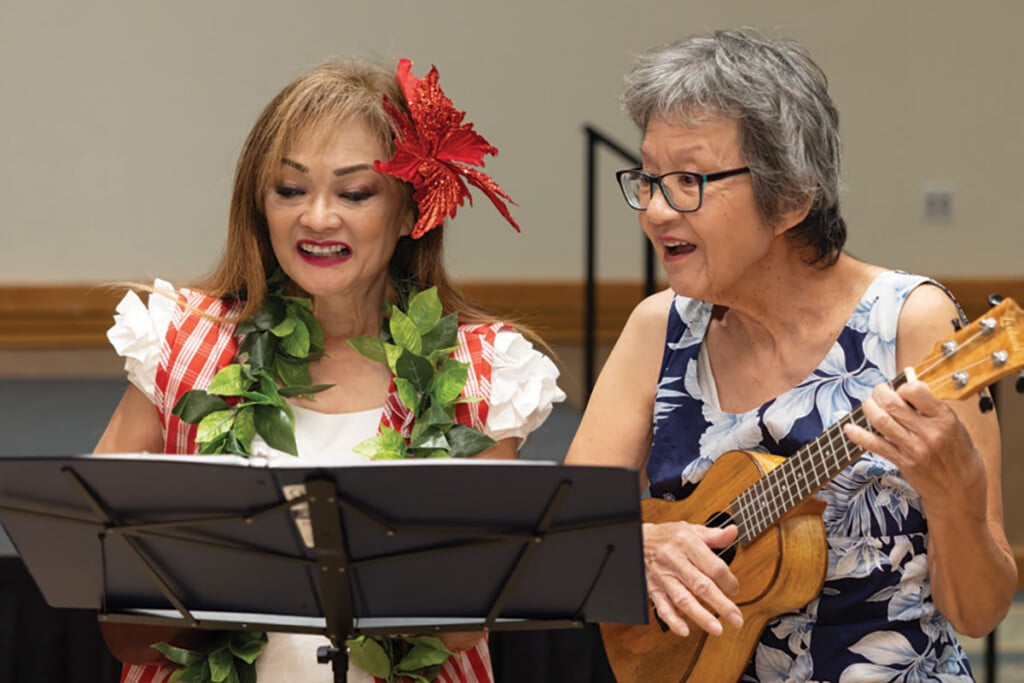
She says among CCH’s most popular programs are the ones offered at the Lanakila Senior Center. “It’s a very special jewel in the community in the Kalihi-Pālama area and the seniors that go there are just so full of life.”
Activities include arts and crafts and a variety of classes, from exercise, dance and music to continuing education and health promotion.
Andrade says CCH also provides transportation services that connect kūpuna with doctors, grocery stores, social activities and other services. One newer program is called Transportation Friends for Kūpuna in which volunteers provide free transportation and escort help to seniors 60 years and older who live independently and may have difficulty walking.
“It’s really the community helping take care of our kūpuna to help keep them independent,” Andrade says.
For caregivers of individuals with dementia, Catholic Charities Hawaiʻi offers a new program called Hawaiʻi Circles of Care for Dementia, which includes workshops as well as information and support.
“SO CARING AND SWEET”
Michelle T., who asked that her full name not be used to protect her privacy, takes care of her elderly mother. She says she first heard about Catholic Charities Hawaiʻi from a representative she met in her apartment building’s multipurpose room. CCH helped her set up SNAP benefits and Section 8 housing, and most critically, helped get her mother into a nursing home.
“They’re so caring and sweet, and they get to know you. I feel like I can tell them absolutely anything. I’ve poured out so much about my mom and everything that has happened, and they’ve become part of the family,” she says.
“Without their help, I don’t know, I might be out on the streets.”
She also uses CCH’s transportation services to shop for groceries and plans to enroll in the service that offers rides to doctor appointments.

The Hale Pilina Affordable Housing Project on Maui is scheduled to be completed in early 2027.
“CATHOLIC CHARITIES REALLY SAVED ME”
Catholic Charities Hawaiʻi says it prioritizes housing. One program provides low-income families with $500 a month to help cover rent, assistance that Andrade says has been a lifeline for many people. “A gentleman came up to me and said, ‘Thank you so much. Catholic Charities really saved me. I lost my job, went into a downward spiral, and found myself in a very dark place. But because of Catholic Charities, I’m in a much better place now.'”
A new affordable rental housing project on Maui, Hale Pilina, will offer apartments for qualified families earning up to 60% of the area median income, with first priority given to families affected by the 2023 wildfires. The 178 apartments, half to be one bedroom and the others two bedroom, are expected to be completed by early 2027.

“There’s already been a shortage of family housing in Maui … before the wildfires, and the fires only made things worse. The Hale Pilina project is really going to help address that need,” Andrade says.
Catholic Charities Hawaiʻi says it spent $59.53 million in the 2024 fiscal year. Of that, 31% went toward emergency rental relief, 28% toward housing and 16% toward family therapeutic services. In that period, the charity helped more than 3,000 individuals, including about 1,000 children.
Much of that spending was on Maui, where CCH helped households recover, heal and build stability after the wildfires.
Andrade says she’s concerned about the future of federally funded SNAP and Medicare benefits, which many of CCH’s clients rely upon. “With upcoming changes, some of those benefits may look different, and we’re still trying to understand what that will mean for them.”