Column: Funding Stewardship at Scale
What Hawaiʻi’s Green Fee Is Teaching Us About Caring for Place. (This story was originally published in Overstory and is co-published with Hawaii Business.)
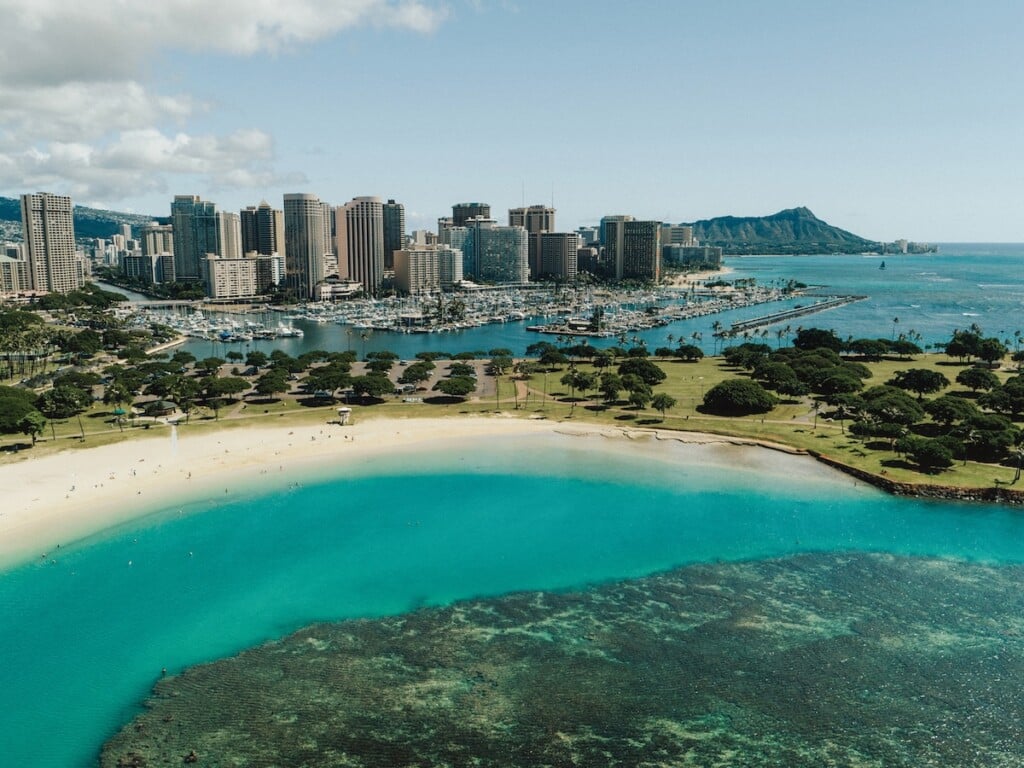
On any given day in Hawaiʻi, signs of strain are visible. Trails show wear from heavy use. Reefs experience stress from warming waters and sediment runoff. Forested areas continue to face pressures from invasive species, alongside growing wildfire risk. Cultural sites are visited often, while stewardship resources remain limited. These patterns are not isolated. Together, they point to a broader reality: the natural and cultural systems that sustain Hawaiʻi have operated for decades without a funding structure that fully reflects how much we depend on them.
Act 96, SLH 2025, introduces what has been described as the nation’s first climate impact fee, often called the Green Fee. As of January 1, 2026, the law increased the Transient Accommodations Tax by 0.75 percent and directs new revenue toward natural resource management, climate and hazard resilience, and sustainable tourism systems. The intent is to establish a more predictable funding source for systems that support Hawaiʻi’s environmental, cultural, and economic well-being.
As this article goes to press, the Hawaiʻi State Legislature is reviewing recommendations from Governor Green and the Green Fee Advisory Council. This stage may be important in shaping the structure of the Green Fee framework and how funds are directed. Some have described the Green Fee as a form of public trust investment in a civic sense, meaning decisions about these funds could reflect long-standing community values regarding intergenerational stewardship and shared well-being.
The need for such a mechanism has not emerged overnight. For years, individuals and organizations working in watersheds, reefs, forests and cultural landscapes have pointed to persistent funding gaps. Watershed protection, reef monitoring, invasive species control, and cultural site stewardship are long-term responsibilities. Yet these efforts have often depended on short-term grants and variable funding streams.
These trends appear in the Hawaiʻi Green Growth Aloha+ Challenge Dashboard, an open-data platform that tracks sustainability goals aligned with the global Sustainable Development Goals, including clean water, climate action, life below water, and life on land. The indicators suggest pressures on ecological systems remain significant, and that progress typically requires sustained effort. For example, one Aloha+ target aims to increase freshwater capacity by 100 million gallons per day by 2030. Recent data show approximately 22 million gallons per day achieved as of 2024. Another goal is to protect 843,000 acres of priority watershed forests by 2030. Current figures through 2025 indicate roughly 185,460 acres, or about 22 percent, are protected.
Viewed another way, these trends highlight the role of natural capital. Forests contribute to aquifer recharge. Coral reefs help buffer shorelines and support fisheries. Landscapes and coastal environments remain central to the visitor experience. Yet funding for the care of these systems has not consistently matched their economic and social importance. A 2024 study commissioned by the Care for ʻĀina Now Coalition (“State of Natural Resource Financing in Hawai’i: Current Funding and Future Needs for Climate Resilience”) estimated Hawai‘i’s annual conservation funding gap between $561 million and $1.69 billion, including both programmatic and ongoing operational needs.
This gap can be understood as deferred investment. Natural systems are not directly represented in budget deliberations, yet environmental changes such as drought, wildfire, flooding, and reef decline increasingly shape policy discussions and budget realities as we have seen in the wake of tragedy. These realities also help explain a recurring tension in conversations about tourism.
Tourism is often cited as a major economic contributor. Preliminary DBEDT figures for 2025 indicate $21.75 billion in visitor spending, about $3.04 billion in state tax revenue from tourism, and roughly 222,000 jobs supported. At the same time, ecological indicators such as freshwater security, reef health, watershed condition, and cultural site integrity influence whether Hawaiʻi remains livable for residents and appealing to visitors. Considered together, these measures suggest economic activity and environmental stewardship are closely connected.
The Green Fee framework does not treat tourism as separate from environmental considerations. Instead, it is intended to connect economic activity more directly with stewardship of the natural and cultural systems that support it. In this sense, tourism becomes part of a broader system of responsibility and investment.
Hawaiʻi’s fiscal structure also shapes the conversation. As a balanced-budget state, Hawaiʻi must align resilience and sustainability goals with available revenue sources. The Green Fee represents one approach to expanding funding while linking revenue generation to long-term environmental and community outcomes.

Kiaʻi Collier Kiai of Hawai’i Land Trust and volunteers enjoy a scenic view after a day of working. | Credit: Hawaii Tourism Authority (HTA) / Heather Goodman
This approach emerged through discussions across sectors. Climate and conservation advocates highlighted the need for resilience funding. Community and cultural practitioners emphasized the need for stewardship. Representatives within the hospitality sector noted the importance of healthy landscapes and cultural vitality to the visitor experience. Government leaders sought a mechanism that could provide predictable funding without disrupting other systems. These perspectives converged around the idea that stewardship investment and economic stability are closely linked.
Because allocations are still being developed, on-the-ground outcomes are not yet widely observable. Even so, early planning signals are evident. Some watershed partnerships and restoration groups report working with longer planning horizons in anticipation of more stable funding. Workforce training programs are also expanding stewardship-related pathways, reflecting expectations of greater demand for restoration, monitoring, and resource management roles.
There are signs of growing momentum. How that momentum translates into outcomes may depend in part on institutional design, and Hawaiʻi is not alone in exploring these questions.
This stage of the legislative process also brings several practical questions into focus. Lawmakers are considering how Green Fee revenues will be distributed across eligible categories, how funds will be layered with existing agency budgets, and what oversight structures will be required. These decisions may influence whether the Green Fee results in a net increase in stewardship capacity or functions primarily as a budget substitution tool. Supplantation could occur, for example, if general funds historically used for natural resource management were reduced in proportion to new Green Fee allocations, resulting in a limited overall change in on-the-ground capacity.
There are also broader considerations. Some stakeholders have raised questions about the competitiveness of visitor costs and the administrative capacity to manage new funding streams. Others emphasize the importance of ensuring that reporting systems are not only established but also maintained over time. Oversight mechanisms such as annual legislative reporting, project-level expenditure tracking, and auditable financial documentation are among the tools that can help address these concerns while supporting long-term credibility.
International examples offer insight. New Zealand’s International Visitor Conservation and Tourism Levy includes regular public performance reports outlining allocations and funded projects. Palau and Bonaire use visitor fees to support protected area management, paired with formal financial oversight and annual reporting. Bali and Aruba have paired tourism-linked sustainability fees with centralized information portals or annual reporting mechanisms. Across these examples, dedicated funding streams appear more durable when paired with public reporting, financial oversight, and clear institutional roles. In several cases, involvement of local organizations has been associated with longer-lasting project outcomes.
Hawaiʻi now faces similar design considerations. A widely discussed principle is that Green Fee revenues should be additive rather than substitutive. If new funds primarily replace existing appropriations, overall stewardship capacity may change less than anticipated. For that reason, attention to the State Budget process remains relevant, as allocation structures can influence whether net capacity increases.
Accountability mechanisms are also under consideration. HB 1949 proposes a Green Fee Transparency and Accountability Program within the Hawaiʻi Climate Change Mitigation and Adaptation Commission, with a dedicated coordinator in the Office of the Chairperson of the Board of Land and Natural Resources. The proposal includes a public, online Green Fee Resiliency Impact Dashboard intended to display revenue, allocations, participating agencies, project-level expenditures, objectives, timelines, performance indicators, and associated outcomes. The program would also establish reporting standards, coordinate data submission, and produce annual public summaries.
Community-based organizations represent another component of the implementation landscape. Across Hawaiʻi, many stewardship efforts are led by small nonprofits and local hui with long-standing relationships to place. These organizations often combine ecological restoration, cultural stewardship, and community engagement. Historically, their funding has been short-term and limited. The Green Fee may present opportunities to provide more stable support. Observers note that projects involving community-based partners often reflect local knowledge and existing stewardship practices, and may contribute to workforce development and long-term capacity building.
Taken together, these themes suggest two consistent patterns. Transparency tends to support public trust. Community involvement often contributes to sustained outcomes.
Underlying these discussions are widely recognized ecological relationships. Native forests contribute to aquifer recharge. Intact ecosystems are associated with reduced wildfire risk. Coral reefs can buffer storm impacts. Fisheries health supports food systems. These environmental functions intersect with economic and community well-being.
The Green Fee framework remains in development, and its long-term influence will depend on how allocations are structured and how oversight mechanisms function. A central question is now more visible in public discourse: how to invest in the natural systems that support Hawaiʻi’s social, cultural, and economic future.
We publish analysis from subject-matter experts and people with deep, lived experience of the issues we cover. Those closest to a problem often bring insights and context that strengthen public understanding. Contributing a column does not signal endorsement, and all submissions are reviewed through our editorial standards process for accuracy, transparency, and clarity.
This is a developing response. HB 1949, which proposes a Green Fee Transparency and Accountability Program, remains under consideration in the 2026 legislative session, with a hearing scheduled for February 12. We will continue tracking how this policy response evolves and what it means in practice.

Derek Wong Photography
Author:
Kalani Kaʻanāʻanā is the Chief Executive Officer of Hawaiʻi Green Growth, a statewide public-private partnership and UN-recognized Local2030 Hub advancing the Aloha+ Challenge and the Sustainable Development Goals. A collaborative executive with 15 years of experience in cultural stewardship, community-based strategy, and regenerative systems change, Kalani previously served as Chief Stewardship Officer and Chief Brand Officer at the Hawaiʻi Tourism Authority, where he led statewide shifts in destination management and branding centered on Hawaiian values and community priorities. His leadership is rooted in ancestral knowledge, cross-sector partnerships, and a deep commitment to Hawaiʻi’s future, guided by the principle that island wisdom can shape global solutions.