Designing Workspaces That Actually Work: Why Your Next Office Investment Needs to Start With Your Team
4 Types of Collaborative Spaces That Support Forward-Thinking Teams
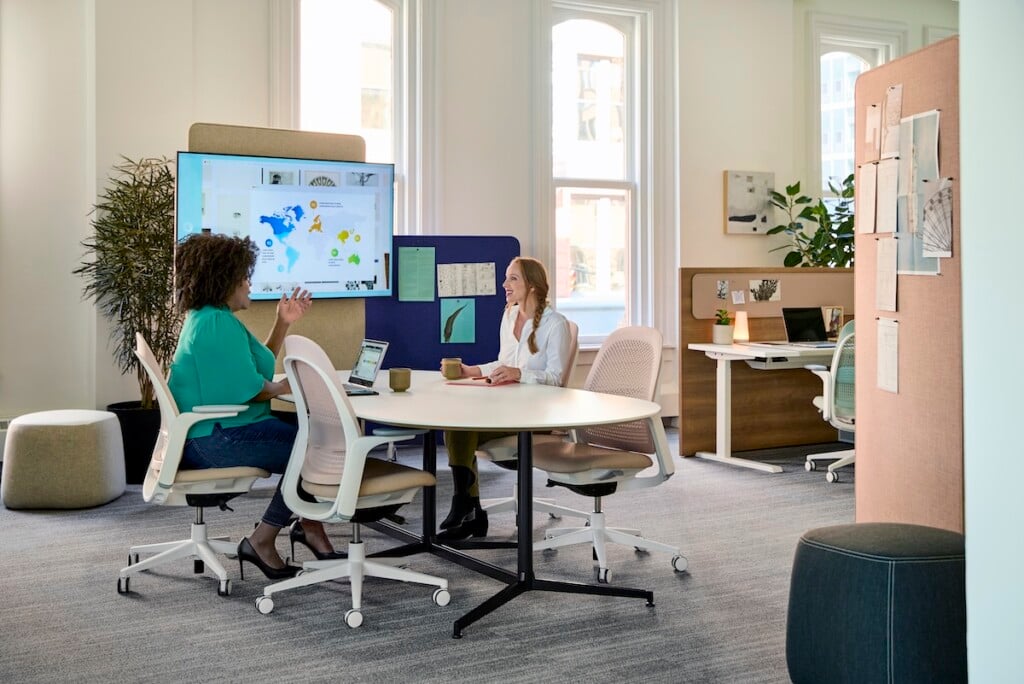
A workspace upgrade is a major investment with the potential to elevate performance, reinforce culture, and support how teams do their best work. That potential is realized when space is designed with intention and clarity; however without a thoughtful discovery process, even well-designed environments can miss the mark, resulting in spaces that look polished but do not get used in the way they were intended. In today’s work environment, that kind of misalignment can quietly erode both productivity and return on investment.
The most effective workplace transformations begin with a simple principle:
your team should shape your workspace, not the other way around.
Achieving that requires asking the right questions and working with a partner who knows how to translate those answers into spaces that truly perform.
Why It Starts With Understanding How Your Teams Work
Every organization is made up of teams with distinct rhythms and responsibilities. Marketing teams often thrive in open, collaborative settings. Accounting teams rely on focus and consistency. Sales teams move fluidly between calls, quick conversations, and collaboration. Operations teams depend on structure, clarity, and efficiency.
Leadership may have a strong vision for the workplace, but the way teams experience the space day to day often reveals needs that are not immediately visible. Systemcenter, a leader in commercial furniture and interior space design here in Hawaii, approaches workplace projects with this understanding at the forefront.
Systemcenter’s Director of Design, Elizabeth Schnelker, explains:
“We often begin with a leadership vision, but the most important insights come from listening to the teams themselves,” Schnelker says.
“When we meet with individual departments, we learn how they actually work, where they need focus, where collaboration breaks down, and what is missing from their current space. That discovery process is what allows us to design environments that truly support the people using them every day.”
This design-led, consultative approach ensures that decisions are rooted in real behavior rather than assumptions.
The 4 Collaborative Modes to Consider When Designing for the Way Teams Work
As the exclusive Haworth dealer for Hawaii and Alaska, Systemcenter draws directly from Haworth’s extensive workplace research to guide this discovery process. Haworth is widely recognized not only as a global leader in commercial furniture manufacturing, but also for decades of research focused on how people work, collaborate, learn, and perform within physical environments.
That research informs how Systemcenter helps clients understand their teams and translate those insights into effective workspace solutions.
One of Haworth’s most valuable frameworks identifies four primary collaborative modes that shape how teams function. While all teams move through each mode at times, high-performing teams tend to have a dominant collaborative style rooted in their culture.
INFORM
Teams with a more structured or hierarchical culture often collaborate through formal communication.
How they work: scheduled meetings, presentations, and clear information flow.
How space supports them: conference rooms, presentation areas, structured meeting environments.
Teams that work this way: executive leadership, finance and accounting, legal, compliance, government or regulatory teams.

Conference room at Hawaii Pacific University’s executive offices by Systemcenter, featuring mobile lounge seating, power-integrated tables, and modular walls designed for structured meetings and clear communication.
DO
Execution-driven teams prioritize speed, efficiency, and access to tools.
How they work: quick decision-making, rapid task completion, active collaboration.
How space supports them: project tables, shared resource areas, touchdown spaces, mobile solutions.
Teams that work this way: sales teams, operations, project management, facilities, implementation and installation teams.

Haworth collaborative workspace with mobile seating, whiteboards, and shared tools that support fast-paced, execution-driven teams through flexibility and easy access to resources.
THINK
Creative teams focus on ideas, experimentation, and innovation.
How they work: brainstorming, problem-solving, and iteration.
How space supports them: flexible layouts, writable surfaces, reconfigurable furniture that adapts as ideas evolve.
Teams that work this way: marketing, design, product development, strategy, innovation teams.

Conference and ideation space at Anduril Industries’ Honolulu office, designed by Systemcenter with movable whiteboards, ergonomic seating, and flexible furniture to support creative thinking and problem-solving.
CONNECT
Relationship-focused teams emphasize group work and collective decision-making.
How they work: collaboration through conversation, shared ownership, and teamwork.
How space supports them: group-oriented spaces, flexible seating, lounge-style collaboration areas.
Teams that work this way: human resources, client services, customer experience, cross-functional leadership teams.
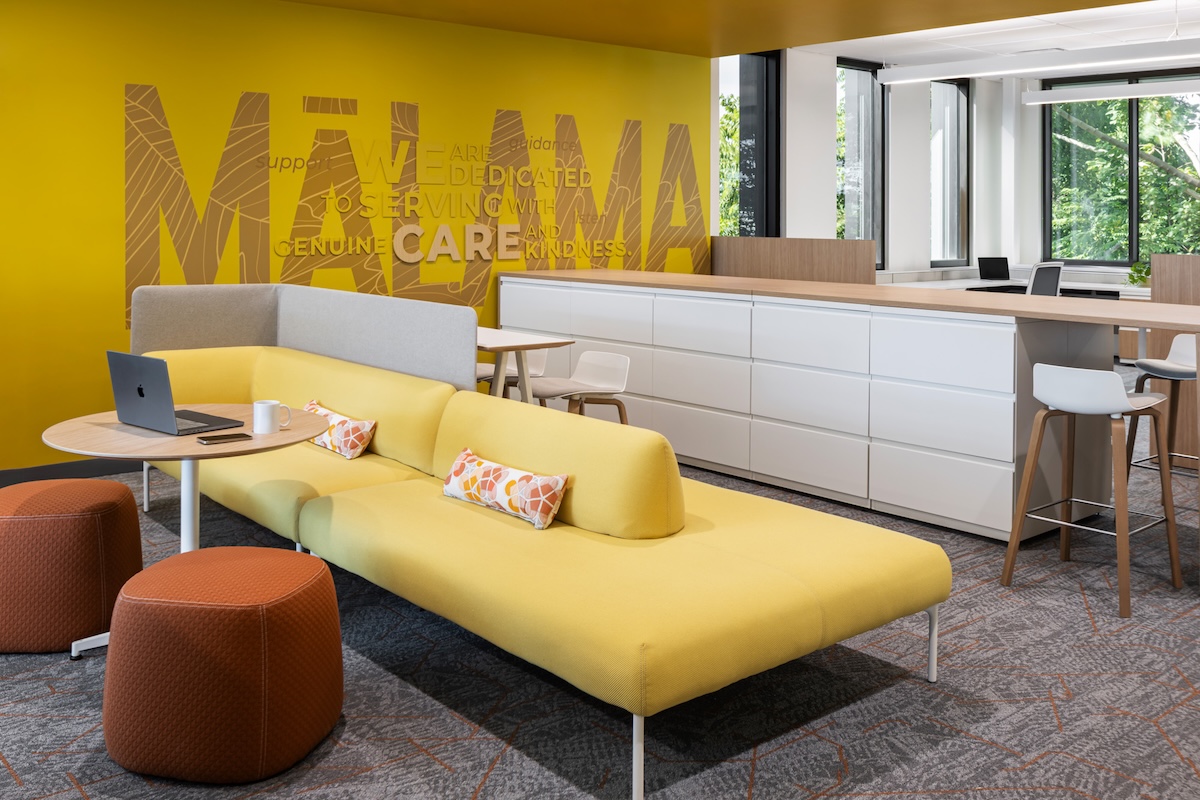
Collaborative lounge area at HFS Federal Credit Union headquarters, designed by Systemcenter with varied seating and acoustic privacy to support relationship-driven teamwork and informal collaboration.
Why Discovery and the Right Partner Protect Your Investment
The gap between intention and impact is where many workplace investments struggle. Without discovery, organizations may unintentionally prioritize aesthetics over function or design for perceived needs rather than actual behaviors.
Systemcenter bridges that gap by pairing research-based insights with deep local expertise. Through department-level conversations, workflow analysis, and thoughtful space planning, organizations are guided toward work environments that align business goals with how teams truly work.
Design With Purpose. Support Your Team.
When workspaces are shaped by people, insight, and research, they become tools that actively support performance, collaboration, and culture. The most successful office environments are built on understanding and guided by experienced partners who know how to turn insight into impact
To learn more about how to design the perfect workspace for your team and to book a complimentary space consultation, visit https://systemcenter.com/designing-the-modern-workplace.