How Regional and Ethnic Chambers of Commerce Elevate Businesses in Hawai‘i
While the statewide Chamber of Commerce Hawaii serves more than 2,000 members, dozens of smaller chambers across the islands offer specialized support for specific regions, communities, and industries.
Many people are familiar with Chamber of Commerce Hawaii, the statewide coalition of more than 2,000 member businesses and nonprofits that supports local companies through advocacy, training, events, networking and other resources.
More than two dozen smaller chambers representing islands, regions, ethnic groups and other affiliations within the state remain less well known. Each is unique and offers different benefits and programs. Hawaii Business Magazine spoke with five of these smaller chambers to report on their activities and help you decide whether your organization and mission could benefit from membership.
KAPOLEI CHAMBER OF COMMERCE
The chamber represents the entire West Oʻahu region, including Kapolei, ʻEwa Beach, Waipahu, Nānākuli, Waiʻanae and Mākaha. Founded in 2008, it now has close to 400 members and 38 Leaders’ Circle Sponsors, including Grace Pacific, James Campbell Co., Kaiser Permanente and The Queen’s Health Systems.
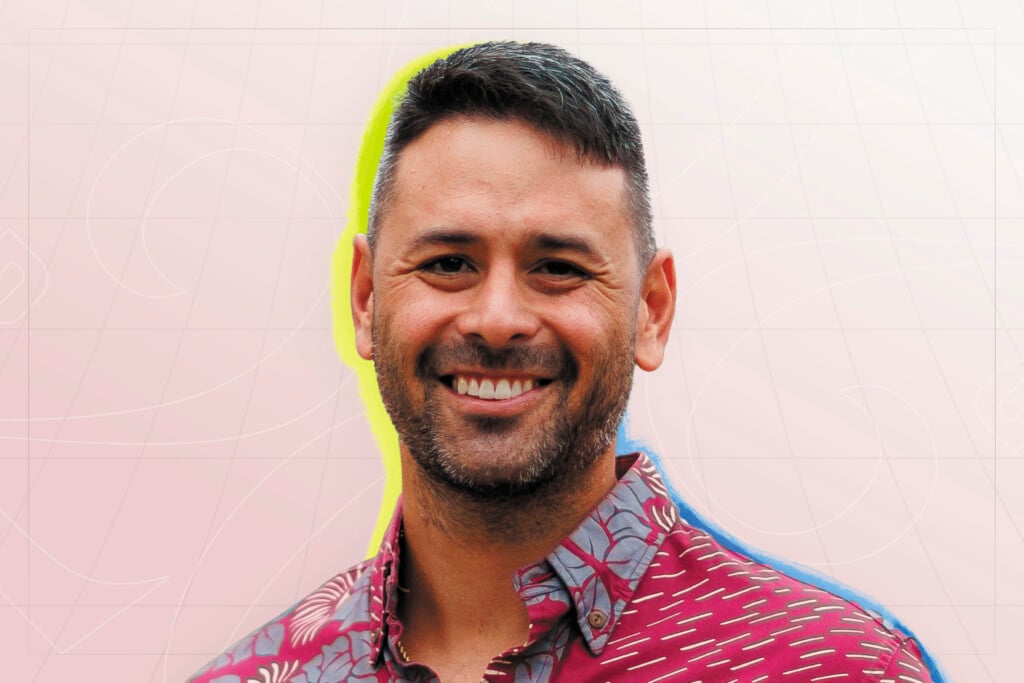
“Our regional chamber uses four pillars to outline our priorities: advocacy, business support, education and workforce,” says Kiran Polk, executive director and CEO of the chamber. “We are an advocacy led organization and [have] a strong presence in the legislative process. We regularly engage with our federal, state and city elected officials.”
Annual membership dues for small businesses range from $100 to $300 and members can participate in signature events such as Pau Hana Networking, which partners with different area businesses to foster connections, and the chamber’s annual holiday luncheon featuring an elected official as keynote speaker.
“I’ve had everyone from small-business owners to C-suite executives tell me they made a meaningful connection at one of our networking events,” Polk says. “At the end of the day, that’s what it’s all about.”
The chamber’s Biz Talks, held in partnership with UH West Oʻahu, feature entrepreneurs sharing their business journeys on a TED Talk-style stage. Live Q&A sessions provide mentoring opportunities for small-business owners, and the events are recorded for YouTube.
The chamber’s current initiatives include advocating for Hawaiʻi’s film industry and attracting more tech companies and connecting them with local schools to support workforce development.
Additionally, the chamber works on community issues such as homelessness, traffic, open-space maintenance, broadband access and regenerative tourism.
NATIVE HAWAIIAN CHAMBER OF COMMERCE

A dance at the annual ‘o‘o awards, which are presented by the Native Hawaiian Chamber of Commerce to honor Hawaiians for outstanding contributions to business, leadership and community advancement.
This chamber was established in 1974 to help Native Hawaiians advance into leadership roles, says Executive Director Andrew Rosen.
“At the time, Native Hawaiians in business often served as liaisons between senior leadership and the workers in the fields or factories,” Rosen says. Today, the chamber is for all Native Hawaiian businesspeople.
It currently has about 500 members. “Nearly 40% of our members are individuals or microbusiness owners,” Rosen says. “Another 40% are small businesses and about 15% are large companies. Those larger businesses are involved because they believe in our mission: to give back to the community and help uplift the lāhui.”
Membership fees range from $75 to $500 a year with discounts available for students and retired members.
The chamber offers two signature programs, including Project Hoʻomana, a hands-on business development initiative designed for Native Hawaiian micro- and small-business owners. The program features workshops, cohort-based learning and practical tools to help participants expand and strengthen their businesses.
“Just this program alone, we have touched over 800 participants in person at these workshops, networking events, mentorship and so forth,” Rosen says. Upon completing the program, participants earn a certificate from UH Mānoa’s Shidler College of Business.
Graduates can also compete in a national pitch event, in which 10 finalists nationwide present their products directly to Walmart and Sam’s Club buyers. Retail partnerships and national distribution opportunities are also available.
Mandi Kaleilani Scott—director and kumu of Nā Maka O Puʻuwai Aloha and owner of Nā Maka Kindergarten Prep School and Tech Park Center—is a three-year member of the Native Hawaiian Chamber who participated in the second Hoʻomana cohort this past summer to strengthen her business knowledge. She says the program not only equipped her with practical tools to enhance her operations, but also provided opportunities to network and learn from industry experts.
“This cohort was truly impactful for me. After every session, I made it a point to apply what I learned directly to my businesses. When I first started, I didn’t actually have a formal business plan, it was just a passion and flying by the seat of my pants. Going through the program and earning my certificate has given me so much more confidence in my skills, and I hope others will take advantage of this opportunity as well,” Scott says.
Another member program is a gala, complete with an elegant dinner, to honor people who have made outstanding contributions to advancing the Native Hawaiian community.
Rosen says one of the biggest issues in the Native Hawaiian community is the unemployment rate. The overall rate in Hawaiʻi is about 2.8% but “if you look at the Native Hawaiian unemployment rate, it’s over 8%,” he says. “These programs and workshops, everything we’re continuing to do and evolve and build stronger, is trying to get out into the community and identify where the pukas are and fill them with relevant content.”
Another challenge is that many Native Hawaiians have left the Islands due to the high cost of living and other economic pressures. An estimated 53% of Native Hawaiians in the U.S. now reside on the continent.
“The biggest focus right now is reengineering the organization to align with where our members and our community are headed. We’re looking at the challenges they face and asking how we can provide the resources, networking opportunities and tools they need to reach their full potential – without having to leave home.”
MAUI CHAMBER OF COMMERCE

Attendees enjoy hula cookies ice cream at the 2025 Hawaiian Airlines made in Maui County Festival.
The phrase “Maui is the heart of its people” reflects this chamber’s mission to support the island’s economy and business while embodying Maui’s generous spirit, says President Pamela Tumpap. Founded in 1910 by Henry Perrine Baldwin – co-founder of Alexander & Baldwin – it is the second-oldest chamber in the state after the statewide Chamber of Commerce Hawaii.
The chamber represents roughly 550 members across a wide range of business sizes and sectors.
“We all have our own unique programs that are rooted in our communities. That trust and understanding is what makes our work effective,” Tumpap says. “People know they can trust our team – they’ve trusted us for decades. They know they’ll receive one-on-one support to overcome challenges, achieve their business goals, and reach new heights.”
The chamber hosts trade councils that focus on specific sectors, such as construction, made in Maui products, and property management. These councils provide members with specialized resources, networking opportunities and industry-specific guidance. They also serve as platforms for members to collaborate, share best practices, and advocate for policies that benefit them.
Tumpap says membership fees are based on a business’s number of employees, and range from about $350 to several thousand dollars a year. Fees for member hotels are based on their number of rooms.
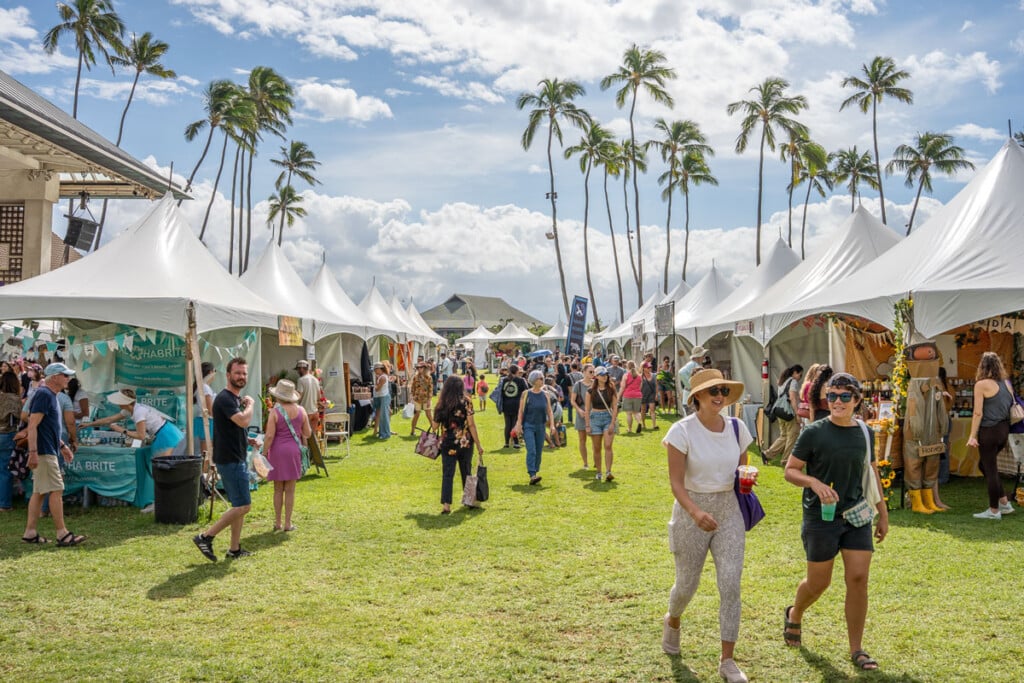
Members can participate in annual events such as the Made in Maui County Festival, the chamber’s largest event, where local businesses showcase their products. They also host Summer Social, a collaborative gathering with other businesses that includes the induction of new leaders and a celebratory annual program. In addition, the chamber holds an annual fundraiser called BizMixx Maui, with all proceeds supporting programs, local businesses and economic recovery.
The 12th annual Made in Maui County Festival, held at the Maui Arts and Cultural Center during two days in November, included 140 makers and food trucks, and about 7,500 attendees, Tumpap says. “It’s also a valuable opportunity for local businesses to connect with wholesale buyers and distributors.”
She says the chamber is deeply involved in advocacy: “We have a very active County Council, so there’s always a steady flow of new legislation. Our members are highly engaged and want to weigh in on key issues at the state level as well, so advocacy remains a high priority for us.”
After the August 2023 wildfires, the chamber played a critical role in supporting business owners who had lost everything and needed to rebuild.
“We had community hubs set up before FEMA even arrived, and we immediately began finding ways to care for our people. It wasn’t just in Lahaina – there were fires starting in Kula as well – so we were dealing with two major areas of the island at once, along with other smaller flare-ups. But everyone came together. The community rushed to unite and support one another.”
The chamber also assisted business owners in securing SBA loans during the pandemic by helping them complete paperwork and navigate the process. “We were able to distribute a significant amount of funding and help many people. Even today, some of them still thank me personally.”
Other chamber initiatives include promoting economic diversification and agriculture, managing the visitor industry responsibly, expanding affordable housing and infrastructure, and improving broadband access for all residents.
HISPANIC CHAMBER OF COMMERCE HAWAII

This Hispanic Chamber of Commerce hosts numerous events, some of which feature traditional dances.
Four co-founders established this chamber in 2019 to support Hispanic-owned businesses statewide. It operates as a volunteer-run nonprofit and has about 200 to 300 members.
“We learned that there are about 8,000 Hispanic-owned businesses here in Hawaiʻi,” says co-founder and President Barbara De Lucca. “When we started the Hispanic Chamber, our tagline became ‘For Latinos and those who love us.’ We want our networking events to not only connect people professionally but also celebrate and share our culture.”
Memberships range from $75 to $500 a year depending on the size and type of business, and discounts are available for military members and students. Members can participate in cultural and business development events such as Cinco de Mayo, the Latino Business Expo, the Taste of Mana Gala, and Vamos Kapolei in collaboration with the Kapolei chamber.
“If you go to our events, they’re smaller and more community-based,” De Lucca explains. “We focus on advocacy and uplifting Hispanic-owned businesses.”
The chamber is open to anyone. “You don’t necessarily have to have a Hispanic-owned business. If you’re a business owner – an accountant, for example – joining different chambers is a great way to meet people you might not encounter elsewhere,” De Lucca says. Members include restaurant owners, tech entrepreneurs, financial planners and other businesspeople.
De Lucca emphasizes that the chamber is also an opportunity to help businesses scale. “When you have a passion for something, like I do, you still need to learn the business side. I never ran a nonprofit before starting this one. It’s the same for a restaurant owner. You love cooking, but you also have to manage ordering, shelf life, payroll and overhead.”
The chamber is connected to the U.S. Hispanic Chamber of Commerce. “There are 5 million Hispanic-owned businesses across the U.S. and over 260 local chambers,” De Lucca explains. “Each year, the Latino Donor Collaborative publishes a report on the Latino population. For the first time [in 2025], Latinos represent 1 in 5 Americans – 20% of the population.”
She says the biggest needs among members and their businesses are marketing and branding, financing, financial management and the adoption of technology such as AI. The chamber offers resources to help with all of those challenges.
The chamber’s Buenos Días Breakfast Networking events typically attract 25 to 40 attendees. “These events provide a valuable opportunity for our business members to showcase their companies,” De Lucca says. “For example, a real estate professional might lead a workshop, engage with other business owners and share insights. It’s a way for members to grow their businesses while learning from one another.”
Taqueria El Ranchero was one of the first members to join the Hispanic chamber in 2019. The owner was a first-time restaurateur who knew little about running a business and even turned to YouTube to learn the basics. With the support of the chamber, he eventually opened two locations – one in Kapolei and another in Wahiawā – and has frequently offered to sponsor chamber events.
“He handles the alcohol setup, secures the necessary licenses, and last year he even provided three bars at our event along with live mariachis,” De Lucca says. “When we asked if he’d bring the mariachis this year, he said yes. We rely on him for Cinco de Mayo – it’s a great partnership and collaboration. It’s been wonderful to see his business grow over the years and his involvement with the chamber increase. Now he’s one of our sponsors, which helps him continue to build his name in the community.”
Another concern among members is the increase in ICE raids, which has led to a decline in some large social events.
“Especially on Maui and the Big Island, where the Hispanic population is larger because of the coffee farms and service industries like hotels and restaurants, many immigrant residents are more cautious,” De Lucca says. “They’re laying low because it’s not worth risking being trapped or racially targeted.”
KAILUA CHAMBER OF COMMERCE

The Kailua Chamber of Commerce hosts the community’s annual independence day parade.
This Windward Oʻahu chamber stands out for its personal, community-focused approach to business that emphasizes relationship building and small business development rather than lobbying or advocacy, says President Rebecca Cummings.
“The special thing about Kailua is how personal it is,” she says. “It feels like people want to get to know you before they want to do business with you. We really are an ʻohana. We work together, learn together and support one another so everyone can do as well as possible. We also develop strong personal relationships; when someone has a wedding, birthday or business milestone, their chamber friends are often there celebrating with them. We’re here for more than business.”
Monthly “lunch and learn” sessions offer members a variety of professional development talks.
“We recently hosted a mortgage panel with four industry experts,” says Cummings. “A few months earlier, we held a real estate panel covering both residential and commercial markets. We aim to provide information that’s relevant and helpful not only for business owners but also for the wider community.”
A general membership is $300 a year, and Cummings says members get the most value by actively participating in the chamber’s many development opportunities, from workshops to speaker events.
It operates mostly on volunteer power, with just one paid staff member. “Anyone leading a committee or serving on the board is a volunteer,” Cummings says. “We have to be smart about where we put our time and energy. We do a lot with what we have.”
One big annual event is Kailua’s Fourth of July Parade, a cherished community tradition for more than 75 years.
Cummings says the chamber is actively working on helping local businesses navigate growing challenges, including rising tariffs.
“Businesses are starting to feel the impact of increased prices due to tariffs,” Cummings explains. “The shutdown has also affected many families here, especially with the Marine Corps base nearby. It’s a trickle-down effect. We plan to bring in speakers early [in 2026] to help our members navigate these issues.”
Cummings adds that what keeps members and the community engaged is Kailua’s unique charm and sense of place.
“Kailua is a place that people love,” Cummings says. “Whether they’re visiting or they live here, there’s something special about it. People want to come to Kailua; they enjoy the small, one-of-a-kind shops and restaurants you can’t find anywhere else. You can walk or bike just about everywhere, and it simply feels good to be here. The more we can preserve that, the better off everyone will be.”