Two Hawaiʻi Founders Score Major Deals in Breakout Quarter for Island Tech
kWh Analytics and Vinovest acquired by global and mainland companies, respectively
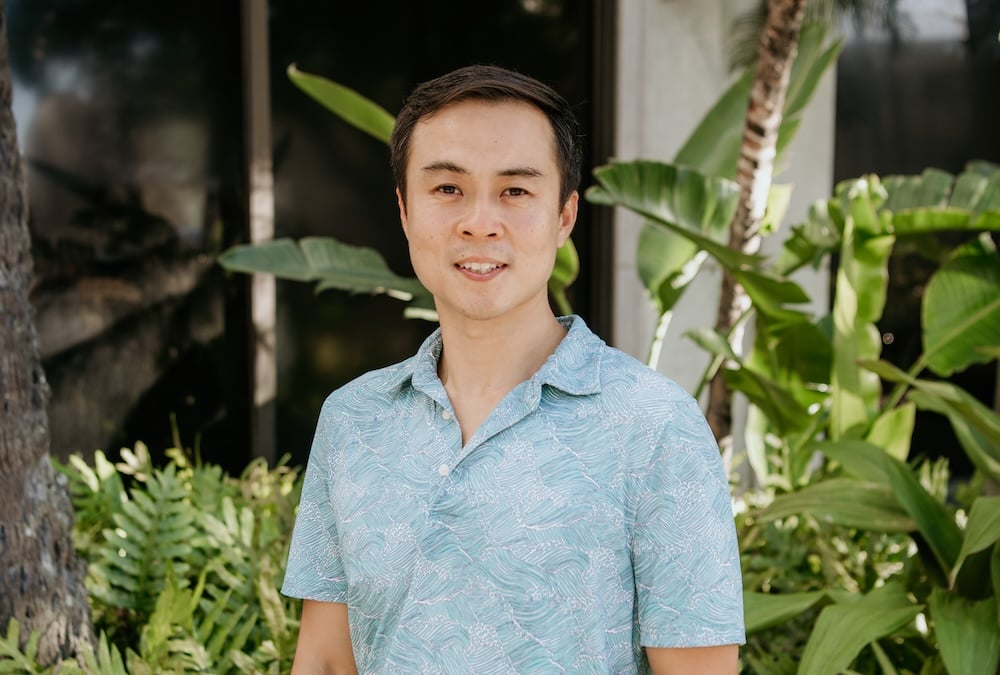
A pair of high-profile acquisitions is putting a spotlight on the global reach of companies founded in Hawaii.
In the energy sector, UK-based Beazley has agreed to acquire kWh Analytics, founded by Richard Matsui, who was recently named one of Hawaii Business Magazine’s HB20 “20 for the Next 20” honorees for 2026. What began in 2012 as a data-focused startup evolved into what Matsui describes as “the insurance company for clean energy” – now one of the largest insurers of solar, wind and battery projects in North America.
Like many tech startups, the company’s path was not linear. “We thought we were building a database,” Matsui said. “Then we asked, how do we make money off this? What if we build insurance policies off the data?”
That pivot ultimately defined the business. The acquisition itself came together quickly after a long build. “Toward the end of last year, we realized the company might be best off as part of a bigger platform,” he said. After seeing signals that Beazley was looking to expand in the space, “we approached them…and the conversation moved quickly from there.”
Earlier this month, Beazley announced that it had agreed to the terms of a $10.8 billion takeover bid from Zurich Insurance Group, as the Swiss firm joins growing competition for holdings in the specialty insurance market.

Brent Akamine
At the same time, another Hawaiʻi-founded company was finalizing its own deal. StartEngine announced it has acquired Vinovest, co-founded by Brent Akamine.
Akamine launched Vinovest in 2019 after years in Los Angeles startups, building a platform that allows everyday investors to access fine wine and whisky – assets traditionally reserved for a select few. The company has since grown to more than 200,000 users and manages roughly $140 million in assets. “We ran a pretty standard process,” Akamine said of the acquisition. “But ultimately, we chose the partner where we felt growth would come faster as part of a larger company.”
The timing of the two deals – closing within the same week – is notable. Both founders, longtime Hawaiʻi residents and Punahou School alumni, see it as more than coincidence. “There’s been this narrative that tech in Hawaiʻi hasn’t succeeded,” Matsui said. “But two exits in one week shows the ceiling is higher than people think.”
Both founders also emphasized a broader shift that could unlock more local innovation: Artificial Intelligence. Matsui argues that many of the traditional barriers to building companies in Hawaiʻi – such as geography, talent and capital – are rapidly disappearing. “You don’t need a big team anymore,” he said. “If I were starting today, it would be me in my living room with one or two people.”
Akamine echoed that transformation from an operational perspective. “What used to take a team of 20 engineers can now be done by two,” he said. “We can ship in a day what used to take months.”
Matsui and Akamine declined to disclose details of the acquisitions.
For both entrepreneurs, the acquisitions are less an endpoint than a transition. Each plans to remain involved in the near term while also exploring how to give back locally, particularly by helping Hawaiʻi businesses adopt new technologies. “If there’s one thing,” Matsui said, “people should just try it. Spend an afternoon with these tools. It will change how you think about what’s possible.”