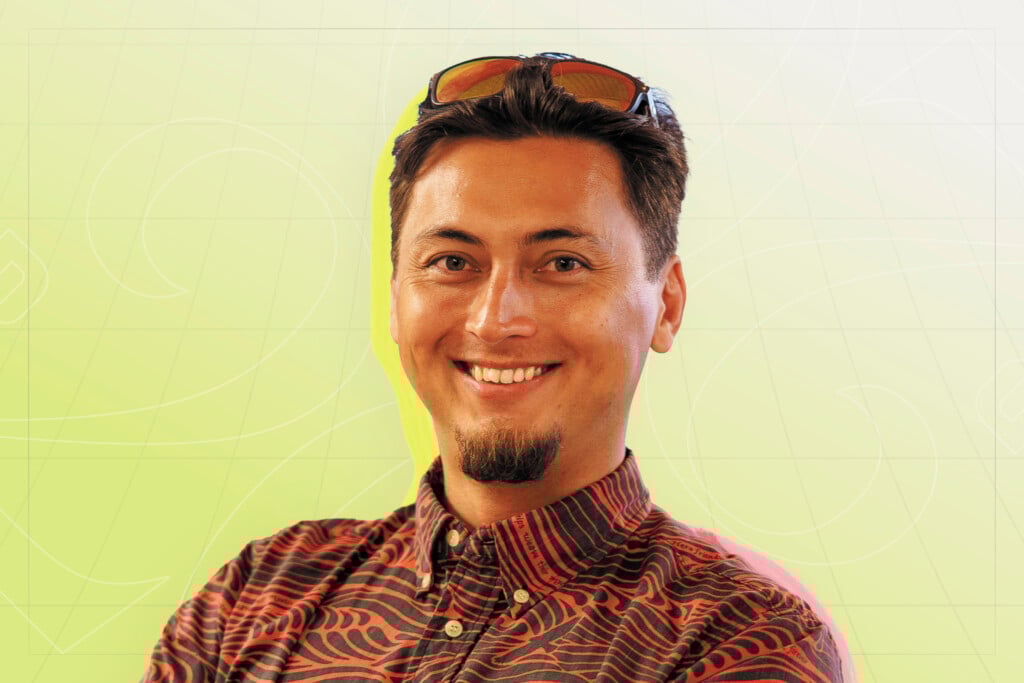
HB20: Daniel Moats, AHL Architecture
Starting as a drafter with no traditional advantages, Daniel Moats worked his way up to shaping Honolulu's skyline one landmark project at a time.
Long before Daniel Moats was shaping Honolulu’s skyline, he was building with LEGO blocks.
“Since I was very young, I would take these, you know, construction blocks or LEGOs, and I would build things,” Moats says. “I knew what I wanted to do in life.”
Growing up in Hawaiʻi, he was drawn to how things were assembled — how pieces came together to create something lasting. That curiosity deepened in Moats’ hometown of Mililani, where he rode his bike through active construction zones, watching an entire town take form. Architecture, he knew early on, was not an accident — it was the goal.
A product of Pearl City’s public schools, Moats discovered architecture through high school electives and continued his training right after graduation, choosing a practical, hands-on path that allowed him to enter the profession quickly. With limited resources, he began his career as a drafter, learning on the job and earning experience through persistence rather than pedigree.
His trajectory was shaped by rare mentorship. Early in his career, Moats worked closely with Joseph Farrell, a highly respected design and technical architect, and later with David Miller, whose business acumen influenced Moats’ approach to leadership. At the time, the work was demanding and relentless; in retrospect, Moats recognizes it as foundational.
Nearly 25 years later, Moats is a Principal at architecture firm AHL with extensive experience leading large, complex, high-rise residential projects that define Honolulu’s urban core. His portfolio includes Symphony Honolulu, Aeʻo at Ward Village, Pacifica Honolulu, The Watermark, Allure Waikiki and Moana Pacific—projects known for balancing technical precision with culturally informed design.
Currently, Moats is overseeing several major developments, including two ultra-luxury mixed-use high-rise projects in Ward Village and the long-anticipated Mandarin Oriental project near the Hawaiʻi Convention Center, a redevelopment intended to revitalize a key urban corridor. He is recognized for integrating advanced technologies into the design process to ensure accuracy, coordination and timely delivery across complex project teams.
While his role includes vision, strategy and execution, Moats believes true leadership is rooted in mentorship and in providing others with opportunities to make an impact.
“Success doesn’t come from focusing on yourself,” he says. “It comes from helping others succeed.” That belief guides how he supports younger professionals through the pressures of a demanding industry known for long hours and high expectations. Architecture, he notes, requires commitment because its impact endures.
“Buildings don’t disappear,” he says. “They stay. They shape cities for generations.”
Born and raised in Hawaiʻi, Moats takes pride in showing what is possible for local students coming from public schools without traditional advantages. He is not one to self-promote; his reputation travels through trust, integrity and results.
Asked what people may not fully see, Moats answers simply: “I care deeply—about the work, but more about the people. I wouldn’t be here without them.”