Time to Leave the College Nest. Now What?
Searching for a job right after graduation can be a perilous task. Here's what I learned from my journey that might help others.
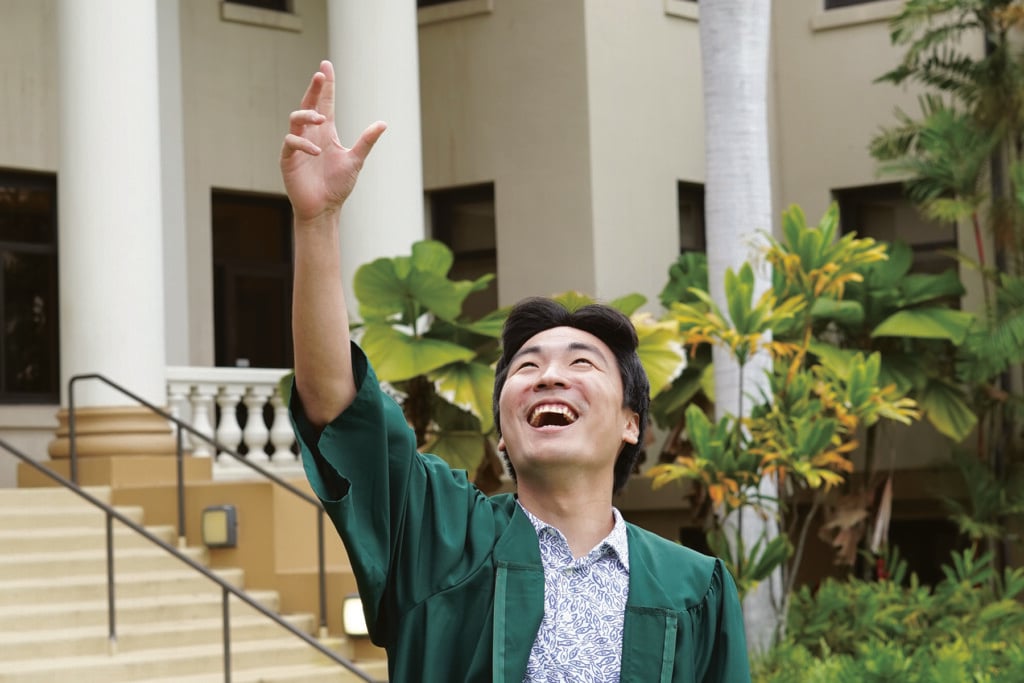
College graduation is marketed as a celebration of years of higher education, but for many, including myself, it feels more like being dropped in the middle of traffic with nothing but a diploma and a LinkedIn profile.
In May, I will be graduating from the University of Hawaiʻi at Mānoa with my degree in journalism. Like many of my classmates, the past few months leading up to graduation have been both exciting and utterly overwhelming.
When do I start applying for jobs? Why does this entry-level job require three years of experience? Do I move to the continent for more opportunities? Can I be away from my family for that long? Should I go to grad school? What happens if I don’t have a job when I graduate?
These are questions I asked myself during a car ride home with my parents late last year. Right on cue, as if my parents could sense the anxiety attack I was having about my future, they began prodding me about my post-graduation plans.
Without a clear answer to give them, I knew I had to get serious about finding a job. The longer I waited, the more difficult things were going to get. As I began my search, however, it became abundantly clear that the journey I was about to embark upon wasn’t going to be smooth.
Entry-level positions in journalism and communications required multiple years of outside experience, and the minimum qualifications were difficult to meet for any student right out of college.
The odds seemed to be stacked against me and everyone else in the same boat.
My friend Skye Navarro is a Mililani native who’s also graduating from college next month. She found herself in a similar position, but she had a different outlook that I think could be helpful to others.
As she aptly put it, “I have no idea what I’m doing, but admitting you don’t have a clue is the first step in finding a clue.”
After months of searching without much success, prospects looked rather perilous, so I did what most 21-year-olds do in times of crisis — I called my parents. Here’s the advice they gave me to help confront the uncertainty of my future:
First, don’t confine yourself to a job that has to check every single box. Be open and willing to adapt and learn as you go. If a job isn’t quite perfect, don’t see it as an obstacle or dead end, but as a stepping stone to reach your goal.
Second, try not to make impulsive decisions because you feel pressured or overwhelmed at the moment. Take time to weigh the pros and cons carefully and when all else fails, as cliché as it sounds, trust your gut.
Third, start as early as you can. Don’t push the search off until next week or next month, because before you know it, graduation’s here and the time to make tough decisions was yesterday.
That all sounds great, but what does it actually mean for a soon-to-be college graduate who doesn’t have a clue about what to do?
For me, it meant that college graduation doesn’t mean you’re doomed to fail in life if you don’t have a perfectly mapped out five-year plan. What truly matters is whether you are willing to face challenges head-on, be fiercely resilient and always open to growth.
As hopeless and frightened as I felt during moments in my search, my parents always reminded me that every application submitted, every interview completed and every rejection received is part of the process.
I’ve learned that the path forward may not be very clear today, but it takes shape with every step taken, so brace yourself for the journey ahead and take that first step.
Postscript: After taking my parents’ advice and following my gut, I accepted a job as a reporter with Hawaii Business Magazine, where I will begin to work full-time after graduation. I was anxious about not waiting until I had my diploma in hand to start looking for a position. I had a number of options to consider. I knew the job market is crowded with new graduates, as well as many people who have been furloughed or whose jobs have been replaced by AI. This article is my first assignment. I’m eager to get started, and I’m looking forward to many more stories to come.