The Unplanned Success of Char’s Bar Hawai‘i
Char's Bar Hawai‘i wasn't built on a five-year plan. It was built on trust, grit, and the values two Filipino-American women carried from the generations before them.
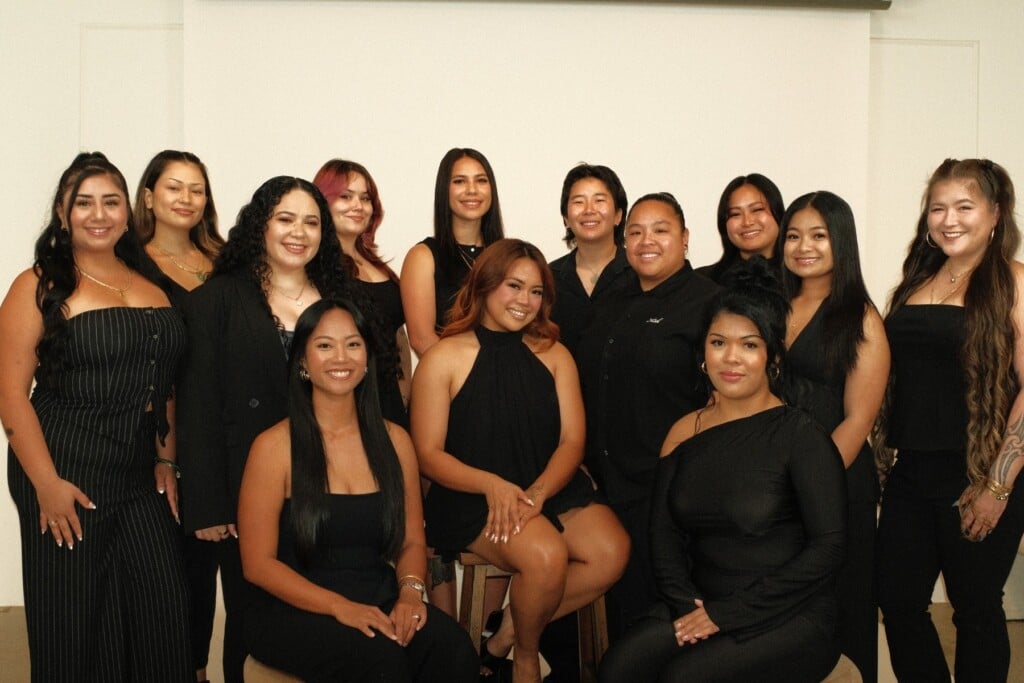
Charissa Vallesteros and Rochelle Cariaga have bartended for celebrities including Bretman Rock, AJ and Alyssa Rafael, and Roman De Peralta from Kolohe Kai. They have flown to Los Angeles to bartend for Jenn Tran, who starred in season 21 of The Bachelorette, booked more than 100 gigs in a single year, built a team of women they refuse to call employees and grown Char’s Bar Hawaiʻi from a tweet into one of Oʻahu’s most recognizable mobile bar brands. When you ask them how they feel about all of it, they will probably shrug.
Not because they are not proud. But because they have been too busy to notice.
This is the story of what happens when two Filipino-American women build something extraordinary while keeping their heads down so long they almost miss it. It is a different kind of business model, one with no five-year plan, no investor pitch, no roadmap. During Asian American and Pacific Islander (AAPI) Heritage Month, it is a story worth telling for every entrepreneur in Hawaiʻi who was raised to work hard and never look up.

Char’s Bar won Mobile Bar of The Year NACE Awards in 2024 and 2025 | Char’s Bar owners now in 2026. Photo Courtesy of Megan David.
A Tweet, a Rejection, and a Nonexistent Business Plan
It started with a 2019 tweet. Vallesteros was working a restaurant job in Waikīkī, mixing drinks and quietly dreaming. She posted a thought online via Twitter (now X): “how cool would it be to do this for events, for homes?” Then she filed it away. Two years and a global pandemic later, that thought became a business.
By 2021, Vallesteros had quit a toxic job mid-Covid, applied everywhere, and was watching her savings drain. Cariaga, her partner in life and eventually in business, was juggling teaching, GNC shifts and a valet gig just to keep them afloat. They were living with Cariaga’s uncle. “We were sleeping on a twin bed,” Vallesteros said. “And when it would rain, [the roof] would leak.”
Then came the interview. Vallesteros made it to the final round for a union poolside bartending position at the Ritz-Carlton, with good pay and benefits — the kind of job Filipino immigrant parents dream about for their children. “I would have been set for life,” she said. She sat in the lobby afterward and made herself a quiet deal with God: If I don’t get this job, I’ll start the business.
She didn’t get the job.
“Apparently you want me wherever you want me to be,” she recalled thinking. “Fine. I’ll do it.”
She spent the last of her savings on a logo. They filed to form an LLC. Four days before their first real event, they built a bar from wood and paint. “If we’re gonna do this, we have to do this right,” Vallesteros said. There was no business plan. No roadmap. Just the next event, and the one after that.

Rochelle Cariaga built many bars, sizing from a single bartending bar to as big as a four person bar.
Ahead of the Curve, Without Knowing It
What Vallesteros and Cariaga couldn’t have known in 2021 was that they were in on the ground floor of a national trend. The global mobile bartender services market was valued at $6.8 billion in 2024 and is projected to nearly double to $13.1 billion by 2033, driven by a growing consumer demand for personalized, experience-first events. As global economies recovered from the pandemic, there was a notable resurgence in social and corporate gatherings, with more clients opting for mobile bartending services. Char’s Bar launched right as that wave was forming.
On Oʻahu, they were among the earliest. Now mobile bar companies have multiplied across the island. What makes Char’s Bar different is not just that they got there early. It is the relationship at its center.
Ask Cariaga where her drive came from, and she doesn’t reach for ambition or strategy. “My drive comes from just trying to do and support her [Vallesteros] and whatever she wants to do,” she said. But she is quick to add where that instinct came from. “My mom forced me to work all these jobs,” Cariaga said. “She also works like three jobs right now. If she can do it, why couldn’t I?” Her father was the same way, out before dawn and back after dark. When her parents divorced, her mother found more ways to make it work. Nobody told her to stop, so she never did. That model stuck.
“She [Vallesteros] has an idea,” Cariaga said simply. “I make it happen.”
Most businesses are built on projections. Char’s Bar was built on trust.

The Year the Highlight Reel Lied
From the outside, 2024 looked like their best year. Fully booked, flying to LA, bartending for high-profile names. “We were doing 100 events,” Vallesteros said. “We were flying to LA, bartending for Victoria Justice, the Bachelorette, everyone.” The highlight reel was full. Behind it though, both women were running on empty.
“If I was doing it for me, I wouldn’t be doing this at all,” Vallesteros said. “I’m at my wit’s end.” Every time she wanted to quit, Cariaga held the line. “You’re in it,” Cariaga told her. “You can’t give up. You have a duty to these people.” Not because of contracts. “It’s ingrained in me,” Cariaga said. “You just have to keep going.”
One afternoon at Island Vintage Coffee, Vallesteros told Cariaga she didn’t know how much longer she could keep going. A stranger walked up mid-meal, unprompted: I love what you’re doing. Don’t stop.
“I was literally crying,” Vallesteros recalled. “And then she just walks up.”
Those moments — the strangers, the thank-you messages, the brides who write back months later — were the only numbers that ever really mattered. Small wins. Small signs. Whatever they were, they kept the lights on when nothing else could.

Char’s Bar owners bartending Bretman Rock’s birthday party in 2023 | Char’s Bar bartended for Jenn Tran, Season 21 of The Bachelorette at her birthday party in 2024.
What the Hustle Was For
The deeper meaning of it all came later, when Vallesteros’ aunt fell seriously ill in December 2024, the same month she got the notification that she was on track to finish her master’s in mental health counseling. She thought about her grandmother, who had pleaded with her to quit nightclub shifts and finish school, and died before seeing it happen. She was not going to let history repeat itself.
She graduated in March 2025. Her aunt was alive to know it.
In that same season of reflection, she also thought about her mother, who had wanted to be a doctor but became an accountant instead, sacrificing her dream so her children could have room for theirs. “How cool is it,” Vallesteros said, “that whatever they’ve done, I get to do this? I get to be whimsical. I get to actually explore what I love to do.”
Cariaga arrived at the same truth from a different direction. “My sacrifice would be whatever I owe to my parents,” she said. “A lot of times there’s things I don’t want to do, but I do it anyway, because it’s for the people that I love.” The American Dream, she added, looks different now than what their families crossed an ocean for. “I think the American Dream has changed,” Cariaga said. “The American Dream now is survival. You’ve got to do what you have to do to survive.”

Char’s Bar bartended for AJ and Alyssa Rafael’s Hawai‘i Wedding in 2022.
This is the throughline of so many AAPI stories in Hawaiʻi. The generation before you carried their dreams quietly so yours could be loud. Vallesteros and Cariaga did not start Char’s Bar as a tribute to that. They started it because a door closed and instinct said go. But what it became — a business rooted in community, in showing up, in taking care of the people around them — looks a lot like the values their families carried across an ocean.
“Learn to love to suffer well,” Vallesteros said when asked what she would tell other young AAPI entrepreneurs. “If you don’t know how to suffer well, you’re not going to get the fruits of your labor. You have to do the gardening.”
Cariaga’s answer was quieter, but just as certain: “Find your reason for why you’re doing it.”
Nearly five years in, what they have built is, by any measure, a success. Bootstrapped from nothing, scaled without loans, sustained through lows that never showed up on their Instagram. They just haven’t had much time to stop and notice.