Ferraro Choi: Purpose-Driven Architecture
The firm builds more than structures - it supports cultural and environmental resiliency.
Ferraro Choi was founded in 1988 by Joe Ferraro and Gerald Choi, and over the years it’s built a reputation for being progressive and innovative.
“The firm originally focused on a client base of corporate interior projects,” designing professional workspaces for law firms, banks, developers and others, says Troy Miyasato, Ferraro Choi’s president and principal. It grew into a full-service architecture firm focused on commercial and institutional clients and projects.
The firm quickly became known for energy-efficient designs, setting a course for its broader vision today of sustainability, both environmental and cultural. Its reputation attracts like-minded clients as well as design professionals seeking meaningful careers.
“Everyone who comes to Ferraro Choi, myself included, comes because of the firm’s mission and foundation in sustainability,” says Karyn Lee, one of the firm’s principals. “Joe and Gerald were the first LEED-accredited architects in Hawaiʻi.”
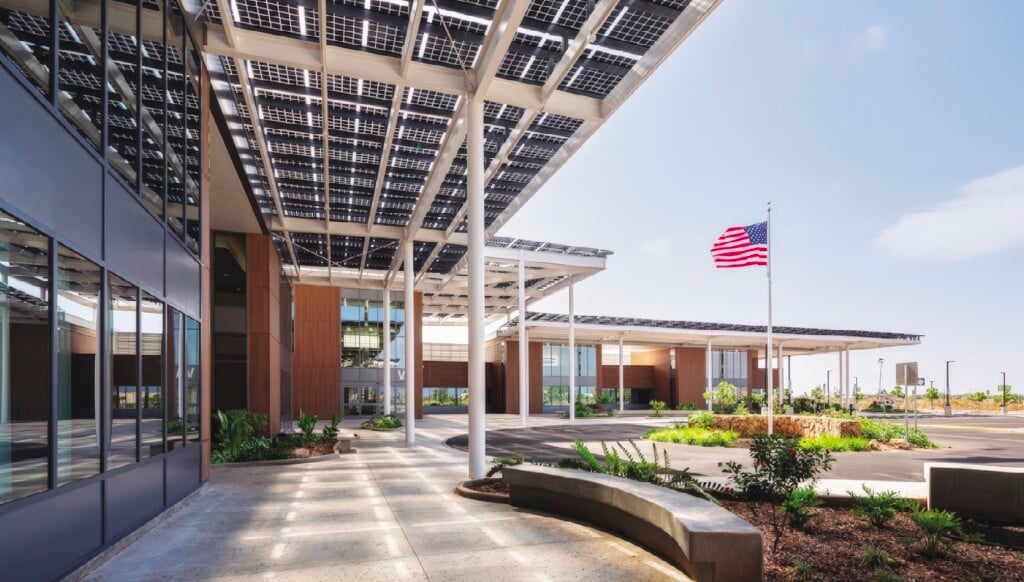
Notable past projects include the Daniel K. Akaka VA Clinic in Kapolei, the Halau of ʻŌiwi Art Hawaiian Cultural Center in Wailuku, Maui, The Queen’s Medical Center’s Airborne Infection Isolation Unit, and multiple public school campuses, most recently East Kapolei Middle School.
The firm currently has 18 employees. While firmly grounded in Hawaiʻi, Ferraro Choi’s portfolio spans projects in Japan, the Pacific Islands and even Antarctica with its work on the Amundsen-Scott South Pole Station.
“Science-based research is one of the markets we are passionate about. It betters the world,” says Miyasato. Additionally, the firm is part of a team that has been awarded work in the Arctic, so Ferraro Choi soon may be doing work at both poles.
The knowledge Ferraro Choi has gained in remote places, especially in the tropics, has led to a specialized understanding of sustainability and resiliency.
A recent example has been its work with Hoʻokuaʻāina, a kalo farm on Oʻahu. “They have a vision of creating a resiliency hub that could address food insecurity,” Lee says. The farm can provide areas for education and gatherings and, during storms, can be a hardened place for shelter and communications.
Emma Freeman, another principal, says many of the firm’s current projects feature enhanced hurricane protection areas, or designated spaces within buildings that are specially designed to withstand storm winds and flying debris.
“What makes something architecture and not a building? It’s an additional level of care,” says Freeman. “Cultural, societal and climate-response needs are changing. We have such a great group of people, and everyone thinks in a big picture mindset in what we do and what we can bring.”