Aloha Stadium’s $4 Billion Gamble
Demolition has officially begun at the old Aloha Stadium, kicking off the state's most ambitious public-private project ever. But with tariff threats, transparency concerns, and a 20-year timeline, the real question isn't whether it will get built, it's who pays if it doesn't go according to plan.
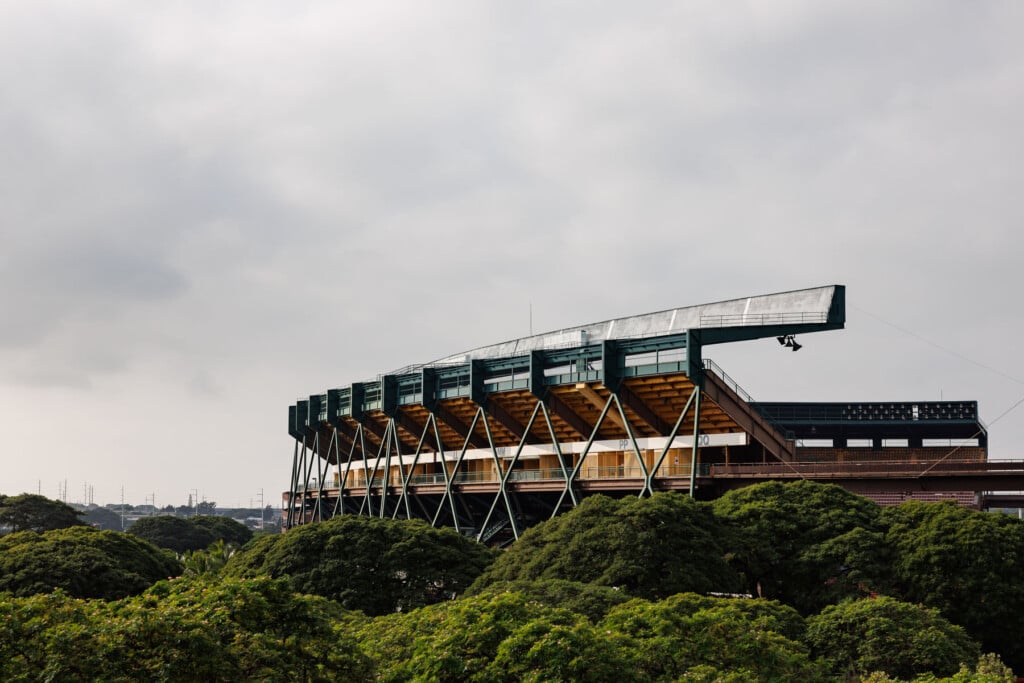
As towering cranes move into place this month for crews to cut and remove steel beams and concrete, the demolition will mark the definitive start of the New Aloha Stadium Entertainment District — the opening act for the state’s biggest mixed-use bet ever.
It’s a massive public-private undertaking valued at up to $4 billion that will unfold over the next 20 years. Phase One covers the new stadium and the “Aloha Live” entertainment district, with the new stadium slated to debut in early 2029. Later phases, planned over two decades, include 4,100 housing units, three hotel towers, and a mix of retail and open space uses. The project promises housing, economic development and cultural continuity.
It also raises familiar questions about whether this vision can hold up over time, stay within budget, and, importantly, who will bear the cost if it doesn’t. To navigate that uncertainty, the state is relying on what it hopes is a safeguard that goes beyond contracts: the people at the helm.
A consortium of local developers and contractors under the umbrella of the Aloha Halawa District Partners (AHDP) was chosen by the state to build the project. Expectations are running high, as expressed by Aloha Stadium Authority Chair Eric Fujimoto: “Mahalo to all the dedicated individuals transforming our community’s vision into reality,” he said at a launch ceremony. “We hope generations of those with Hawaiʻi in their hearts will come here to dream, celebrate and make lasting memories.”
Despite years of planning, however, community concerns about transparency have been raised, and risks have already surfaced that could bust the project’s cost projections. One of those is the impact of tariffs imposed or threatened by President Donald Trump on countries that will supply critical components for the construction project, including steel and cement.
The United States imports roughly a quarter of its cement and steel from Canada, with Mexico and China also serving as notable suppliers. Domestic sources introduce other risks, such as higher costs.
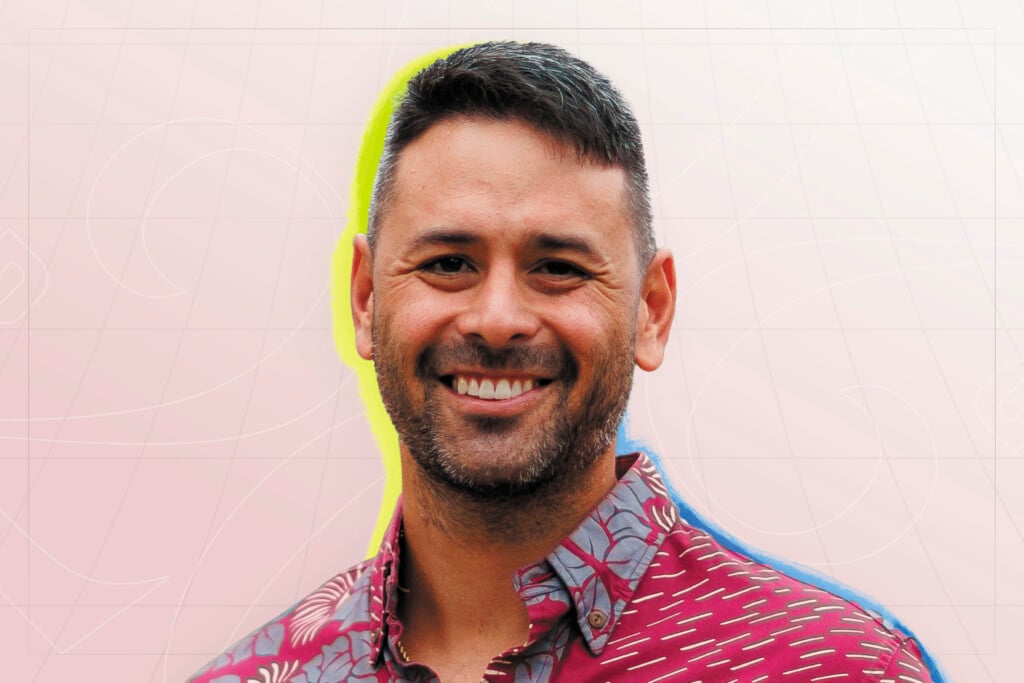
“Some of the external factors that really keep us up at night right now is that we’re still not fully sure of the impacts of tariffs on the cost of construction, especially on steel and aggregate and concrete,” says Brennon Morioka, special adviser to the governor overseeing the state’s $350 million investment in the project.
“A lot of that comes from Canada, Mexico or China,” he says, which are at varying stages of negotiations with the Trump administration over tariff levels the president has said he will impose.
Morioka says project leaders are being proactive, working to identify risks early and develop contingency plans while acknowledging that not all proposed solutions may prove viable.
Another wild card is county and local financing above the capped state contributions. Details for borrowing those funds have yet to be hammered out. Some leases and other plans have also not been made public.
The Strength of Local Stewardship

Stanford Carr, whose development company is leading the stadium district demolition and reconstruction plan, surveys progress at the site. Photo Courtesy: Aaron Yoshino
One structural advantage is that both sides of the public and private partnership are led by people with deep local ties. Together, they represent a combination of technical skills and relational “soft power” intended to keep such a large project on track.
Morioka, who is also Dean of the University of Hawaiʻi College of Engineering, oversees project delivery. While he acknowledges the skepticism inherent in large infrastructure projects, he adds that momentum is finally building. “At the beginning, you always kind of wonder, is this really going to happen? Now you look back at all the hard work, long hours, pulling hair through negotiations, and it’s all worthwhile,” Morioka says, “especially with a project like this.”
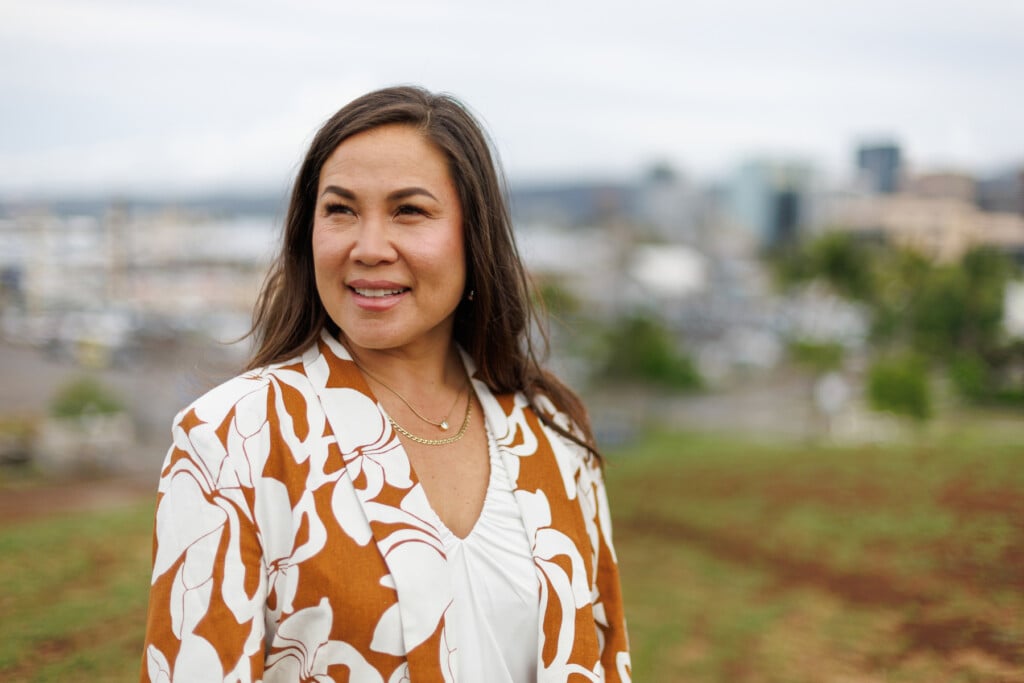
Fujimoto, who is part of the state’s leadership team, is an ʻAiea-Pearl City native whose board authorizes the project’s contracts. Fujimoto views the stadium as a shared cultural touchpoint: “When somebody says ‘Aloha Stadium’, it invokes a memory – let’s say in those 30 years or older – that makes them smile, whether it’s a concert, or a football game, or graduation,” says Fujimoto.
“To be able to build a community asset like that, it’s an exciting time,” he adds, noting that local oversight is critical to ensuring that the legal agreements align with community values.
On the private side, developer Stanford Carr of Aloha Halawa District Partners has been developing master planned communities in Hawaiʻi for 30 years and views this as a “legacy project.”
“I’m local; I want the money to stay here,” says Carr, emphasizing his intent to work with local contractors as much as possible, and to collaborate with other local developers to speed up the build-out. Carr is also CEO of Stanford Carr Development, which is the lead developer in the partnership.
This local focus has earned cautious optimism from the community. ʻAiea Neighborhood Board Chair Steve Wood noted that, from what he has seen so far, the developer has addressed fears about the community losing its identity. He points to the preservation of the Swap Meet through a new plaza design and the creation of a “tailgate preservation zone” — a designated surface lot ensuring that the tents and grills defining local fandom aren’t lost to the new vertical density.
As for the community, he says, “There’s some excitement there, some relief — like ‘Okay, finally, we’re making progress.'”
Even so, public concerns about transparency have begun to surface, especially about the fine print of the major agreements.
The Stadium Operating Agreement and Initial Ground Lease had been executed but not yet finalized, while the Master Development Agreement — which sets performance standards and responsibilities for financing, construction, operations, maintenance and lifecycle costs — was also still being finalized. Morioka says the terms for these major agreements have been set. However, none had been made public as of early January, as they were still officially considered under active procurement. Ground leases for 38 parcels and reciprocal easement agreements governing shared infrastructure and common areas were still under negotiation.
That gap between visible progress and unavailable documents has heightened public concern, shaped in part by Hawaiʻi’s experience with past large-scale projects. Oversight of the Honolulu Skyline rail project, for example, was later criticized by city auditors, who found that delayed access to key contracts and amendments made it harder to track risk, costs and accountability as the project evolved. Those experiences have made residents especially sensitive to transparency questions when work begins before agreements governing long-term obligations are available for public review.
Adding to that perception is the absence of a single, final financing package, which Carr attributes to the project’s long timeline and the need for a phased development approach. “On a project like this, it’s a 20- to 30-year endeavor, depending on the different economic cycles,” he says, a horizon that affects interest rates, tax revenues and investor appetite. As a result, financing decisions are made in stages, aligned with what can be built at each phase rather than committed all at once.
Carr says the early phase is dominated by costly but non-revenue-generating work. “Phase One, there’s going to be a stadium and the Aloha Live Entertainment District. We will not have any of the residential or commercial up yet because we’ve got a tremendous amount of infrastructure that first needs to be relocated,” he says. Housing, hotels, and commercial uses that typically generate lease revenue and tax streams come later, after utilities are redesigned and rebuilt. “Before we can disconnect it and connect it to the new, we need to design and build the relocated utilities, then demolish the existing, and then install the new infrastructure to serve the community,” Carr says.
Financing, he says, is therefore contingent on future build-out and performance: “Institutional investors buy tax-exempt bonds based on the future economic success of these communities.” Until that work is complete and site capacity is known, parcel layouts, densities, and uses — and the financing assumptions tied to them — remain unresolved.
Who Pays?

Photo Courtesy: Aaron Yoshino
While leadership shapes execution, NASED’s success ultimately depends on a complex financial engine designed to shift more of the burden away from the state. Under the Public-Private Partnership (P3) model, the state has capped its contribution at $350 million in general obligation bonds and $49.5 million in special funds for operations.
The private developer bears responsibility for all additional construction costs, assuming financial and operational risk for 30 years.
For additional costs not involving construction that exceed the state cap, the team has proposed using Tax-Increment Financing (TIF) and Community Facilities District (CFD) bonds. Both rely on county-issued debt and will surely invite intense scrutiny, as neither has been used in Hawaiʻi for a project of this scale.
But proponents argue the financial logic is secure because the project creates the potential for tax revenue streams where almost none exists today.
The TIF and CFD bonds are a hybrid: Public authority enables the bonds, private investors purchase them, and repayment is intended to come from future property tax revenues generated by development on the site.
These bonds would be issued by the City and County of Honolulu, but state and county officials have not yet decided whether to proceed or in what amounts. While the intent is to repay them from new taxable value that does not currently exist, the specific risk protections and contingencies have not yet been made public.
Currently, the swap meet’s $5 million in annual revenue flows into a state special fund to maintain the facility. As a state-owned facility, the stadium and its surrounding parking lots had been tax-exempt, meaning the county currently collects no property tax revenue from the 98-acre site. Transforming this concrete expanse into a commercial district guarantees an immediate leap in assessed value. Under the plan, that new revenue — which currently doesn’t exist — would be captured to pay for the project’s debt service rather than flowing into the general fund.
Carr noted that this strategy is standard for stadium-anchored districts he has seen nationwide. “Private capital, institutional capital will be buying these private tax-exempt bonds to fund the development,” Carr says. “This has been done successfully in so many different cities. It’s reinvented them.”
Securing the capital is only half the battle; the other half is controlling how fast the money is spent. The team is bracing for external cost risks that no amount of local bond authority can fully control.
Below ground, the risks are just as volatile. Carr estimates it will cost $150 million to $180 million just to update the infrastructure. Crews must navigate a subterranean maze of World War II-era easements, military sewer lines and jet fuel pipes before vertical construction can even begin.
Managing Risks

Rendering shown are for illlustration purposes only and could be subject to change.
Economists with the University of Hawaiʻi Economic Research Organization (UHERO) say the dynamics facing the Aloha Stadium redevelopment are typical of long-term public-private partnerships, which often carry significant legal and financial risks.
UHERO Executive Director Carl Bonham says large development projects in Hawaiʻi are especially vulnerable to legal challenges. “Any development project in the state is at great risk of being held up by lawsuits that can delay the project,” he says. Those delays have cascading effects on financing and development assumptions, particularly for phased projects.
When assumptions change, outcomes depend on how responsibilities and remedies are defined in contracts. “This all comes down to what’s in the contract, which none of us know yet,” Bonham says. A developer facing higher-than-expected costs in early phases may adjust the mix of housing, retail or amenities later to recoup expenses.
Assistant Professor Steven Bond-Smith, who is also with UHERO, says those pressures expose a core tension in how P3 risks are allocated. “Generally, you privatize the benefit and socialize the risks to the taxpayer,” he says. “Better to place those risks with whichever party can control them best.”
Construction cost risk is often best borne by the private developer, while regulatory risks may fall on the public sector. “We have to watch for milestones: at what points are we allowed to renegotiate?” Bond-Smith says.
UHERO research fellow Sumner La Croix says transparency and public monitoring determine whether risk allocations hold over time. “These public-private contracts work best when there’s actual public monitoring,” he says. Clear performance benchmarks and penalties become critical when projects encounter unexpected costs.
La Croix cautioned that incentives differ sharply when costs rise. “The state doesn’t have the incentive to rein in costs if a project goes over budget, because the public bears that risk,” he says. “A private firm has more incentive to control costs—but may also cut corners or perform only on the margins of what’s spelled out.”
State officials say Hawaiʻi’s direct financial contribution is capped, with the developer responsible for private financing, operations and long-term maintenance. Economists say how clearly those responsibilities are defined — and enforced — will determine who ultimately pays if assumptions prove wrong. “It’s really important to catalog the risks we face and determine if they’re properly accounted for,” La Croix says.
The Economic Catalyst

Motorists and neighbors will be able to monitor outward progress of the New Aloha Stadium Entertainment District, shown here before demolition began. Photo Courtesy: Aaron Yoshino
The state is navigating this labyrinth of risk to spark what it hopes will be a multibillion-dollar revival. Phase One alone is projected to generate more than $2 billion in spending and 12,000 temporary construction jobs.
“When you build something of this magnitude, that becomes the catalyst,” says Stadium Authority Chair Fujimoto.
Morioka adds that beyond the short-term construction bump, the long-term build-out could bring high-tech jobs and recurring revenue to the area.
However, local economists caution against assuming large gains from the stadium itself. As UHERO Research Fellow Sumner LaCroix notes, people are often “disappointed with how little economic growth really comes out of the new developments.”
Bonham says mixed-use sports districts often just shift economic activity rather than creating new spending: “If you’re going to go to the stadium and then spend money in the restaurants around it, you’re probably not going to spend money at restaurants in Kaimukī or the North Shore.”
Economists suggest that the durable economic win may actually be housing. “If you build enough housing that you can help stabilize rents, and maybe help with some of the outmigration,” Bonham says, that would be a significant impact. Bond-Smith says the type and quantity of housing, along with transit access, will matter. Higher-density housing near the rail station could reduce traffic impacts if residents use public transit to reach the central business district, he says.
Investor interest is also being stoked by NASED’s designation as a federal Opportunity Zone, which offers capital gains tax exemptions. Fujimoto says NASED offers a unique advantage: “This one is right across from Pearl Harbor, the most visited tourist attraction in the state, and two stops from the airport. There are big synergies with this site,” says Fujimoto.
Market analysts agree, though they note that macroeconomics will dictate the timing. According to Colliers Research Director Mike Hamasu, “Currently, a lot of investment capital is sitting on the sidelines awaiting changes to interest rates before entering the commercial real estate investment marketplace.”
However, Hamasu remains bullish on NASED: “I believe it provides an opportunity for investors to capitalize on the ground floor of an exciting project that will revitalize the neighborhood.”
To prove the point, Carr says he has already discussed plans for UHERO to perform an economic impact study by 2030, a year after the stadium’s projected opening date.
A Watchful Community

Photo Courtesy: Aaron Yoshino
As the skyline is set to change, the neighborhood maintains its vigilance, supported by a long-established dialogue among neighborhood boards, the Aloha Stadium Authority and the development team. Wood says the community expects this level of engagement to continue: “They have a permanent monthly slot on our agenda. They know they have to be there, and they know they have to tell us what’s going on.”
With the channels for local community engagement in place, Morioka also promises a broader community strategy, ranging from media appearances to updates on the NASED website.
As they tear the stadium down, Carr says he imagines a billboard facing traffic on the H-1: “I’d love to put a sign out there” that reads “‘If you lived here, you’d be home by now.'”