Nash Subotic Survived a War. Now He’s Building a Billion-Dollar Firm.
From fleeing war-torn Bosnia to building one of Hawaiʻi's most celebrated financial firms, Nash Subotic's journey is proof that preparation, discipline and an unshakable sense of purpose can turn the hardest beginnings into extraordinary outcomes.
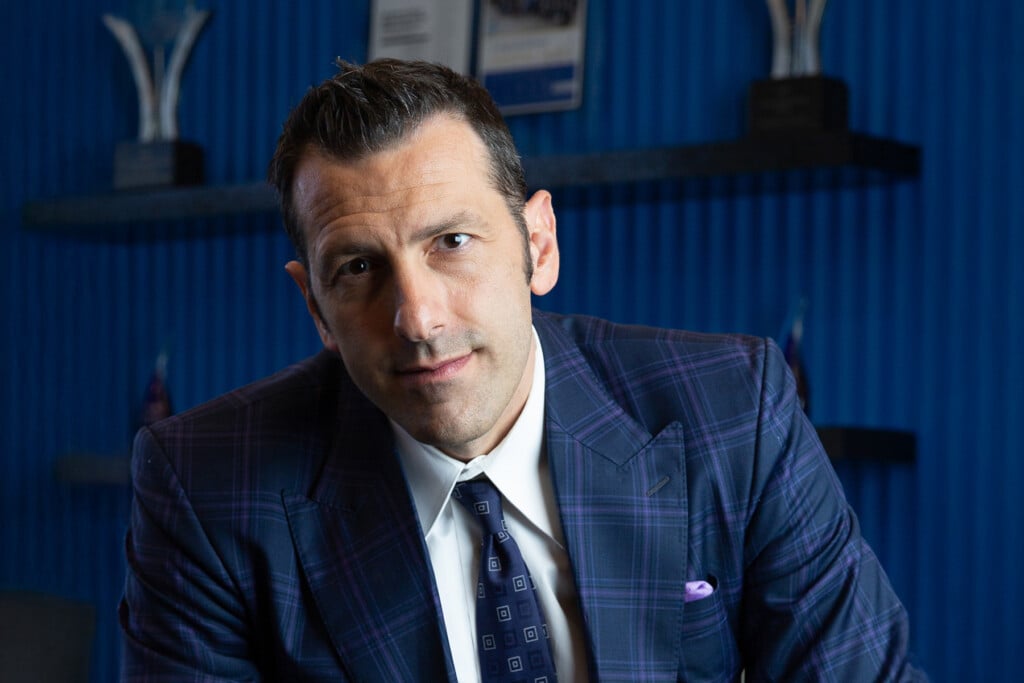
Long before boardrooms, balance sheets and billion-dollar ambitions, athleticism carried the Sarajevo-born Subotic toward freedom.
At 13, he fled Bosnia with his family as civil war tore through the region. They resettled in Serbia, carrying the invisible weight of bombs, checkpoints and the constant knowledge that life could end without warning. Basketball became his refuge, and eventually, his way forward.
“I think, first of all, you have to be lucky,” Subotic says, his Serbian accent still pronounced. “Lucky means you survive. Nothing bad happens to you. And then you’re prepared when opportunity comes. Everyone gets opportunities, but not everyone is ready.”
He seized opportunities that ultimately led to his founding of WestPac Wealth Partners.
His first major break came with Red Star Belgrade, one of Europe’s most prestigious basketball programs. Competing at that level sharpened his discipline and put him squarely on the radar of U.S. scouts.
“I got the opportunity to play against the top teams in the world outside the NBA,” he says. “That environment teaches you pressure. It teaches you how to show up when it matters.”
That opportunity opened the door to the United States, and to an athletic scholarship at Hawaiʻi Pacific University, where Subotic played NCAA Division II basketball. “When I came to the U.S., I saw a land of opportunity,” he says. “I saw something I don’t see anywhere else and I grabbed it.”
From Groundskeeper to Guru

2002 January 28 SPT – HPU basketball player Nash Subotic goes to the hoop against UH Hilo player David La Qua in a game on Monday night. SB photo by George F. Lee
Adjusting to a new language, culture and expectations was daunting. Subotic immersed himself fully, completing both his bachelor’s degree and MBA in just five years.
Basketball, he says, prepared him for more than competition. It taught him how to fail, recover and stay disciplined when no one was watching. “Every training session, every game… it’s not just about skill,” he says. “It’s about pressure, risk and showing up every single day.”
Off the court, life in America was humbling. To survive, he was working before and after school, maintaining grounds and doing construction jobs. On campus, he wore a janitor’s vest — work that carried no prestige but lasting perspective.
“When you’re a groundskeeper, people see you differently,” he says. “But it teaches you something important and that is, no work is beneath you. And it teaches you how people really see you.”
Those experiences sharpened his instincts. He learned to read a room, recognize ego and insecurity and distinguish between people seeking status and those truly worth getting to know. “I learned who the social climbers were,” he says. “And I learned who the real people were.”
Subotic has carried strong soft skills throughout his business career, admitting he has walked away from professional partnerships that didn’t feel right. His drive is matched by emotional intelligence — or what Corporate America calls EQ. “I have a lot of empathy,” he says.
After graduating, Subotic joined John Hancock Financial Services, quickly rising into leadership roles. But it was September 2007, at the onset of the Global Financial Crisis, that would define his entrepreneurial path.
As Wall Street began to unravel, Subotic saw opportunity where others saw paralysis.
He launched WestPac Wealth Partners to serve clients disillusioned with traditional advisers. “It was actually an exciting time,” he says. “People were desperate for guidance. Most advisers were under the table, and they were afraid to speak because portfolios were down 40%. We weren’t afraid.”
He started with just three representatives. Today, WestPac has more than 375 team members, serves roughly 38,000 clients and oversees more than $5 billion in assets across California, Nevada, Washington, Oregon, Montana, Arizona, Hawaiʻi and Florida.
Subotic’s vision is ambitious by design: to build a billion-dollar-revenue firm over the next 14 years. Hawaii Business Magazine asked why in 14 years? “I want to be retired by then,” he said.
What separates WestPac, Subotic explains, is integration. Instead of isolating investments, insurance, taxes and estate planning, the firm treats financial life as a single, interconnected system, particularly for ultra-wealthy clients. “Most firms bring value,” he says. “We create value. The more wealth people have, the more surprised we are by what’s missing. We exist in those gaps.”
Overall for WestPac, “culture has to come before profit,” he says. “If you focus on culture, profitability follows. Never the other way around.”
WestPac’s approach has earned national recognition. The firm was named #1 Best Workplace in Financial Services in a nationwide Fortune survey, ranking first among 228,000 small and mid-sized workplaces. It has also earned accolades in Hawaii Business Magazine’s Best Places to Work from 2019 through 2025.
WestPac also embraces Life-Work Integration, recognizing that employees are more than their job titles. That translates into flexible schedules, remote work options and support for personal well-being to promote balance as well as long-term success for both people and clients.
‘Education Is Freedom’

Subotic credits his time playing NCAA Division II basketball with teaching him how to fail, recover and maintain the discipline required to build a multibillion-dollar firm.
For Subotic, true wealth isn’t measured in numbers — it’s found at home. With his wife, Marija, and their children, Bianka and Alek, he defines success through happiness and health. “I work 24/7 because I love what I do and work does not feel like work because my life is integrated between my business and personal life. But at the end of the day, success is about my family. If my kids are on school break, I take a break too.”
That perspective has been shaped by loss. The unexpected deaths of three WestPac employees in recent years, including one in his early 30s, left a profound mark. “It reminds you how fragile everything is,” he says. “How fast life can change. I live like it’s my last day because I’ve seen how quickly things disappear.”
Every decision, every priority, reflects that awareness — anchoring him to family, to empathy and to the urgency of living fully. Observers often compare Subotic to Tony Robbins, citing his magnetic charisma, commanding presence and shared Eastern European heritage.
However, Subotic’s personal and professional philosophy is influenced by Simon Sinek, whose books, talks and videos “I read and whose moves I follow,” he says.
Subotic says young professionals should picture an iceberg to guide their careers. “What people admire is what’s above the water,” he explains. “What keeps everything afloat is what’s underneath.”
Below the surface, he points to discipline, consistency, values and integrity. He believes many people live divided lives — thinking one thing, saying another, acting differently depending on who’s watching.

For Subotic, true wealth is found at home with his wife Marija, and their children, Bianka and Alek.
“That’s not freedom,” he says. “You can’t be free doing the wrong things. Freedom comes from doing the right thing consistently, especially when no one’s paying attention.”
After speaking at Hawaii Business Magazine‘s Money Matters Conference in Honolulu in November, Subotic was asked during a Q&A whether he would support the Pasefika Student Advancement Program at the University of Hawaiʻi at Mānoa. He didn’t hesitate — he pledged $10,000 on the spot.
“Education is freedom,” he says. “When people are educated, they can’t be controlled.”
Subotic also believes Americans often underestimate how rare true stability is. He encourages travel to see how much of the world lives without it. “You can’t love this country the same way unless you’ve lived without what it offers,” he says.
For Subotic, building a billion-dollar firm isn’t about ego. It’s about scale and helping more people live organized, intentional financial lives. “If we grow, we help more families,” he says. “That’s the point.”