Uncertain Future for Lahaina’s Front Street, Where Businesses Have Yet to Return
While some homes have been rebuilt and people are returning to residences in the devastated town, its once-thriving business hub along Front Street remains desolate, as policymakers, residents and business owners debate the best way forward.
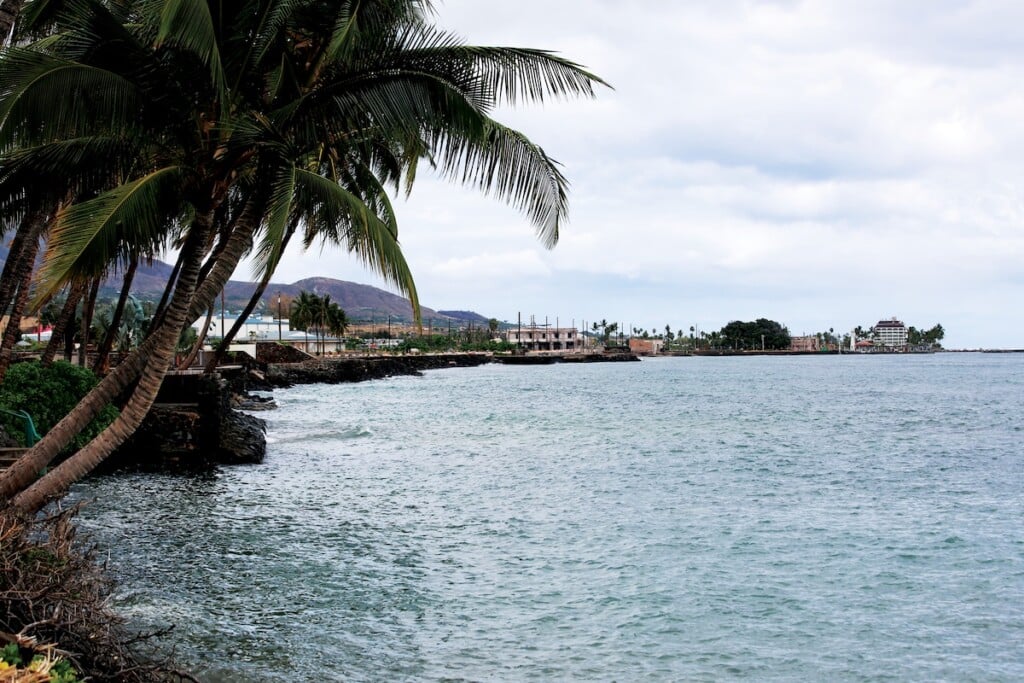
More than three years after a raging wildfire swept through Lahaina and turned most of the town to ashes, the main business artery, Front Street that runs parallel to the ocean, remains vacant. Not a single business has returned to the once vibrant and historic thoroughfare.
Understandably, the county directed efforts in the early recovery years to rebuilding homes so those who took cover in shelters, temporary housing or had fled the island could start their lives anew. So far, around 600 homes have been built or have received permits to begin construction in the devastated area.
But the commercial district has been neglected, some business owners say, as they deal with the county’s new vision for a street that discourages reconstruction on the ocean side of the road, as well as rising costs and administrative delays for building permits.
“When they say Lahaina is open, it doesn’t mean Lahaina is open. It means Front Street is open, and yes, there’s nothing on it,” Zach Laidlaw, co-founder, executive chef, lead farmer and vice president of experiences at Hua Momona Farms told Hawaii Business Magazine in August. “You might see a food truck here and there, but there’s really no businesses.
“We lost 22 huge restaurants in Lahaina; that was 60% of our sales,” he adds.
Once home to more than 800 business establishments, today Lahaina is a troubling reminder of one of the most devastating and deadly wildfires in American history, which killed more than 100 people and impacted more than 2,000 structures.
Prior to the fire on August 8, 2023, Lahaina was one of the most popular tourist destinations in the state, with businesses in West Maui generating more than $70 million a month and employing about 8,500 individuals, according to a report from the University of Hawaii Economic Research Organization.
Maui County administrators have reiterated that their focus over the past few years has been on housing, which Kent Untermann, a small business owner, landowner and member of the Front Street Recovery Committee, says he respects. (See prior HB story on one of Untermann’s businesses: https://www.hawaiibusiness.com/how-the-art-source-became-a-manufacturing-powerhouse-in-hawaii/ )
“The priority for the business community was clearly not the priority the first year, which we understood,” he says.
Over the last six months, however, he says the county has pivoted to make the business community a top focus by removing some of the barriers to help them rebuild. With well-known businesses slated to return to his building, such as Kimo’s, a popular TS restaurant, Untermann says he is now optimistic.
“The engagement has been better,” he says, and he anticipates the permitting process will continue to improve, at least for those not along the ocean side.
“The oceanfront side of Front Street is very uncertain, to say it lightly,” he says. “The businesses and oceanfront owners most likely won’t be able to come back.”
In part, that’s by design.
Front Street was known for its oceanfront businesses, but after the fire, state and local authorities have halted attempts to rebuild along the coastline, citing environmental and coastal hazard regulations and concerns within Special Management Areas.
Allocating $50 million from federal Community Development Block Grant Disaster Recovery funds, the county has launched a Strategic Voluntary Mitigation Buyout Program that aims to purchase properties on the oceanside of Front Street.
“The primary purpose of a buyout is to reduce future risk to life and property, and promote long-term, resilient land use patterns,” according to the county website.
Not surprisingly, the county plan and slow progress have become political issues in an election year.
Yuki Lei Sugimura, who is running against incumbent Maui County Mayor Richard Bissen, says the county could be doing more faster.
“Simply put, the people of Maui deserve better. Three years later, we still don’t have a wildfire economic recovery plan from the current administration, and almost none of the businesses along Front Street have been rebuilt. Our economic activity across the county remains significantly below pre-wildfire levels, unemployment and underemployment remain high, wages are stagnant, and the poverty rate remains at a near-historic peak,” she says.
“Given rising inflation and declines in federal financial assistance,” she adds, “I’m afraid for what our future holds if we don’t turn things around. We must do better by making it a priority to allow these businesses to rebuild, bring back jobs, and jump-start our economy.”
Bissen, in a statement to Hawaii Business Magazine, says the county does have a wildfire recovery plan, adding that “significant progress” has been made toward starting reconstruction of the business district.
“Lahaina is literally one of the most complex places to rebuild in the state,” he says. “Rebuilding requires navigating historic preservation, cultural resources, shoreline protections and environmental requirements, while also restoring the infrastructure needed to support homes and businesses. Much of that work happens before anyone sees a building go up.”
That work includes clearing debris, restoring water and sewer service, repairing miles of damaged infrastructure, removing regulatory barriers and establishing a pathway for commercial rebuilding.
A separate statement from the mayor’s office said: “There may not be any active building yet, but commercial rebuilding efforts are certainly underway. We just issued our first building permit, with several others moving forward in the queue.”
The County of Maui and the U.S. Department of Housing and Urban Development finalized a $1.6 billion grant agreement on June 20, 2025, providing permanent disaster recovery funds — nearly 20 months after the wildfires.
“We had to literally fix our entire water system … our water infrastructure burned; our storm sewers underneath the ground, some of them burned, under the ground,” says John Smith, recovery administrator at the Office of Recovery. “We spent well over a year just fixing it and making it functional.”
County Buyback Program
Former chairperson and Director of the Department of Land and Natural Resources Dawn Chang wrote testimony regarding Senate Bill 830 that related to coastal zone management. She favors reconstruction of areas that were damaged or destroyed in the disaster.
Other criticisms stem from the details of the county buyback program.
According to the plan, the county may “acquire properties at an amount and maximum award cap based on the post-disaster fair market value.”
Lynn Barr, a former Front Street homeowner who lost her home in the fire, says post-disaster fair market value leaves property owners with very little.
“People have not been able to rebuild for three years,” she says. “They’re still paying mortgages on their property, they’re facing bankruptcy if they haven’t already, and so what are they going to do?”
She has joined with some of her neighbors to push back against restrictions that prevent them from rebuilding along the coastline.
“If they want to do eminent domain, do eminent domain. Make it fair,” she says.
Barr also says the current process leaves many residents and business owners afraid to speak up.
“There ought to be a way for people to be heard anonymously because they are very concerned about retaliation,” she says. “I’ve heard from many business owners that they can’t speak because they will never get a permit. How do we allow people to tell the truth and allow the truth to be known? Where’s the transparency? There are no hearings; there’s no due process.”
Seeds of Change
Despite his optimism, Untermann predicts that businesses that weren’t properly insured or didn’t have reserve funds or were already struggling before the fire will likely not return.
“Those, sadly, are gone forever,” he says.
He anticipates fewer restaurants will rebuild, as well as fewer art galleries – two aspects that previously made up much of Front Street. Since the fire, many restaurants and business owners have moved or relocated to other parts of the island, while other efforts are underway for future business endeavors in the area.
One such project underway is ʻUlu o Lele Marketplace, which will span approximately 3 acres and is expected to accommodate up to 50 local vendors with an estimated 90 jobs during the interim recovery period. This effort is a multi-million-dollar project developed by the nonprofit Hawaiian Council with support from its Kākoʻo Maui Fund and the Hawaiʻi Community Foundation.
Other owners are working toward supporting business as well.
Marc Godt of The Lahaina Yacht Club says they intend to rebuild on the land at 835 Front Street “that we own free and clear.”
Gary Grube of the Hua Momona Farms and Foundation says their work is focused on revitalizing the West Side through several efforts, including the 3rd Annual Maui Music & Food Experience that occurred in August.
Since the fire, though, Lahaina has not really changed, some business owners say.
“I’ve been watching small businesses struggle ever since,” Laidlaw says.
Untermann says he’s hopeful that one day Front Street and businesses will return.
“I’m a believer however it comes back, it will still be a remarkable place. We as owners want to build it back in the most thoughtful way, preserving culture, preserving history and recreating it in its own, most unique way,” he says.
“Pay Attention to History”
Ke’eaumoku Kapu has held his nonprofit Nā ʻĀikane o Maui along Front Street for more than a decade.
The cultural center, which burned down during the fire, was home to community service projects and Hawaiian artifacts and served as a community headquarters of sorts, hosting lectures and events for the public to attend and learn about Lahaina’s deep culture and rich history.
He says Front Street’s future is rooted in its past. Before Lahaina became a place of business, it was the capital of the Hawaiian Kingdom, home to delicate ecosystems and ancient wetlands.
Kapu and his nonprofit attempt to preserve stories such as those found along Front Street, including Moku’ula, a one-acre island and former residence of King Kamehameha III that dates back to the 1800s and is now below the surface of a county baseball park.
Well before the fire, Kapu had been calling for balance within the space as neighboring businesses and tourism continued to grow. He is now spearheading cultural sensitivity training in the area and is often called upon when bones are discovered.
He says that as redevelopment begins, he hopes that the business community will understand the importance of preserving Front Street’s longstanding Hawaiian history as the capital of the Hawaiian Kingdom, and protect its surrounding environment.
“Everyone wants a rubber stamp to move forward but are not willing to go through the correct process to get there,” he says.
“We want to ensure that the commercial guys really do their due diligence when they find historic property, when they find artifacts, especially when they find bones. We don’t want this thing to just be swept under the carpet.”
Even with the redesign of businesses moving away from the coastline, Kapu anticipates there may still be challenges.
“We’ve got to make some drastic changes because we’re not doing our due diligence in protecting the integrity of our town,” Kapu says, adding they are “trying to educate everybody why it’s important that we have to protect these areas because our wetlands are turning into cesspools.”
He hopes that state and local authorities work to preserve West Maui’s history, on Front Street and beyond.
“All these lands are related,” Kapu says. “Pay attention to history.”
(Megan Moseley previously worked in Maui County’s Office of Recovery, where she analyzed public comments and surveys regarding CDBG-DR funds.)