Horses Do the Healing
By offering specialized riding programs for individuals with physical, developmental and learning challenges, Therapeutic Horsemanship of Hawaii helps riders build strength, improve coordination and feel empowered.
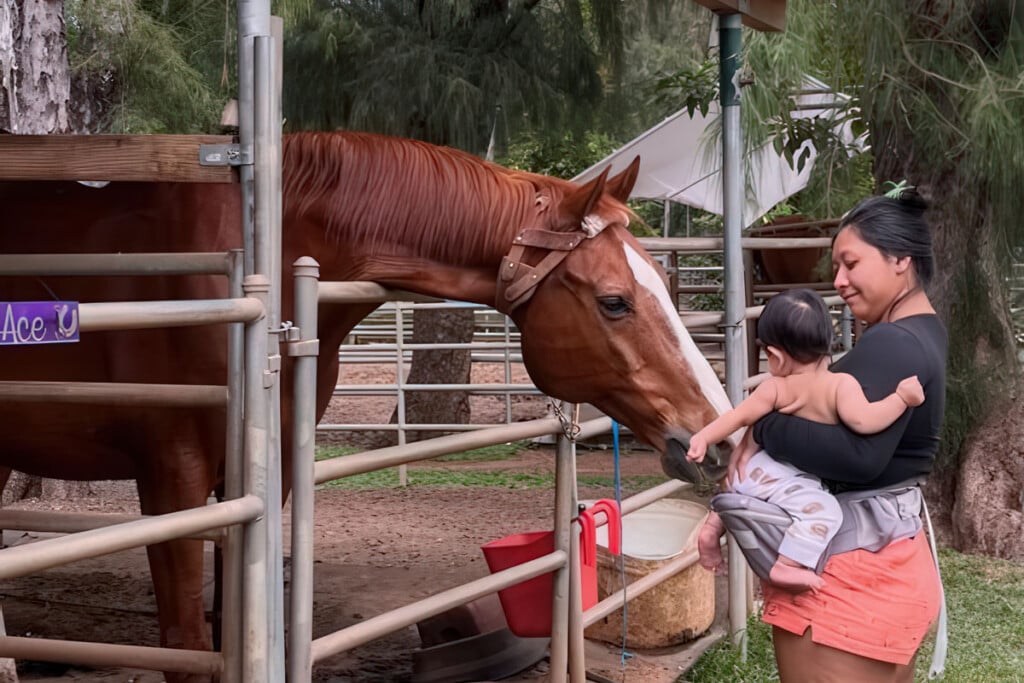
Horses, which often weigh upwards of 900 pounds, are known for their power and strength. But they can also be gentle—and that makes them ideal therapists, says Dana Vennen, executive director of Therapeutic Horsemanship of Hawaiʻi, a nonprofit located next to the polo field in Waimānalo.
She describes a powerful moment when THH was working with the Children’s Alliance of Hawaiʻi, which serves sexually abused children.
“After a session, a parent came to me in tears and asked, ‘What did you do? My child finally talked about what happened on the way home.’ The only difference that day was that she had ridden a horse. I told them, ‘It wasn’t me, it was the horse,'” Vennen says.
THH specializes in riding programs for people with physical, developmental and learning challenges, including severe cases.

Therapeutic Horsemanship offers youth the opportunity to ride, care for and bond with horses, all while fostering a welcoming and inclusive community. Photo Courtesy: Therapeutic Horsemanship of Hawaii
Riders benefit in three ways: They build physical strength, improve coordination and balance, and boost their self-esteem. Sitting on these large, powerful animals and learning to guide them, Vennen says, can be empowering.
She tells another story, of a boy named Kaipo who came to THH in a stroller, though he was at an age when most children are walking. Vennen says that at the start, the boy was able to hold his head up, but not his whole body. “His core strength was not very good, but he started riding,” Vennen says, and within six months he was able to sit up in a saddle “on his own, and his mom said that it really improved his ability to roll over.”
The nonprofit also brings two miniature horses—named Makakoa and Kamalani—into hospitals, schools and private homes free of charge. “I once got a call from a woman about her mother, a lifelong horsewoman who was housebound and just wanted to see a horse one last time. She hoped someone could bring a horse to the driveway. I told her, ‘We can bring them right inside,'” Vennen says.
“When the horses were finally in the house, her mother was amazed and completely shocked.”

Kids interacting with one of the horses at the camp.
THH offers day camps, ranging from one day to a week, where children 6 to 12 can groom, feed and ride the horses, and enjoy other activities.
The nonprofit’s biggest challenge is the cost of feeding the horses and keeping them healthy.
According to Vennen, the weekly feed bill is between $5,000 and $6,000, while the facility itself costs $2,250 in rent each month. Additionally, health insurance for horses can top $10,000 a year, and they need their shoes replaced every six weeks, which costs about $150 per horse.
Volunteers run 80% of THH’s operations, which helps to keep costs down. They handle almost everything, from feeding the horses to leading riding lessons, except bookkeeping, marketing and office work. Vennen along with another instructor are the only paid employees.
A volunteer’s day might include yard work, scrubbing, refilling water buckets, mucking the paddocks—sometimes removing two large wheelbarrows of manure—and shoeing the horses, which the volunteers do as well as grooming the horses before and after every lesson.
One volunteer is usually there all day on Mondays and Fridays to “groom the horses, let them eat grass, turn them out in the arenas so they can run, play and roll,” Vennen says. “She basically looks after their mental health, making sure they’re able to do this job, which isn’t physically hard, but does require patience and empathy to do what we ask of them.”

A youth participating in riding lessons.
THH is home to 10 horses to suit different riders and activities. Each of them, Vennen says, is confident and patient. “We’re lucky to have a few horses who can accommodate the full spectrum of our riders,” she says. “They’re incredibly patient, whether it’s wheelchair mounts or advanced riders working on walk, trot and canter.”
THH also offers horse rides for those without disabilities, ranging from 30 minutes for $50 to an hour for $70. Each lesson begins with visitors grooming and saddling the horses, with guidance from an instructor, before transitioning to riding in the arena.
For now, Vennen is the driving force behind the program, but she hopes that in the next five to 10 years, she can train and guide the next generation to take her place.
“In our future somewhere, I believe this organization [will] become so important to the community that, if I were to get hit by a bus, it would survive somehow.”