Llamas With a Purpose: Inside Maui’s Most Unexpected Farm
Christine and Sam Heidama turned a fiber arts hobby into a full-on llama and alpaca experience on the slopes of Haleakalā. The animals are stealing hearts at weddings, hikes, and everything in between.
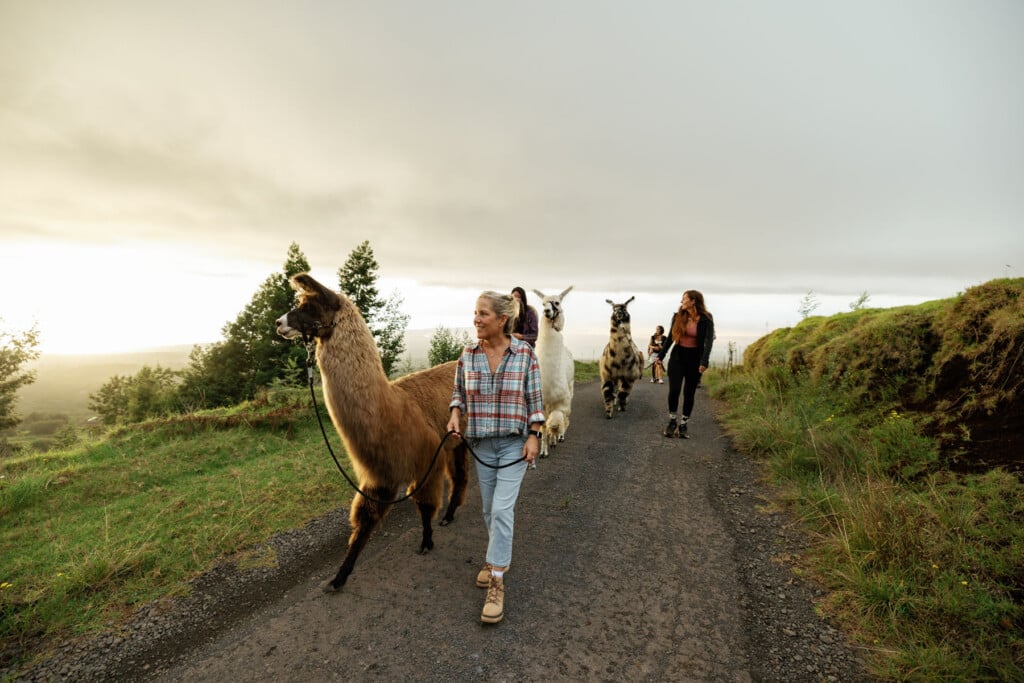
Wife and husband Christine and Sam Heidama own Kula Cottontail Farm on the slopes of Haleakalā, where they care for an assortment of creatures, including llamas and alpacas. Christine is a fiber artist who acquired the animals for their soft, luxurious fur, which she spins into yarn and weaves into clothing.
“As our herd grew, we discovered the llamas thrive on having a purpose, and they spread joy wherever they go,” Christine says. So today, they bring the long-necked and big-eyed animals to weddings, parties, hikes and other occasions.
Beginnings: Christine and Sam are both the children of missionaries, and they met in Papua New Guinea. At age 18, they went in different directions: Sam to earn a degree in structural engineering while Christine traveled the world as a scuba diving instructor. After reconnecting, they married and settled in Hawaiʻi to continue their careers.
When they acquired the llamas and alpacas – native to the Andes Mountains in South America – there was little published research on their proper care, Christine says.
“It was challenging when I first started learning how to care for alpacas and llamas because I was told all the wrong things. These guys are prey animals, so for us to stand and stare at them, or move forward to touch them, that is a very aggressive move.” Alpacas are smaller, shyer and have softer fleece, which is ideal for turning into yarn. Llamas, on the other hand, are more outgoing and better suited for interacting with people at events.
Research: She spent time in Peru, learning about the cultural use of these creatures, especially llamas, which are often used as pack animals. And she had to unlearn other people’s ways of training them because that wasn’t how she wanted to train her own.
She recognized that training that works for natural predators, like dogs, doesn’t work well with prey animals like llamas and alpacas.
“If they come up against, like, a flag or something that frightens them, they’ll stop, adjust, so you must let them have time. I’m not going to force them, I’m going to wait for them to figure it out. That’s how you build trust.”

Llamas pictured at a wedding with a couple.
Typical days: Christine says llamas like to keep busy, and every day they’re ready for new tasks to accomplish.
“Llamas especially love to feel useful, and they love routines. Every morning when I go out to feed them, they’re always looking at me like, ‘What are we going to do today?’ They really love to stay busy, and one way I thought they could be useful was to be at different events, such as weddings, so they could feel that sense of purpose.”
Highlights of the job: She says she treats her animals with respect, not expecting them to be something they are not, and delights in how well-behaved they can be. The connection she builds with them, she says, is one of the best parts of her farm life.
And she revels in the special connections between them and the people they meet, too. “You can see a bit of healing go on in the interaction. I had a guest at a wedding come up to me and tell me how her husband had just passed away a few weeks ago, and how meaningful was the time she spent with the llamas.”

Little girl posing with a smiling llama.
Community: A unique farm like Kula Cottontail requires creative people and solutions. Christy Haines, a large-animal veterinarian on Maui, learned a lot about caring for llamas and alpacas along with Christine, including different ways to treat infections, what works and what doesn’t, and other best practices.
“Most vets won’t even see llamas and alpacas,” says the veterinarian. “They can be finicky and there’s not much research done on them but it’s fun and interesting if you’re willing to figure it out and put in the effort.”
Volunteers help with feeding the animals and other responsibilities. “I have multiple older women in the neighborhood who help me on a daily basis, whether it’s cleaning the pastures, or just watching the animals, walking them, even helping in the training,” Christine says.
Challenges: The biggest challenge the farm faces is making a profit. She recently began to offer guided hikes with the animals but says the many rules and permits required, and other restrictions, can make it tough.
“I’ve been trying to get something going for about two years now. If you don’t own the land, it’s difficult. The county wasn’t open to letting me use government land. And we’ve struggled with getting the word out.”
Misconceptions: “A lot of people come in thinking llamas are mean or unpredictable, and it’s just not true. Once folks spend even five minutes with them, they see how gentle, goofy and sensitive they really are.”
For more information visit maluhiallamas.com