Race Randle, The Builder
If Tadashi Yanai is the billionaire at the center of Maui’s water controversy, Race Randle is the local executive who has become one of its most visible participants.
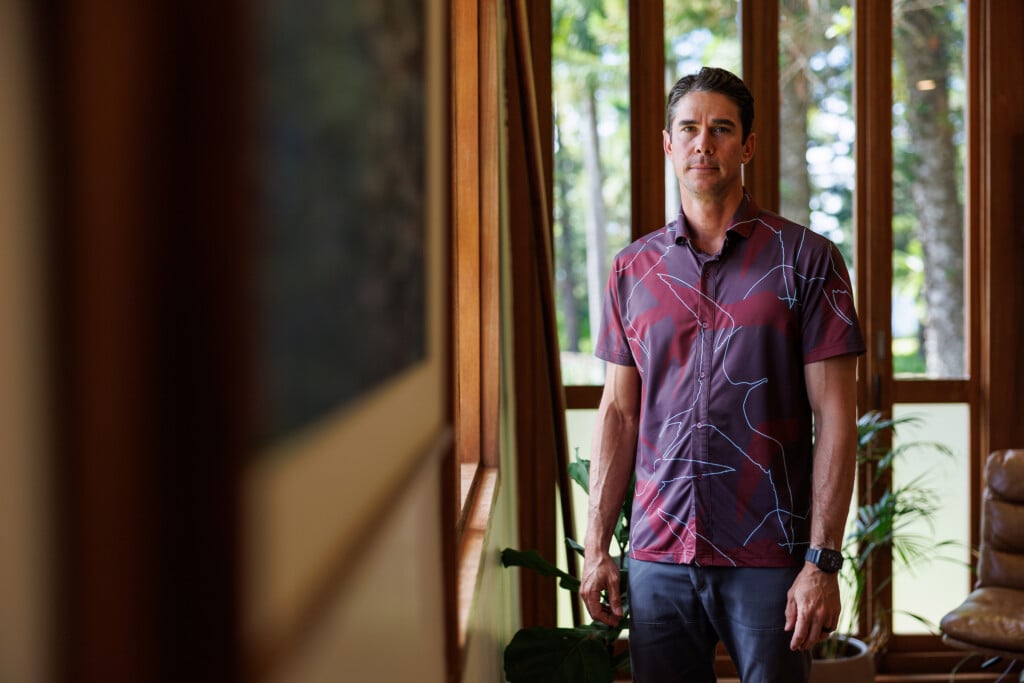
Shortly after Maui Land & Pineapple announced a memorandum of understanding with Maui County that could place major West Maui water assets under county control, I spoke with Race Randle about the company’s future, the ongoing water debate and his vision for Maui.
As chief executive of Maui Land & Pineapple, Randle oversees one of Hawaiʻi’s oldest and most storied companies, a firm publicly traded on the New York Stock Exchange under the ticker symbol MLP. Its history stretches back more than a century, and its land holdings and water infrastructure have placed it at the center of a growing debate over water, development and public trust.
As he navigates those challenges, Randle must also answer to shareholders. Maui Land & Pineapple shares have risen about 4% over the past year, even as the company has found itself at the center of one of Hawaiʻi’s most closely watched water disputes.
“We’re a company that has a long legacy, a long legacy of stewardship in Hawaiʻi,” Randle says. “Over a hundred years of creating thousands of jobs, creating homes for hundreds, if not thousands, of families on Maui and protecting and preserving some of the most pristine lands on Maui.”
The water controversy has attracted attention because it touches on something more fundamental. In Hawaiʻi, water is not simply a resource. It is tied to history, identity, economic opportunity and the future of entire communities.
Yet spend time with Randle and a different picture emerges. He is less interested in talking about legal disputes than he is in talking about communities.
“My father was a homebuilder,” Randle says. “From the first days I could walk, I was on job sites.”
That experience shaped his worldview long before he entered the executive suite. Born and raised in Hawaiʻi, Randle grew up watching homes take shape one foundation at a time. Later, his career took him beyond the Islands, but he says he always felt drawn back home. Like many local families, he watched friends and relatives leave because of the high cost of living and limited opportunities. When the chance came to return to Maui, he took it.
“I’m a community builder,” he said.

Maui County’s storage reservoir at the Mahinahina Water Treatment Facility. Photo: Aaron Yoshino
Today, he lives in Lahaina with his wife and two children. He talks about Maui less as a business market and more as a place where people know their neighbors, help one another through difficult times and celebrate successes together.
That outlook informs the vision he has for Maui Land & Pineapple.
“It’s not my vision. It’s our vision,” he said. “We all believe that there is a future where local families are thriving, where communities are resilient and where families are stable.”
For Randle, that future depends on solving several interconnected challenges: housing, economic opportunity, food security and water security. Those priorities have taken on greater urgency since the Lahaina wildfire on August 8, 2023, which exposed vulnerabilities across West Maui and intensified public scrutiny of everything connected to land and water.
The human toll has been staggering. According to U.S. Census Bureau Vintage 2025 estimates, Maui County’s population dropped from 164,022 in 2023 to 160,592 in 2025, a loss of about 3,400 residents, or 2.1%. From 2024 to 2025 alone, more than 1,600 residents left, the largest single-year drop of any county in the state. Approximately 90% of Lahaina burn area residents remain displaced, according to the University of Hawaiʻi Economic Research Organization (UHERO), a figure that has changed little over time.
Maui Land & Pineapple occupies a unique position in that conversation. Its history is intertwined with Maui’s plantation era, even though pineapple is no longer the company’s primary business. To some residents, that history carries baggage. To others, the company remains an important steward of land and infrastructure that could help address some of the island’s most pressing needs.
Randle argues that the company is focused on meeting present-day challenges. “What we’ve taken on is the challenging effort to create community,” he said, describing a strategy aimed at putting land and assets to their most productive use for local residents.
That philosophy is now being tested in public. The dispute involving entities tied to Tadashi Yanai has elevated questions about stewardship, accountability and the future of Maui’s water system. While Randle declines to discuss the specifics of ongoing litigation, he repeatedly returns to the same theme: collaboration.
He says Maui Land & Pineapple sought direct discussions between decision makers and even offered mediation before litigation began.
“That offer still stands,” he said.
The economic consequences of the ongoing turmoil extend beyond the water dispute itself. The Sentry Tournament is gone. The Sony Open may follow. Hospitality veteran Jerry Gibson estimates hundreds of millions in lost revenues, losses that fall hardest on the workers and small businesses that depend on Maui’s visitor economy. UHERO estimates the fire-driven population loss alone will cost the state at least $50 million in annual income.
Randle’s most ambitious proposal may be the MOU with Maui County, which could eventually transfer major West Maui water assets into county ownership and management. Terms of the MOU still leave many questions, and it is nonbinding, but Randle describes the agreement as an effort to strengthen the overall system through greater storage capacity, additional water sources and long-term public oversight. Supporters see it as a path toward greater stability. Skeptics question whether any single agreement can resolve decades of tension surrounding land use, development and water management.
Randle understands the skepticism. “We may not be able to change what happened in the past,” he said. “But we can learn from it. We can listen to the community, and we can take action that makes this place better.”
As the public debate over water continues, Randle insists the conversation should not be about winners and losers. It should be about what kind of future Maui wants to build, and who is willing to help build it.
For a man who still describes himself as a community builder, that may be the most important project of all.