From Black Sheep to Model of Success, Waipahu High School’s Amazing Transformation
The school’s “six schools in one” robust career academies are transforming the way education helps students prepare for the workforce.

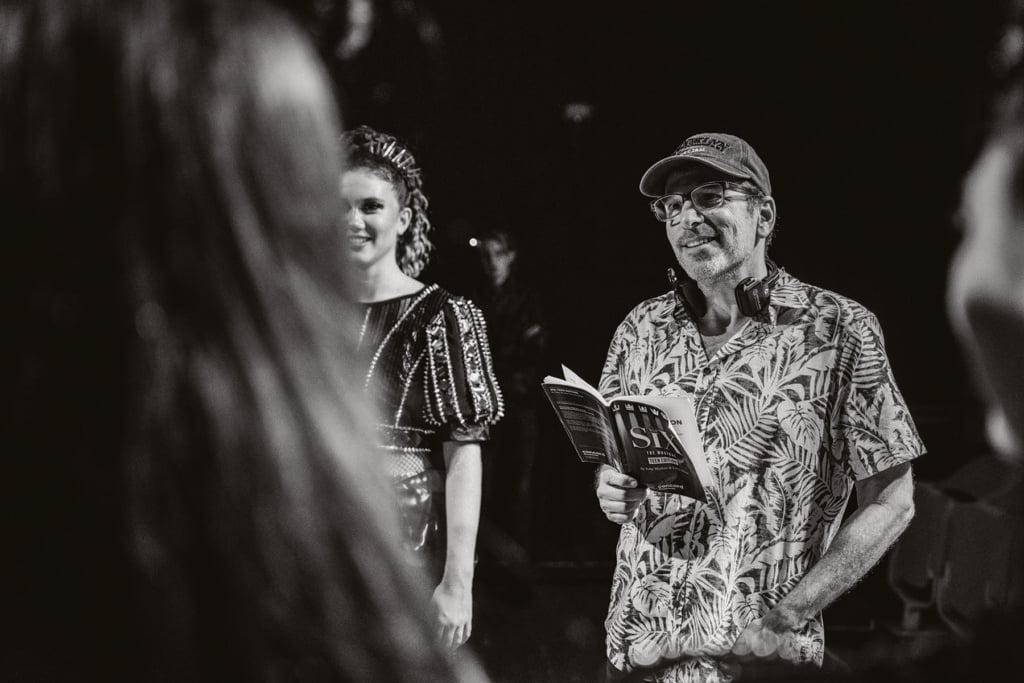
Keith Hayashi. Photo Courtesy: Hawai‘i State Department of Education
Keith Hayashi had barely settled into his new role when there was a knock on his office door.
It was the FBI.
It was the fall of 2009, and Hayashi had just become principal of Waipahu High School — a school that, at the time, was more known for gang activity and juvenile offenders than academic promise.
“During my first year at Waipahu, I had the FBI come to see me,” he told Hawaii Business Magazine. FBI Special Agent Arnold Laanui warned him, “Waipahu High School is No. 1 in juvenile status offenders per capita in the United States.”
“I said, ‘what?'” recalled Hayashi, who is now Hawaiʻi Department of Education superintendent. “In fact, we’re in the FBI Yearbook.”
What followed was more than a decade of methodical, almost evangelical work.
Waipahu High School underwent a significant academic gut renovation, notably through the implementation of the “wall-to-wall” academy model and the Early College program.
“It’s not because kids do not want to be successful,” Hayashi said. “It’s because they haven’t made a connection to school. They haven’t figured out why school is important. They don’t see how school is relevant.”
Waipahu is now making a splash in national educational circles.
According to U.S. News & World Report, Waipahu High School ranks in the top 32% of approximately 17,900 public high schools nationwide, and in the top 35% of all public high schools in Hawaiʻi — a remarkable achievement for a school where 97% of students are minorities and nearly half come from economically disadvantaged households.
On one part of Waipahu’s campus, students help run a credit union. In another, they assist in a fully functioning health clinic with real patients, while others prepare tax returns, operate a student-run restaurant or grow produce that ends up in the school cafeteria.
It’s all part of the wall-to-wall academy model that turns a traditional high school into what Principal Zachary Sheets calls “six schools in one,” a system designed to connect students to careers starting from their freshman year.

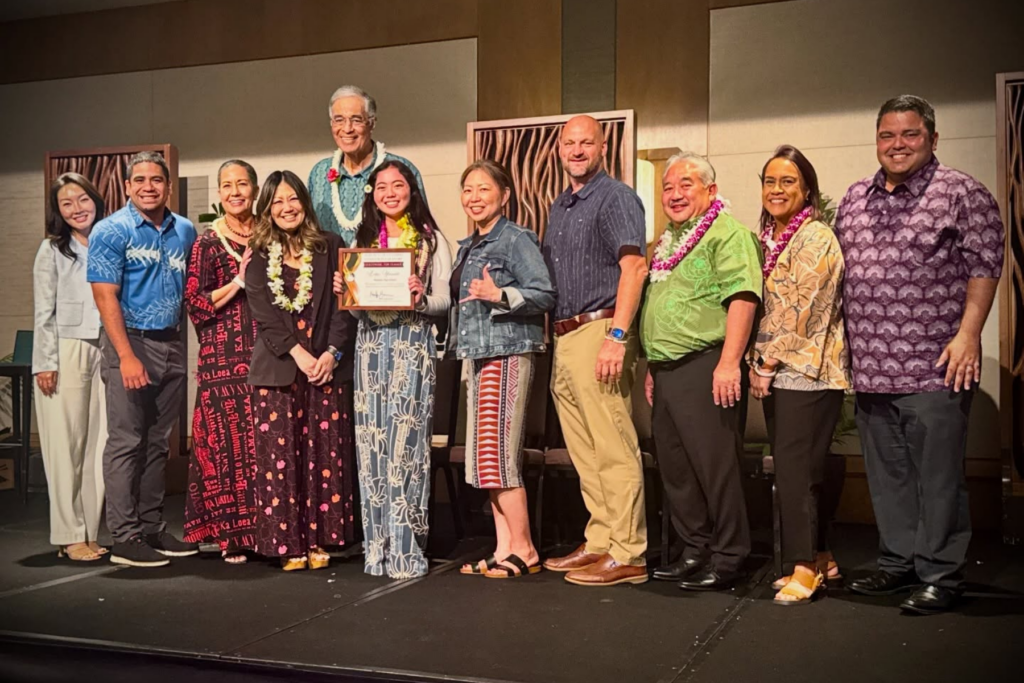
Waipahu High School’s Year 2 CTL team won Vision Lab 2026 for a project that improved community access and helped launch the first annual Marauder Mākeke, connecting residents with local resources.
Photo courtesy of Waipahu High School
One Campus, Six Communities
At first glance, Waipahu High School looks like most other large public schools on Oʻahu, with a student population exceeding 2,000 students. But step inside its unique academic structure, and the student experience is fundamentally different.
Instead of moving through a standard schedule of core and elective classes, students choose one of six career academies: Arts & Communication, Health & Sciences, Industrial & Engineering Technology, Natural Resources, Professional & Public Services, and the Ohana of Excellence.
Each academy functions as a smaller learning community, complete with its own leadership, counselors, teachers and industry advisers. That structure reshapes something as basic as a class roster.
In a traditional high school, a teacher might work with many students across different grades, disconnected from other teachers. At Waipahu, teachers within an academy work as a single team, sharing the same group of students. An English teacher, math teacher and science teacher are not working in isolation, they’re working with the same students, collaborating on curriculum that’s relevant to the academy.
The impact is both academic and personal. Academy teachers and counselors can identify when a student struggles across multiple subjects, or excels in a particular area, and coordinate interventions or opportunities accordingly. For students, it creates a sense of belonging within a much smaller community inside a large campus.
Leila Manibog, a senior in the Academy of Health & Sciences, spoke to the benefits of having a more personal relationship with her academy teachers and faculty.
“I thrive in close communities,” she says. “Having the same teachers and counselors all four years makes it easier to ask for help and grow. It feels like a huge support system already built in.”

Academy of Health and Sciences students from Waipahu High School explored medical career pathways during a visit to JABSOM, where they learned from medical students and experienced simulation labs.
Photo courtesy of Waipahu High School
Learning by Doing
That philosophy comes to life through hands-on experiences that go far beyond a typical classroom experience. Waipahu’s model doesn’t just simulate the working world, it integrates it directly onto campus.
Students in the health academy complete internships in a fully functioning on-campus clinic alongside professional healthcare providers, where they observe patient care and learn alongside professionals. Their work-based courses require hours of shadowing nurses and doctors at Pali Momi and Queen’s medical centers. Business students help run a credit union and offer tax preparation services to the community. Culinary students run a campus restaurant, while others manage a student market.
In the natural resources academy, students grow crops using hydroponics, producing lettuce and other vegetables that can be served in the school cafeteria. Some even develop and sell products using materials they cultivate themselves.
Across academies, these experiences are tied to coursework and curriculum through project-based learning, where subjects such as math, science and English are applied directly to real-world problems.
“It’s not just, ‘Here’s your lesson,'” Sheets says. “There’s always that lens of your academy.”
That level of integration has led to partnerships with organizations including Hitachi Rail and the University of Hawaiʻi at Mānoa, creating a direct bridge from high school into higher education and into the workforce.
For employers, the benefits are clear: students come better prepared, with both technical knowledge and invaluable real-world experience.
“Our employees came back from capstone judging and were like, ‘Oh my gosh, these students are amazing. I want to hire that person. I want to work for them,'” says Cara Mazzei, project communications director at Hitachi Rail, an industry partner of Waipahu High School. “These academies are important because at the end of the day, without having students and having that workforce development, employers are going to be in trouble.”

Photo courtesy of Waipahu High School
A Proven Pipeline
Waipahu High School has become the largest feeder to the University of Hawaiʻi at Mānoa’s College of Engineering, a statistic that school administrators and industry partners point to as evidence of the academy model’s effectiveness.
It hasn’t always been this way. Waipahu High School was once perceived as a predominantly low-income campus, a reputation that shaped negative assumptions about students’ educational values and career aspirations.
Since 2020, college-going rates have steadily increased, with the most recent data from the Hawaiʻi Department of Education recording 50% of the class of 2024 going on to college, up from 45% in 2020. Sheets said that number is likely around 52% from the class of 2025, continuing the upward trend.
Additionally, through the school’s early college opportunities, 34 graduates from the class of 2026 are graduating with an associate degree — a two-year credential typically earned at a community college — marking the most ever in school history.
“Historically, Waipahu had a bad reputation, but what we do here at the school is truly mind boggling,” Jakayla Saquing says, a senior in the arts and communications academy. “When I talk to other students from other schools and my coworkers, they can’t believe everything we do here. I have a lot of pride in being a Marauder.”
Sheets emphasizes that while a four-year degree is one option, it’s not the only one, and not inherently more valuable than other paths. Students are encouraged to pursue trades, certifications, two-year degrees or immediate entry into the workforce, depending on their goals.
While approximately half of graduates go on to higher education, a majority of the remaining students enter the workforce, many with certifications, internships or early experience in their chosen fields.
“It’s not about college-bound or career-bound,” Sheets says. “It’s about a career for everyone; what is your path, and how can we best prepare you?”
Through their academy, some students get the opportunity to begin apprenticeships or connect with trade unions before they even graduate from high school.
“It’s not about saying one path is better than the other,” Sheets says in comparing college and workforce entry. “A career is a career. The real question is how are you going to give back to the community?”

Waipahu High School’s Team 2477X competed at the 2026 VEX Robotics World Championship in St. Louis, Missouri, finishing in the Top 10 of their division with a 10-2 record.
Photo courtesy of Waipahu High School
The Student Experience
For the students of Waipahu, the academy model is an experience that connects classroom learning directly to specific career pathways.
In the Academy of Industrial & Engineering Technology, junior Ynez Gaborno describes starting with foundational coursework before moving into hands-on technical training and certifications.
“We start off mainly in our foundation classes and learn about the basics of what we want to go into,” she explains. “Safety is very important, especially for an academy that deals with a lot of tools, so in my first years, I got an OSHA certification, which will be really useful in the field I want to go into.”
In the health and sciences academy, students describe a similar progression — from exploration to specialization to real-world experience.
“My first years here helped me grow as a person and figure out what I wanted to do,” Manibog says. “I was torn between pharmacy and nursing at first. But through opportunities by the academy like certifications and shadowing, I found my path.”
That path led directly into the workforce and externships while still in high school, and even a certificate from Kapiʻolani Community College in her junior year of high school.
“After my internship, I was offered a part-time position, so I’m still working as a pharmacy technician now,” she says. “We were even able to graduate with a certificate of competence through KCC. The academies definitely gave us a head start.”
In the Academy of Arts & Communications, Saquing emphasizes how creative work in class is tied directly to industry expectations.
“We start with foundations like video, graphics, fashion design — just to explore,” she says. “Then we specialize. I chose digital design, and we use Adobe Illustrator, Photoshop and InDesign, which are industry programs.”
That training eventually leads to real client work.
“In work-based learning, we actually get real clients and businesses who email us for designs,” Saquing says. “We set deadlines, meet with them, and go through the full design process. I’ve worked on branding projects for companies even like McDonald’s. It feels like real workforce experience. It is real workforce experience.”
Across their academies, all three students repeatedly pointed to the same theme: responsibility and independence.
“There’s no one reminding you to finish,” Saquing explains. “You have to communicate with clients, meet deadlines, and deliver professional work. It prepares you for what comes next; it prepares you for what’s asked of you in the real-world workforce.”

Waipahu High School’s Year 2 CTL team won Vision Lab 2026 for a project that improved community access and helped launch the first annual Marauder Mākeke, connecting residents with local resources. Photo courtesy of Waipahu High School
A Model for the Future
The academy model didn’t emerge overnight. It builds on years of work, including by former Waipahu High School principal Hayashi, who helped transform the school into the state’s first “wall-to-wall” academy school, where every student participates.
“He [Hayashi] was able to implement this academy model, share the success stories of the students, and change the perception of what students from Waipahu High School represent,” Sheets says.
Programs are shaped by student choice, reflected in the school’s mantra: “My voice, my choice, my future.”
For teachers, the model demands more coordination and creativity. But according to Sheets, it’s sustained by a shared belief in its impact.
“When you have success, it builds on itself,” Sheets says. “People see it, and they want to be part of it.”
With the success of Waipahu High School’s academies, the question remains, how replicable is this model for other schools in the state?
As of 2025, some 27 HIDOE schools are accredited academy schools, reflecting Hayashi’s impact as head of Hawaiʻi’s school system.
While Waipahu’s academy model reflects a growing national push toward education more aligned with workforce skills, it has sparked debate. Some critics argue that as schools lean further into a focus on career pathways, they risk becoming too transactional and narrow, training students for a specific job, rather than the traditional role of education as a space for broader development across all subjects.
Looking Ahead
For Gaborno, Manibog, Saquing and the thousands of other students going through their academies each day at Waipahu High School, the difference in structure is simple but significant: a clearer vision for the future.
Gaborno put it simply: “It’s not just school. It’s preparation for life.”
Instead of waiting until college or beyond to explore careers, students at Waipahu High School begin their journey as high school freshmen, supported by teachers, counselors and mentors. And in a place where students are earning college credits, assisting in medical clinics and building workforce skills all before graduation, this high school starts to look less like preparation for the real world, and more like the beginning itself.
A local real estate agent told Hayashi something that would have been unthinkable a generation ago: “What are you guys doing at Waipahu High School? Whatever you are doing, keep it up,” Hayashi recalled about the exchange with the realtor. “People are buying homes in Waipahu so that their kids could go to Waipahu High School.”