Wahine Mālama ʻĀina
Mālama ‘āina is the Hawaiian values-based practice of caring for, protecting and honoring the natural world. For this year’s Wahine issue, Hawaii Business Magazine recognizes five women doing vital work to steward Hawai‘i’s land and ocean — from conserving culturally and ecologically significant sites and mitigating invasive pests to restoring coral reefs and revitalizing the traditional ahupua‘a system.
Christy Martin
Program Manager & Information Officer at UH Pacific Cooperative Studies Unit / Coordinating Group on Alien Pest Species

Photo Courtesy: Aaron Yoshino
Hawaiʻi is renowned for its remarkable rate of endemism, species found nowhere else on Earth due to our extreme geographic isolation. Yet we also bear the tragic reputation of being the endangered species and extinction capital of the world.
“Nearly 90% of species losses on islands are because of invasive species, and that includes Hawaiʻi. They are the leading cause of biodiversity loss,” says Christy Martin. As program manager and information officer at the University of Hawaiʻi Pacific Cooperative Studies Unit (PCSU) / Coordinating Group on Alien Pest Species (CGAPS), Martin and her team support invasive species mitigation work across the Islands.
PCSU “is really looking at how do we better link the capacities and knowledge base of the University of Hawaiʻi with areas in the state that need it,” she explains. CGAPS is her project under PCSU that facilitates communication and collaboration between all the statewide agencies and organizations doing invasive pests mitigation work.
“We make sure that the groups that do the field work have the things that they need to be able to do it. We also do a lot of policy work, so we work on identifying gaps or needs, and when needed, I will testify to help others understand the issues,” says Martin.
Invasive species threaten Hawaiʻi’s ecosystems through several destructive mechanisms: outcompeting native wildlife for resources, spreading deadly diseases, smothering delicate habitats and preying on native animals.
For instance, coqui frogs consume immense quantities of insects that native forest birds rely on, while the fungal pathogen responsible for Rapid ʻŌhiʻa Death devastates a critical native tree species. Marine invaders like alien algae form dense mats that suffocate coral reefs, while introduced land predators such as mongooses raid nests to eat the eggs and chicks of vulnerable ground-nesting birds like Hawaiʻi’s state bird, the nēnē.
“We’re losing species that are important. We have relationships with them. They are important in their own right, but they also form the fabric that holds up our ecosystem,” says Martin.
She adds that there are direct impacts on humans too: “Invasive species can certainly bite and spread diseases to us,” such as the painful stings of little fire ants or waterborne bacteria that cause leptospirosis spread by feral pigs into local streams.
To address these threats, CGAPS champions proactive measures to prevent the arrival of invasive species and control existing populations. “We should be using data-driven techniques and procedures for finding pests coming in. We should be able to better reduce risks,” says Martin. “So, what we try to do is advocate for the use of information, technology and tools to be able to better prevent species from coming in and then from spreading once they’re here.”
Their policy efforts include advocating for critical biosecurity legislation, such as a late-July interim rule that restricts moving coconut rhinoceros beetle host material from other Hawaiian Islands to Maui and Lānaʻi. Martin says they are also seeking better boating regulations because marine invasives often arrive in ballast water and on ship hulls.
“Ships take in water to help balance themselves as they move cargo around, and they pick up that water in one port. Then they come to a different port of Hawaiʻi, and they’re moving cargo around again, so they can discharge that water. Well, that’s like letting loose all the larval species in there. They could also be on the bottom of vessels because it’s really hard to pull a giant ship out of the water and clean it off. So, you also get things collecting there,” she explains.
In addition to policy work and facilitating communication and cooperation between agencies and organizations, Martin and her CGAPS team spearhead public awareness campaigns. The one she is perhaps most proud of is a short documentary film they produced called “Saving Ohia: Hawaii’s Sacred Tree,” which won three Emmys in 2019.
To gauge the effectiveness of their efforts, she says they frequently do polling: “We’re able to track that there is high public awareness and support, over 90%, for managing and preventing invasive species. That is huge.”
In 2022, Martin was appointed vice chair of the Invasive Species Advisory Committee, which provides research-backed policy guidance to the National Invasive Species Council. She became chair in 2024, but “unfortunately, this current administration did not renew this advisory committee. So, it cut my term short,” she laments, but “we continue to work with the National Invasive Species Council folks, anyhow.”
Invasive species mitigation work is a constant uphill battle, so Martin says she reduces stress “by going out and reconnecting with nature. It’s my why, right?” Despite all the challenges, she wholeheartedly believes “it’s not impossible that we could put in place the changes that are needed. So, remembering that it’s a marathon and not a sprint, and knowing that the next generation is going to be ready to take the baton, it’s all of these things.”
Amy Goto
Scientific Diver and Boat Captain at Kuleana Coral Restoration

Photo Courtesy: Aaron Yoshino
Amy Goto traces her love for the ocean back to a childhood spent sailing and fishing in the Bay Area. That passion eventually led her to the Islands, where she studied marine biology at the University of Hawaiʻi and also worked aboard local commercial vessels.
In 2022, Goto joined Kuleana Coral Restoration as a scientific diver and boat captain. “The way the world works, eventually you end up where you need to be,” Goto says. “That’s how I ended up at Kuleana Coral, through mutual connections.”
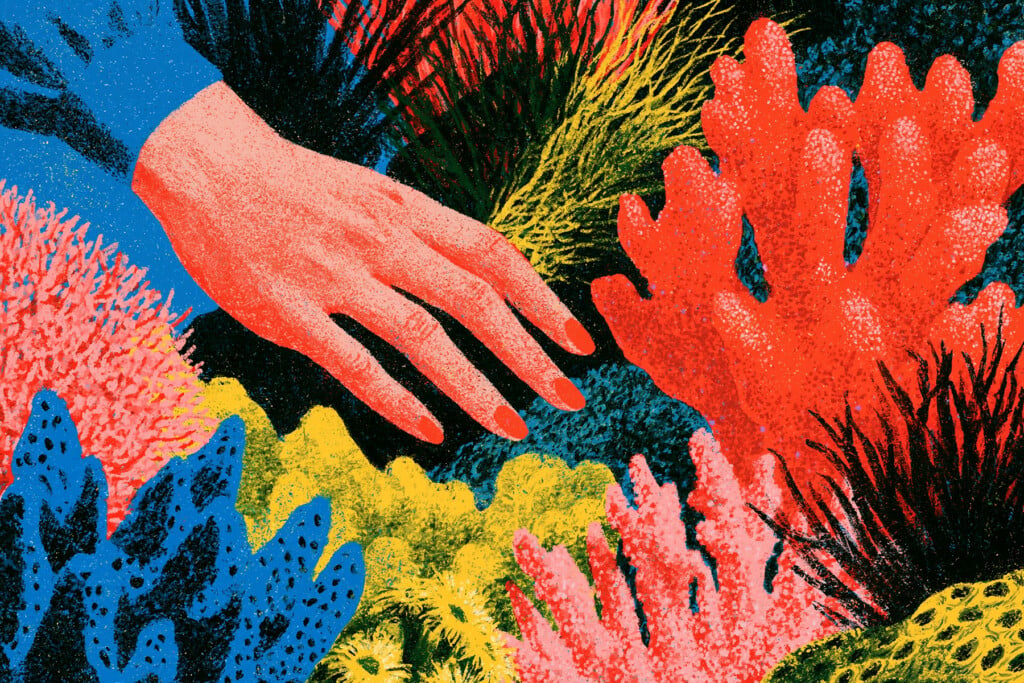
Headquartered in Ko Olina, the nonprofit collaborates with the state’s Division of Aquatic Resources (DAR), NOAA and local partner organizations to carry out reef restoration projects across the Islands.
Hawaiʻi is on the edge of the tropical zone, so “we’re kind of on the fringe of where coral grows,” she says. The reefs surrounding our Islands are also unique because they’re a “tiny pinpoint in the middle of the ocean. So, we maybe don’t have as many species as other places, but we have a lot more endemic species because they develop on their own. That’s why we’re a biodiversity hotspot.”
Protecting these unique ecosystems means battling many challenges. According to Goto, “the number one biggest threat to coral is climate change.” As rising emissions drive up ocean temperatures and carbon dioxide levels, ocean acidification weakens their structural framework, while marine heatwaves trigger widespread bleaching.
“Corals are what you would consider a keystone species. If they disappear, a lot of other things are affected,” Goto says. Coral colonies build structures that support countless marine species by providing habitat and shelter. “Reefs only make up 1% of the world’s ocean floor, but they host 25% of the world’s marine life,” she says.
They also buffer wave energy to create “calm areas that serve as nurseries for juvenile species,” including humpback whales who migrate here to give birth to calves in the winter.
Acting as natural barriers for island shorelines, reefs mitigate coastal erosion from surf, storms and flooding, meaning they “help protect not just the natural environment, but people’s homes and livelihoods as well.”
As part of its mission to recover and stabilize at-risk reefs, Kuleana Coral Restoration performs emergency coral reattachment after extreme weather, boating accidents and coastal damage dislodge coral colonies.
Goto recalls responding to an incident near Kewalo Basin a couple of years ago, where a vessel dragged its anchor across a reef and caused severe breakage: “We went in with our partners at DAR and collectively assessed the damage. Then we took what corals we could that were at higher risk of not recovering on their own from being dislodged, and then we outplanted them back into the areas where the anchor got dragged through.”
She emphasizes that reef restoration is particularly urgent in Hawaiʻi because “our corals grow way slower than other places. … Most of our corals probably average at like two centimeters per year, compared to other places, where they’ll grow up to like 15 centimeters in a year.” When a massive coral head is destroyed, “they could be well over hundreds of years old, and if those are gone, it’s going to take them that long to get that big again.”
For Goto, the most rewarding part of the job is watching marine life immediately return to freshly restored reefs: “When we go back to visit some of our restoration sites, or even right after we finish outplanting, you’ll see certain fish come right away and be like, ‘oh hey, what’s this?'”
She adds that the transformation is even more dramatic over time. “You go from nothing to, all of a sudden, all these little baby fish and whatnot are hanging out. It’s pretty fun, and that feels good.”
Outside of her work at Kuleana Coral Restoration, Goto is an ambassador for Artemis Sports Women, “which is an initiative by the National Wildlife Federation to get more women into outdoor activities,” like hunting and fishing.
In Hawaiʻi, hunting and fishing invasive species plays a key role in ecological balance, as introduced species often outcompete native wildlife. “There’s no natural predators to keep things in check,” Goto says. Following a recent archery event she hosted, she plans to organize more workshops.
“I’m probably going to have something coming up with Kuleana also,” Goto says, “just to help get more women into things where they don’t necessarily have a safe place to get into it.”
Lea Hong
Associate Vice President and Hawaiʻi State Director of Trust for Public Land

Photo Courtesy: Aaron Yoshino
As Trust for Public Land’s associate vice president and Hawaiʻi state director, Lea Hong has led efforts to protect some of the Islands’ most culturally, environmentally and recreationally significant spaces.
Under her leadership, the national nonprofit, founded in 1972, has preserved 49 sites totaling nearly 78,000 acres statewide, including Alakoko Fishpond on Kauaʻi, the Ka Iwi Coast on Oʻahu, Kamehamenui Forest on Maui and Pōhue Bay on Hawaiʻi island.
“Our mission is to create parks and conserve land for people, ensuring healthy, livable communities for generations to come,” says Hong, whose love for the outdoors sparked at a young age.
Growing up in Wahiawā on Oʻahu, she recalls frequently hiking nearby Koʻolau trails and swimming in the Kaukonahua Stream with friends. As a student at Leilehua High School, she joined the Sierra Club, exploring trails on other sides of the island, an experience she says “was really eye opening.” Hong also spent plenty of time on the North Shore fishing with her hānai aunty, whom she remembers as a “master fisherwoman.”
At the University of Hawaiʻi’s William S. Richardson School of Law, Professor Casey Jarman mentored her on environmental litigation. She then completed a two-year associate program with Earthjustice, a public-interest environmental law firm, followed by a decade in private practice handling environmental and cultural resource cases.
That background continues to come in handy since joining TPL as its Hawaiʻi state director in 2006, where she oversees land acquisitions for conservation. “The law degree has really helped in terms of exposing me to so many environmental, conservation and Hawaiian cultural issues that face Hawaiʻi,” Hong says. “Even though I’m not the lawyer on these transactions, … having that understanding of land use, legal title and real estate issues, I think is really helpful.”
According to Hong, the most challenging aspect of TPL’s work is that land in Hawaiʻi is considered by some to be a commodity and “it’s sold often in a way that doesn’t take into account the community.
“Some landowners actually want to work with us, but some landowners just want to sell it as quickly as possible for the highest price possible, regardless of who that end user is going to be.”
She says raising enough funds to close a deal takes 18 months to two years on average, a timeline many landowners aren’t willing to wait out just to see the property go to a community-supported steward.
“So we try to be creative. There are sources of capital that we can tap to purchase land at lower than market interest. In fact, we just bought a parcel recently on the Kona Coast at Kealakekua Bay, that’s the trailhead to the Captain Cook Monument Trail, and with the intent that this land will be conveyed to Hoʻāla Kealakekua Nui, which is a community organization that has brought together all the stakeholders at Kealakekua Bay and the residents.”
Hong has helped establish three TPL Hawaiʻi programs. “One is our Aloha ʻĀina program, which works with local communities and Native Hawaiian organizations to protect lands that are culturally sensitive, culturally important. In some cases, the land is actually returned to the Office of Hawaiian Affairs, or to a Native Hawaiian nonprofit,” she explains.
Another, Sustainable Hawaiʻi, “is more about the watershed, forests, food, sort of the whole ahupuaʻa,” including loʻi and fishponds, but she says there’s significant crossover between the two initiatives.
“Native Hawaiians have a special relationship to land where they consider it as part of their family, and that they have tremendous kuleana, responsibility, to care for it. And if they care for it, it will be a reciprocal relationship, right? So that is very special to see and to see it progress over time because we’ve been involved in so many different land returns to Native Hawaiian organizations: Kaʻala Cultural Learning Center, MAʻO Organic Farms, Nation of Hawaiʻi. We’re working with two in Maunawili, Hoʻokuaʻāina and Kauluakalana.”
Their newest program, Parks for People, is working to create safe and vibrant urban parks to improve parkgoers’ health and quality of life. “We’re trying to work with those communities to figure out what they want to see in their community as an open space, or what do they need? Sometimes it’s not a regular park, it might be a community garden or a community loʻi or a gathering space,” she says. Their pilot project is currently underway at ʻAʻala Park in Honolulu, where they are working to revitalize the space based on community input.
After two decades at the helm of TPL Hawaiʻi, Hong is preparing to retire in December. She says she looks forward to traveling and tackling home repairs, while spending “more time in the water and getting dirty, … and supporting organizations, like the law school, I’m already involved in.”
Stacy Sproat
Executive Director of the Waipā Foundation

Photo Courtesy: Aaron Yoshino
Before Hawaiʻi’s modern land ownership system sliced parcels into a hodgepodge of shapes clustered around shoreline towns and cities, ancient Hawaiians had their own system called ahupuaʻa. Taking inspiration from the sloping terrain of the Islands, these properties stretched from mountain peaks all the way down to the ocean, following the watershed that fed streams and allowed for a variety of food production at each elevation level.
Today, few operational ahupuaʻa remain. But one, Waipā on the north coast of Kauaʻi, extends from the mountaintop of Māmalahoa to the western shores of Hanalei Bay. It is under the stewardship of the Waipā Foundation, which aims to carry on the self-sustaining community, agricultural and social traditions as guardians of the land.
“The ahupuaʻa system was a land management system that our ancestors created,” explains Stacy Sproat, executive director of the nonprofit Waipā Foundation. “So you can imagine, if you need to get everything you need to survive [from just your valley], you need to really understand your resources in the valley, how to take care of them, how to increase their health.”
Alongside community volunteers, the foundation stewards the ahupuaʻa through stream restoration, reforestation, agroforestry and coastal resiliency projects. By revitalizing Waipā’s natural systems, the organization provides ʻāina-based education for all ages. A lot of that hands-on learning takes place across more than 30 acres of gardens, orchards, loʻi and agroforestry sites, where they cultivate crops ranging from kalo, papaya and ʻulu to kale, daikon and arugula.
Sproat’s own connection with the land stretches back to her childhood. She grew up in Kalihiwai, another ahupuaʻa on Kauaʻi’s North Shore, immersed with her family in farming, fishing and ranching. “My lessons from those experiences were learning how to work hard and that hard work can be fun; that it’s important to make it fun, and also to reward the hard work,” says Sproat.
As kids, “we always got to go swimming afterwards and play and eat the fruits of our labor. We had dinners together and celebrations, and there was always an element of community there, of food and of fun in and around the work. So, we learned that it was a good thing to work hard.”
After boarding at Kamehameha School’s Kapālama campus on Oʻahu from age 12 through high school, Sproat attended the University of Southern California, graduating magna cum laude with a degree in business entrepreneurship in 1992. Not long after she returned home to Kauaʻi, Hurricane ʻIniki, a Category 4 storm, devastated the island.
She started volunteering in Waipā that same year, but she says the groundwork started a decade earlier, when her father and other activists saved Waipā from resort development in the early 1980s: “They had to incorporate a for-profit to hold the lease because Kamehameha wouldn’t lease to a nonprofit, and so that was our predecessor organization, the Hawaiian Farmers of Hanalei.” In 1994, they pivoted to the nonprofit model and changed their name.
“There were so many challenges at the time,” she says, but, fresh out of college, she viewed it as the ultimate entrepreneurial project: “The returns aren’t just financial, they’re also community, culture, food, ʻāina and environment. So I saw the value in it, as well as that it was the dream of many generations. I was just helping them to bring their dream to fruition and do everything I could to keep it alive and use all of my business skills to do so.”
Sproat became the Waipā Foundation’s executive director in 2001, serving as its first and only employee for about a year. Twenty-five years later, the organization has expanded to a staff of 36.
In addition to weekly farmers markets, they sell fresh produce through their self-serve, honor-system retail kiosk on site, although Sproat admits items sell out quickly because quantity is limited. “We do so much at Waipā that it’s really hard to prioritize farming and growing” enough to keep the fridge stocked, she says.
For her, the most fulfilling thing about their work is engaging with multiple generations: “To have been able to work with kūpuna from my community for decades, to learn from them and hear their stories, and be able to carry them on and pass them on to the next generation of kids. To keep them alive through our work has been a beautiful and rewarding thing.”
Connecting keiki and young adults to the ʻāina also brings Sproat joy: “To be starting and running programs, especially that actively work to pull back young people and college graduates that leave our rural communities, … finding ways to use their degrees and giving them a space to come back and connect to, watching them build community with each other is so rewarding, and it gives me a lot of hope for the future.”
Uhiwai Wall
Hawaiʻi Science Intern at Asner Lab

Photo Courtesy: Aaron Yoshino
Among Hawaiʻi’s up-and-coming generation of environmentalists is 20-year-old Uhiwai Wall. While pursuing an online degree in culture, technology and environment at Arizona State University, Wall works as an intern at Asner Lab, a research group housed within ASU’s Center for Global Discovery and Conservation Science.
At Asner Lab, a hub for initiatives designed to protect the environment, she is “a part of a big team that has a wide range of specialties. They do crazy stuff from outer space to the seafloor,” Wall explains.
Under the Asner Lab umbrella, Wall works with the ʻĀkoʻakoʻa Reef Restoration Partnership of Hawaiʻi, a coral conservation and community stewardship program that covers 120 miles of Hawaiʻi island’s leeward coast.
“Coral restoration is important because of how foundational corals are to the ecosystem, both below and above water. Without them, there’s a chain reaction of death starting with the immediate surroundings, but also there’s the death of culture, of practices that bring us together: no coral, no fish, no fishing. No reef, no surf, no surfing,” Wall explains.
Raised in Kona, Wall and her siblings represent the sixth generation of ranchers in their family. “I was raised and surrounded by people who understood the environment around them, from weather patterns, water sources, plants and animals. They knew their place so well, and they knew how to take care of it. So, naturally, I wanted to be like them,” she says.
“My family and this place are what instilled the awe and reverence that I have for ʻāina. When a place is healthy, the people who live on it are healthy. And like, what greater honor than taking care of the place that takes care of you.”
Understanding the Indigenous knowledge of the ahupuaʻa system and how entire watersheds are interconnected is vital, Wall explains, since upstream harms, such as wastewater pollution, debris, chemical discharge and rapid development, trickle down into the ocean and threaten reefs. “When the land isn’t properly managed, the reef suffers the consequences,” she says, “so it’s a tough issue to tackle.”
Wall supports a variety of marine operations as captain or crew aboard vessels from which their team carries out coral reattachment, diagnostic surveys and larval deployment. She says ʻĀkoʻakoʻa operates a land-based nursery to spawn coral larvae, which crew members then transport by boat to targeted restoration sites.
“We recently released 1.2 million coral larvae at Hoʻokena using nets that Uncle Damien Kenison and Uncle Paul Kane helped design,” Wall says, noting that the two local fishermen crafted a setup modeled after traditional fishing techniques.
“It’s basically like an upside-down ʻōpelu net made of super-fine mesh so the larvae can’t float away and the fish can’t eat them, because to the fish, those larvae are like candy.” A few days after deployment, the larvae settle enough for the team to remove the nets.
Her favorite species to work with is Porites compressa, also known as finger coral. “I like the way it makes a tangle of holes and caverns for fish to hide in,” she says. “And when you look at it from the side, it tells a story. Like you can see the layers and layers of life from decades of growth, and then at the top is a very thin line of living tissue.”
Wall also helps with outreach, manning booths at community events and visiting schools, which is how she was introduced to the program. She recalls a representative from ʻĀkoʻakoʻa coming to Konawaena High School during her senior year and shedding light on “what has been right under my nose this whole time. The reefs that I surfed over every day are alive and have watched me grow up, but I wouldn’t have paid attention to them if I hadn’t been shown.”
She joined ʻĀkoʻakoʻa straight out of high school in 2024. She says, “I’m thankful to my mentors who took the time to teach me about this ecosystem because once you’re opened up to it, there’s no way you can’t care.”