Why Vinyl, Film and Thrifting Are Drawing Hawai‘i Shoppers
Consumers are seeking out vinyl records, film photography and secondhand fashion for ownership, self-expression and experiences worth slowing down for. Younger shoppers are helping drive demand, even as rising costs make some analog hobbies more expensive. Hawai‘i businesses rooted in personal service and community have an advantage, if they recognize what keeps these customers coming back.
We live in an age of convenience where “friction” has been systematically engineered out of our daily lives – which are increasingly governed by algorithms tracking our purchases, online searches, photos and interactions with friends.
As AI instantly processes mega-databases of personal profiles, technology companies can now anticipate our consumer desires and capitalize on those without us doing anything more than tapping a finger on a smartphone or voicing commands to a smart speaker.
If you want to hear a specific song from 1994, you can find it and play it through a streaming service much faster than hunting down the CD or waiting for it to be played on the radio. Our photos are automatically backed up to invisible cloud storage, turning captured moments into searchable data. And the things we buy arrive on our doorsteps by tomorrow afternoon.
By almost every metric of convenience, technology has delivered its promises. Some social scientists have described this as “techno-feudalism” – a world where consumers become renters, not owners, and we entrust everything, even our privacy, to the few companies that control access to the cloud.
People are voluntarily returning to slower, heavier, more physical experiences.

Bobby Asato opened Treehouse in 2012 located in SALT At Our Kaka‘ako. Photo: Aaron Yoshino. Shot with Leica M6 on Kodak Ultramax 400 film
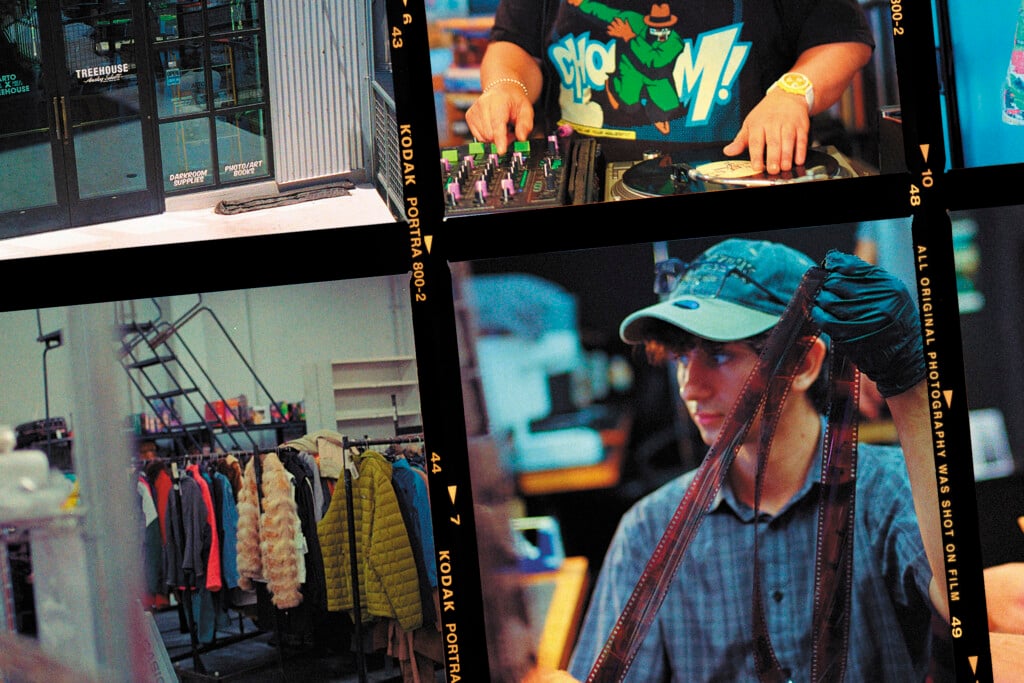
Bobby Asato saw it coming. He opened his Honolulu shop, Treehouse, in 2012 out of a father’s concern. “I had two young kids, so I could see [the iPad] starting to come up,” he recalls. Treehouse began as a creative workshop and arts-and-crafts store for children and has since evolved into a specialty film photography establishment. “I was trying to be an option to promote hands-on creativity instead of the digital stuff.”
He didn’t expect other people to feel the same way.
When we let algorithms do all the lifting, we remove the effort and time that makes experiences memorable. Nick Sun, an artist and employee at Hawai‘i’s oldest record store, Hungry Ear Records, calls this a form of cultural erosion. “I feel, with digital, there is a distance that we’ve created, not purposefully, but through time and through things being more available and being easier,” Sun reflects. “I think it has made things a little less intentful, a little less purposeful.”
That intentfulness is showing up in everyday choices. At Goodwill Hawaii, managers watch younger shoppers arrive with a straightforward goal, hunting for specific items that don’t exist on any new-arrival rack. Angel Zavala, a high school freshman, spent her summer scouting thrift stores across the country for styles she’d saved on Pinterest and couldn’t find anywhere else. For Zavala and her generation, even the way they shop has become a deliberate, physical act.
Our digital lives have become increasingly optimized, frictionless and automated. People are placing a premium value on experiences that feel tangible, nostalgic and human. They are actively searching for ways to close that “digital distance” and reclaim a sense of active participation in the culture they consume.

76% of Gen Z vinyl buyers purchase records at least once a month, using the format for intentional, album-length listening sessions. Photo: Aaron Yoshino. Shot with Leica M6 on Kodak Ultramax 400 film
The Return of Analog
The most visible symptom of the search for experience over ease is the resurgence of things we previously discarded in the name of progress and convenience. You can see it playing out across retail aisles, local coffee shops and community gathering spaces.
While national data shows vinyl record sales climbing year after year, local business owners do not need charts to prove the demand. Jim Williams, a music industry veteran who began his career in 1988 with Tower Records before joining Hungry Ear Records in 2012, remembers exactly when the resurgence shifted from a niche subculture into a major commercial force.
“I think the long lines we started getting at Record Store Day, which is a national indie store event … was the first realization that we really had something going again,” Williams says. “And a lot of those people that were standing in those long lines were coming back to shop with us.”
This commercial gravity is so strong that it pulls in people who do not even have the means to play the media they are buying. The store itself has become a sensory destination that defies the transactional nature of clicking “add to playlist” on a screen.
“It’s just a great way to get lost for an hour or two,” Williams observes. “We’ll have a lot of people come in say they don’t even have a turntable. They just like coming in, you know, thumbing through the records, just kind of walking around, soaking up the atmosphere.”
For those who do own a turntable, the draw lies in the manual choreography of the format. What the digital age labeled as “friction,” vinyl enthusiasts view as an essential ritual. Sun refers to this phenomenon as “intentful listening.”

Nick Sun and Jim Williams of Hungry Ear Records. Photo: Aaron Yoshino. Shot with Leica M6 on Kodak Ultramax 400 film
“There’s a sense of ceremony to it that does bring intent to the idea,” Sun explains. “And you only can listen to one side at a time. It takes 20 minutes. Then you have to walk back to the turntable and flip it over and listen to the other side. It’s so much more work for most people, but you have intention to listen.”
This premium on patience is also driving a parallel boom in film photography. Asato’s journey at Treehouse mirrors this shift. Local demand was so intense that when a major supplier closed down, Asato was asked to buy out their inventory and take over supplying photography departments at local high schools and colleges. Since that pivot, the demand has remained remarkably steady.
Like vinyl, film appeals to creatives because it enforces a physical limit. It serves as a direct antidote to the infinite, thoughtless snapping permitted by smartphones.
“Shooting film is a process, and you’re not able to see what you shot until you finish the roll,” Asato says. “I think it makes you more intentional and try to make it count because you’re obviously paying for a roll, so you only have 36 shots in a roll. So, I think you tend to be more selective versus just pop away and shoot 10 of the same thing and pick one.”
From a purely functional standpoint, this makes very little sense. The images a disposable camera captures have lower resolution than those of a modern smartphone, and a record player is objectively less convenient than a digital playlist. These analog formats are not returning because they are superior technologies. They are returning because they provide a completely different experience, one filled with nostalgia and less internet slop.
When you buy a physical object, it’s yours to keep. That tactile connection fundamentally changes our relationship with the things we consume, transforming passive scrolling into an intentional, memorable action.

Eddie Esperante, Local collector and founder of SlabbySouls. Photo: Aaron Yoshino. Shot with Leica M6 on Kodak Ultramax 400 film
Desire for Things They Didn’t Grow Up With
The most enthusiastic consumers of these older formats are often the ones who came of age after new formats replaced them. Many Gen Z consumers have no memory of struggling to rewind a cassette tape with a pencil, carrying a bulky binder full of CDs or waiting for a roll of film to be developed.
Their conscious lives have been entirely defined by high-speed internet and ubiquitous screens. Yet they are the very ones driving the massive demand for early-generation iPods, independent print magazines and point-and-shoot cameras.
Why seek out the clunky and outdated when you have a supercomputer in your pocket? The answer lies in a search for authenticity and individuality.
When everyone has access to the same music, a Spotify playlist says less about who you are. Physical media serves as a tangible expression of personality that an algorithmic profile cannot replicate. Eddie Esperante, a local collector who runs the physical media brand SlabbySouls, observes that physical collections once acted as a direct window to a person’s identity.
“Growing up, people had their own DVD collections, and that kind of displayed their personality,” Esperante explains. “So maybe someone is really into science fiction, so they have all the Star Wars movies or Star Trek movies. Whereas, you know, on Netflix, everything is on one, two, maybe three-year contracts, and that’s not really your collection. Netflix chooses what you get to watch based on what contracts they have. It’s important to have that physical media because it shows your personality.”
According to the Vinyl Alliance’s Gen Z report – the most comprehensive study of its kind, surveying over 2,500 vinyl fans worldwide – 76% of Gen Z vinyl buyers purchase records at least once a month, and 80% own a working record player, using the format for intentional, album-length listening sessions. Their collections reflect a deliberate approach to how they consume, preserve and engage with culture.

Film photography no longer ends with the negative. More young photographers are printing their images and bringing them into the physical world. Photo: Aaron Yoshino. Shot with Leica M6 on Kodak Ultramax 400 film
Nowhere is this more visible than in the explosive resurgence of film photography. The global disposable camera market surpassed $1 billion in 2025, according to a ShelfTrend report, and Gen Z accounted for 63% of disposable camera sales in 2023. More young film photographers are making prints of their photos. The study found that 43% of Gen Z regularly print physical copies of their photos, compared to just 5% of Baby Boomers, at twice the frequency of any other generation. Rather than leaving their memories buried in a camera roll or cloud storage, they are choosing to print, display and preserve them.
The rise of hyper-polished, AI-generated perfection has made the imperfections of physical media feel more human and real. Sun views this aesthetic as a core driver of Gen Z’s migration to analog, describing how physical wear can turn a mass-produced object into something uniquely personal.
“Perfection is unrealistic,” Sun says. “I really don’t think conceptually that that could exist unless you idealize your imperfection as perfection. It’s the thing with vinyl; it doesn’t sound better than digital necessarily. It depends on a lot of things, but the little cracks and pops sometimes it becomes yours. You know, like if you scratch it, that’s your scratch. Like now, that record’s always yours.”
Esperante points to Batman v Superman: Dawn of Justice, a film that was heavily criticized in theaters but found redemption among fans who bought the physical Blu-ray. That physical release contained director Zack Snyder’s three-hour cut, which cleared up major narrative gaps.
“People were very passionate about the director’s cut version when it came out to DVD and Blu-ray because they can see the true vision of the director,” Esperante says. “So you get to see the true version.”
That sense of unique, unrepeatable ownership is a psychological defense mechanism against a highly disposable digital culture. This behavior reveals a profound shift in the modern consumer landscape. Nostalgia shapes what people buy and collect, from the products they choose to the designs they like. Smart companies are beginning to realize that delivering this sense of grounded, imperfect reality has become an industry of its own.

Angel Zavala moves through thrift stores hunting for styles of the early 2000s and mid-2010s. Photo: Aaron Yoshino. Shot on Nikon F3 on Kodak Ultramax 400 film.
The Thrift Store Comeback
The analog revival isn’t limited to record stores and camera shops. It’s showing up in closets, too. Across Hawai‘i, a growing number of shoppers are bypassing fast fashion retailers entirely and heading straight for the thrift store rack. They’re hunting for styles of the early 2000s and mid-2010s like baggy denim, flame-print details, layered baby tees and bedazzled tops. Fashion from roughly 10 years ago is cycling back in, and secondhand stores are the most accessible place to find it.
Angel Zavala is a high school student and exactly the kind of shopper reshaping what a Goodwill run looks like. Zavala doesn’t have a significant presence on social media, but she moves through thrift stores with a practiced eye, guided largely by what she’s saved on Pinterest and what she sees on people around her.
“I feel like even if you don’t know what you’re looking for, if you go, there’s so many options that you’ll find something you’ll like,” Zavala says. “And it’s also conveniently priced, so it’s affordable.”
Zavala started thrifting seriously this past summer during family travels that took her to New York, where she visited a store called 2nd STREET. The experience was immediately different from walking into a standard clothing retailer. She had been hunting on Pinterest for Henley tops, a silhouette virtually absent from mainstream store racks, and found them easily at the thrift store, exactly as she’d imagined them.
“I’ve been saving a bunch of stuff on Pinterest of Henley tops,” she explains. “And I was looking for those in all regular stores, but I couldn’t find any that were really what I wanted. But I was finding some at thrift stores I went to.”
Zavala shops at thrift stores for the prices and the chance to see what she might find. She gravitates toward baggy jeans with unusual details, jeans with flame patterns on them, pieces with bejeweled back pockets, and, next, she’s hunting for bedazzled cami tops to layer over long sleeves in the style that’s been circulating among her peers. The thrift store is where that kind of specificity is possible.
“If you’re not really sure what you want, then thrifting would be easier,” Zavala says. “When you walk into a thrift store, there’s so many options and different styles to choose from.”
Goodwill Hawaii has watched this shift unfold from the other side of the rack.
“We’re seeing a much wider range of customers than we used to,” says Carol McDaniel, store manager at Goodwill Pearl City. “A lot more of the younger generations and resellers. Thrifting has become much more mainstream, and people aren’t necessarily shopping secondhand only because they’re looking for a lower price.”
That shift is visible in what younger shoppers are specifically hunting for. Anela Lewis, store manager at Goodwill Wahiawā, describes a generation with a clear and very analog shopping list.
“They’re looking for anything vintage or retro,” Lewis says. “From graphic tees to vinyls and older cameras or electronics.”

Goodwill Hawaii sees a lot more younger generations thrifting and becoming more mainstream. Photo: Aaron Yoshino. Shot with Nikon F3 on Kodak Ultramax 400 film
“I hear customers say that they like the thrill of finding something vintage or unique,” says Kim Pablico, store manager at Goodwill Kapolei. Pablico recalls a young customer who came in and was genuinely excited by an ashtray, a functional object so thoroughly absent from everyday life that he had no idea what it was and simply thought it was a cool find. The discovery was the point.
The reach of that discovery extends well beyond walk-in shopping. Keala Dela Cruz, Goodwill Hawai‘i’s e-commerce manager, oversees ShopGoodwill.com/Hawaii, where the customer base spans generations and geographies. What the online platform reinforces is that the appetite for secondhand goods is not a niche local trend. It’s a broad, cross-generational pull toward the singular and the unexpected.
“When you buy something new online, you usually know exactly what you’re getting,” Dela Cruz says. “At Goodwill, you might walk in looking for one thing and leave with something completely different because you found something you didn’t even know you wanted.”
To be sure, revivals of retro clothing have occurred in nearly every generation, seeking the fashions of a prior era. But younger shoppers today are also arriving with a goal beyond the discovery. Thrifting has taken on an environmental dimension for a generation acutely aware of the waste embedded in fast fashion. Buying secondhand is understood as an act of rejection, a way of opting out of a system built on disposability.
“The younger generations are more eco-conscious and attuned to the idea of rejecting fast fashion and shopping secondhand as their way of trying to protect the environment for the future,” McDaniel says.
Zavala might not put it that way. But her instinct, to seek out something specific, something physical that can’t be found on an algorithm-optimized product page, connects directly to the same search driving vinyl collectors and film photographers. What makes thrifted fashion feel meaningful is the same thing that makes a record or a printed photo feel meaningful: you chose it, you found it and nobody’s feed suggested it to you.

Treehouse Photo Lab on Young Street strives to produce exceptional film processing and scanning services. Photo: Aaron Yoshino. Shot on Nikon F3 on Kodak Ultramax 400 film
Nostalgia Has Become an Industry
Businesses are tapping into the comfort of nostalgia to shape how they market and sell their products. Brands are reviving vintage typography, utilizing throwback packaging and leaning heavily into retro branding that evokes specific eras.
The massive resurgence of Y2K fashion – now a global market valued at roughly $8.7 billion in 2024 and projected to nearly double by 2033 – the enduring appeal of heritage surf brands, and the popularity of new instant cameras all point to a consumer base eager to purchase a piece of the past. Even software companies are cashing in, selling digital film presets designed specifically to make high-resolution smartphone photos look degraded, grainy and flawed.
The appetite for this kind of emotional commerce is well-documented. Research consistently shows that consumers are willing to pay 10 to 15 percent more for products that evoke nostalgic feelings. More than 50% of U.S. adults say they are likely to make a purchase when it makes them feel nostalgic for the past.
Online retailers are also capitalizing on this trend, with “retro” an established and popular search term on Amazon and other shopping sites.
Still, there’s more behind this renewed interest in the past than marketing. In 2026, nostalgia has become a high-premium industry navigating the same macroeconomic headwinds that challenge any modern supply chain. From inflation to shifting global trade policies, the operational reality of running an analog business is expensive.
Asato has spent the last several years steering Treehouse through these exact economic pressures. For local shop owners like him, keeping the physical medium alive is a constant battle against rising overhead.

Bobby Asato owner of Treehouse and Treehouse Photo Lab. Photo: Aaron Yoshino. Shot with Leica M6 on Kodak Ultramax 400 film
“I guess throughout the years, trying to find the right mix in inventory, but as of more recent, probably since Covid, the prices have doubled,” Asato says. “So, what we would retail a particular film before Covid now is twice as much.”
Film prices are only part of the pressure. The chemicals needed to develop those images also depend on international trade. In early 2025, major film manufacturers announced across-the-board price increases: Kodak raised prices 5 to 8 percent on most films, while Fujifilm announced hikes of up to 52% on certain reversal films, both citing raw material costs and supply chain disruptions compounded by new tariffs. The pain extended beyond film stock itself: Tariffs prompted Fujifilm to raise the price of its camera by as much as $800 per body.
“The cost has constantly been increasing, and now we’re faced with tariffs,” Asato explains. “Other countries supplying some of the chemistry or material to make film has gone up too. So, it’s been increasing once or twice a year, at least, like 5%. I’m hoping it won’t choke people out at some point.”
Today, this financial reality changes the math for the consumer. What once was an affordable weekend hobby now requires a deliberate financial commitment. Asato details how expensive the hobby has become.
“To shoot a roll of film and get it developed with digital scans, you’re probably looking at, you know, anywhere from $25 to $30,” Asato notes. “So, for $100, you can only shoot three rolls and get that digital scan these days.”
Despite these steep barriers, so far younger consumers are actively choosing to absorb the cost. This willingness to pay a premium proves that the desire for tactile, authentic experiences is robust enough to withstand significant financial hurdles. The organic look and physical connection of analog products hold a value that infinite, free digital files cannot match.
For businesses, this points to an important difference. The most successful brands are not just copying old designs or lazily slapping a retro logo on a new product. Instead, they are carefully engineering texture that elicits an emotional reaction. They understand that when a customer reaches for a product with heritage packaging or an intentionally tactile design, they are often reaching for the feeling of familiarity and trust that those visual cues represent.
It is a sophisticated approach to building brand loyalty. Functionality, price and digital convenience are no longer enough to set brands apart. Emotional resonance is increasingly what makes the difference. Consumers are opening their wallets for companies that offer a break from digital sameness, rewarding brands that manage to feel distinct, grounded and shared by real people.
Hawai‘i Was Already Built This Way
For businesses operating in Hawai‘i, this national shift toward the tangible may seem familiar. Many of the qualities currently being celebrated as a return to analog have long been the foundational bedrock of Hawai‘i’s economy and culture. Commerce in Hawai‘i has always been rooted in relationships, shaped by island geography and the close-knit communities that define life here.
The premium placed on face-to-face relationships and word-of-mouth reputation cannot be easily replicated by a mainland technology company’s algorithm. A family-owned market in Hilo or a legacy eatery in Kaimukī doesn’t need to manufacture a retro aesthetic or print vintage-inspired packaging. Their authenticity is earned through decades of continuous, physical presence.
The continent may be experiencing a sudden resurgence of interest in swap meets, flea markets and handmade goods, but these have remained constant weekend rituals here. The enduring vibrancy of neighborhood farmers markets, local craft fairs and community swap meets proves that Hawai‘i consumers have long valued the experience of buying directly from a maker.
This community-level commerce frequently sees different analog niches teaming up to create physical gatherings. For instance, Asato regularly collaborates with Hungry Ear to host events that bridge their respective subcultures.
“We do a film camera swap meet,” Asato explains. “We also team up with Hungry Ear and include vinyl records. I guess it’s kind of the same clientele or customer. Local people with gear can sign up, and then we facilitate, along with the local vinyl record collectors, and then we do this event at the barn at SALT… and we have DJs playing.”
This local connection is built on a circular flow of goods and mutual trust. The records lining Hungry Ear’s shelves come directly from personal collections preserved in local homes.

Hungry Ear Records located in SALT At Our Kaka‘ako. Photo: Aaron Yoshino. Shot with Leica M6 on Kodak Ultramax 400 film
“Almost all—well, all—of our used music comes from people in the community,” Williams notes. “If they have older records just kind of sitting in a closet that they don’t know what to do with, we’re always happy to take a look. We do buy used collections, and that kind of helps keep the store up and running as well… That helps us keep the store going.”
This relationship is especially potent when it comes to preserving local musical heritage. There is a deep, cross-generational demand for classic island sounds, driven by both locals and visitors seeking a physical piece of history.
“We get younger kids who are interested in the history of Hawaiian music,” Williams says. “We get older people wanting to relive their youth, picking up, you know, say a Kalapana or a C&K record, and we get a lot of tourists, too, who want a memento of their trip.”
For Sun, selling physical music is also an act of cultural preservation. He often describes it as a form of modern archaeology.
“Loving music is finding cultures and being able to look into the modern archeology of things,” Sun reflects. “Music transcends time, but it can also be a time capsule, so it takes you to different eras. It takes you to different demographics and different cultures, all through this thing that you don’t have to understand the language, you don’t have to understand the rhythms, but you can feel them.”
In Hawai‘i, a transaction is an interaction between neighbors. As a growing market reverts to valuing human connection over digital convenience, local businesses hold a built-in competitive advantage.

Treehouse Photo Lab on Young Street preserves O‘ahu’s analog infrastructure. Photo: Aaron Yoshino. Shot on Nikon F3 on Kodak Ultramax 400 film
The Business Advantage of Being Human
So, what does this cultural shift mean for local businesses navigating the market today?
It offers a compelling counter-narrative to the prevailing pressure to digitize every aspect of commerce. It is easy for business owners to look at global tech trends and assume that the only path forward is aggressive automation. But the growing fatigue with frictionless living suggests that businesses do not always need more automation to succeed. In fact, a 2025 PwC survey found that 86% of consumers consider human interaction essential to their brand experience, and 79% of Americans say they strongly prefer interacting with a human over an AI agent.
Sometimes, what a company actually needs is a stronger community. The most enduring local brands are proving that growth often comes from investing heavily in memorable, in-person experiences rather than just digital user interfaces. The numbers show how much people value this connection: 64% of Americans actively seek out local businesses to support, and 78% say they are willing to spend more to buy local.
Taking these community-first risks can require a substantial leap of faith. The uncertainty of the pandemic in 2020-21 coincided with a turning point for Asato. Wonder Lab, one of the last remaining film processing labs on O‘ahu, announced it would either close or be sold. Up to that point, Treehouse had functioned as a retail shop and a drop-off site, feeding film to outside facilities. Rather than letting local photographers lose a crucial resource, Asato decided to step in and purchase the lab.
“I thought, oh no, we’ll only have one lab locally,” Asato recalls. “So, it was a pretty cheap way in. Although we had to get trained on how to use all these machines, they require chemistry, different programs. So, I ended up buying the lab business.”
Treehouse Photo Lab on Young Street preserves O‘ahu’s analog infrastructure. Without that decision, local photographers would have been forced to mail their rolls to the continent, adding weeks of shipping and processing delays. It was an operational risk, but it solidified his business as an indispensable pillar of the local creative community.
This human advantage is also evident at local conventions. If you walk past Table D11 at the H&C Card Fest or browse the Hawaii Collectors Expo, you will find Esperante surrounded by graded VHS tapes, vintage movie tickets, and first-print editions of the One Piece manga. In exhibition halls dominated by hyper-commercialized sports cards and Pokémon packs, he uses his physical inventory to spark interactions.

Esperante’s local collection. Photo: Aaron Yoshino. Shot with Leica M6 on Kodak Ultramax 400 film.
“A lot of the shows now are just really dominated by Pokémon and maybe some sports stuff,” Esperante says. “And I do love Pokémon, I watch a lot of sports, but in terms of collecting, that’s not really my passion. But I already had a collection, and so it’s nice for me to put it on display and to kind of talk story with people. I’m really trying to spread that message like, oh, there’s other things you can collect, you know, and everyone goes to the movies, so there might be something that is nostalgic to them.”
For Esperante, the conversations, relationships and new perspectives shared at the table matter as much as what’s for sale. Recognizing a beautifully printed menu, a carefully designed storefront, or having a genuine conversation with a knowledgeable merchant carries an emotional weight that a QR code or an online store listing cannot replicate.
This does not mean abandoning innovation. Technology remains an incredible tool for improving operational efficiency behind the scenes. Software is perfectly suited for managing complex inventory, streamlining payroll, and analyzing sales data. But efficiency alone rarely inspires devotion. It is the authenticity of human connection that creates lasting loyalty. They want more human contact in their customer experience, not less.
Businesses that survive this digital wave will not be the ones trying to match the efficiency of online giants. Record stores and camera shops endure because they offer a sense of culture and community that big-box retailers can’t match.
Sun outlines this as a fundamental business strategy for independent survival: “We can never compete with the Amazons and the big bosses of the world, but what we can do is build a culture. We can build the community, and that will keep us going because they’ll support us whether or not we’re able to have all the records that they want. But they understand we’re a hub where they can enjoy each other’s company and talk about it and feel things, you know, and not feel judged.”