The Other Side of Motherhood
One Hawai‘i mother’s experience with stillbirth, postpartum depression and grief reveals a side of motherhood that too often goes unseen and unsupported.
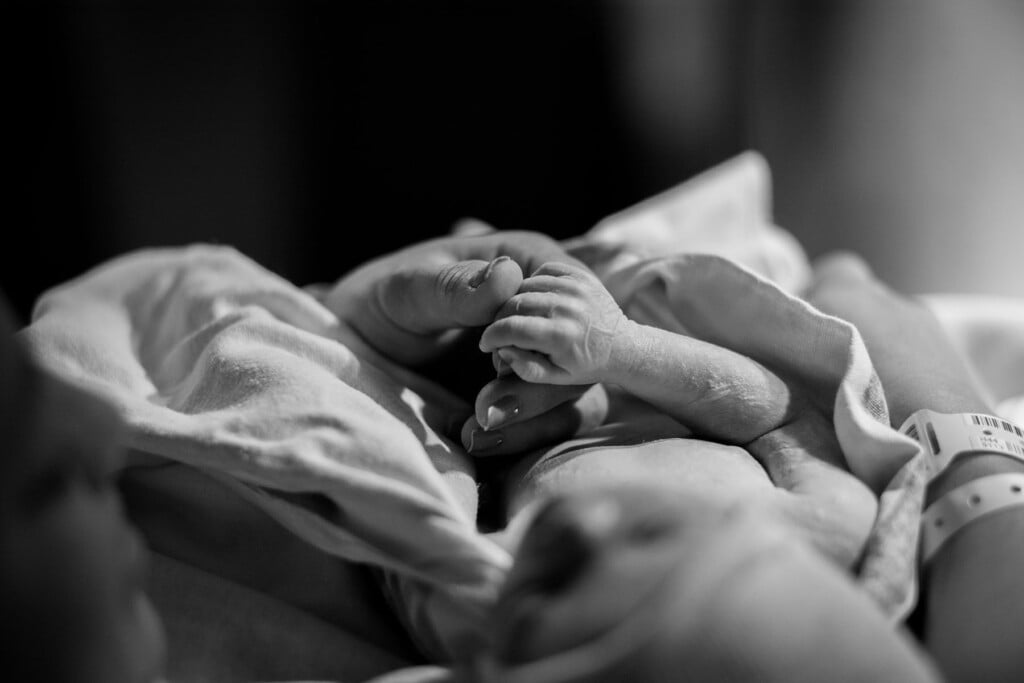
Katie Nault woke up at 38 weeks pregnant and knew something was wrong. She couldn’t feel her son. She went immediately to the hospital, holding onto hope but knowing, somewhere deep inside, that something was terribly wrong. The doctors confirmed what she already knew. Her son was gone. She was admitted and induced immediately, with barely any time to process the news.
She was in labor for two and a half days. During labor, she experienced a serious complication involving her epidural. She remembers tasting metal in her mouth. Then she suddenly flew backward into her hospital bed. She couldn’t breathe. Her blood pressure dropped to 50/33. “I thought I was dying,” she says.
Slowly, with the help of medication, her blood pressure came back up. Then, just after midnight the following day, she gave birth to her son, Connor James. They placed him in her arms. And as tragic and heartbreaking as that moment was, Katie remembers it differently.
“It was beautiful.”
Yet the hardest part was still ahead: leaving the hospital without Connor. She returned to a home prepared to welcome a baby. Stacks of diapers. Neatly folded onesies and pajamas. A crib in which her baby would never sleep. These objects of excitement and anticipation were now reminders of a life she would never have.
Left to Navigate It Alone

Katie shares a heartbreaking and beautiful final moment with her son Connor James. Photo: Courtesy of Katie Nault
What followed was the darkest period of Katie’s life. She recalls that she “wasn’t even living, just floating.” She was consumed by a toxic mixture of postpartum depression, grief and guilt. Thoughts of failure and disbelief haunted her: “I failed. My body failed. How could this have happened?” It would be years before she felt free of the guilt.
Although she tried to move forward, her body reminded her every day of what she had lost. Her breasts were engorged with milk, but she couldn’t pump to relieve the pain without signaling to her body to keep producing more. She had to find a way to tell her body, ʻPlease stop. There is no baby.’ She gave herself one goal every day: to shower. Some days, even that felt like too much.
There was no follow-up care. No appointment was made before she was discharged from the hospital. There was a vague mention of a grief group, but when Katie called the hospital, and even returned in person to ask about it, she couldn’t get any information. No one from the hospital ever called to ask how she was doing, mentally or physically.
She wanted help, but didn’t know how to ask for it. “When you’re depressed and you’re not wanting to do anything, when you physically can’t do anything, the last thing you’re going to do is look up a bunch of phone numbers and try to figure out which one you need. You’re just struggling to get out of bed in the morning.”
She vividly remembers driving was an impossible task. She felt like she was moving through the world with tunnel vision, unable to see the larger picture, breaking down into panic attacks whenever she got behind the wheel. She knew she would never act on them, but the pain was so deep that, at times, she had thoughts of suicide. She yearned for some kind of relief.
Five years later, Katie received devastating news from a friend who had six-month-old twins. She had lost one of the babies. Her friend said to her, “Katie, all I can think of is you.” Katie was shocked. In the middle of her own unimaginable loss, her friend was thinking about her, and wondering how Katie had survived it. “I just don’t know how you did this,” she told Katie.
For the first time, Katie caught a glimpse of her own recovery by helping someone else navigate the pain she had been through. When the medical system failed Katie, these women found strength and healing in each other.
A New Kind of Fear
Two years after she lost Connor, she found out she was pregnant again. The shock was quickly followed by fear: “I was scared. The fear of, oh my God, can my body do this again? Can my body even make a healthy baby? And the fear that I cannot go through that again.”
Rather quickly, though, a quiet reassurance set in. She knew from somewhere deep inside that she wasn’t going through that again. She knew stress wouldn’t be good for herself or the baby, so she made a decision to enjoy the pregnancy rather than living in fear every day that something was going to go wrong. The fears lingered in the back of her mind, but she was determined not to give them any air to breathe.
“Connor is watching,” she’d say. “He’s going to make sure we’ll all be okay.”
At 39 weeks, she had a C-section. And then she heard it, her son’s first cry. After everything she had endured, the sound was almost surreal. He was here. He was alive. He was healthy.
When Night Fell
The first three months were a blur of physical pain, exhaustion and the relentless demands of caring for a newborn on her own. “It was like a dream. You’re there. You’re doing everything, but you don’t remember a lot.” On top of the pain from her C-section recovery, her son, Mason, suffered from acid reflux. While he would sleep on her during the day, he was constantly up at night. As the sun began to go down each evening, a feeling of dread set in, knowing she wasn’t going to sleep, knowing how awful and tired she would feel the next morning, knowing she would have to do it all on her own.
Nighttime became a battleground. She cleaned the bottles, prepared the diapers and braced herself for another long night. When the sun finally rose, there was some relief in knowing the night was over, but she was completely unrested and had another day of caring for her son alone ahead of her.
She also struggled to breastfeed. Mason had trouble latching, and despite pumping around the clock, he still wasn’t satisfied. She saw a lactation consultant who suggested different positions Katie had already tried, offering little help. She was determined to make breastfeeding work, but after two months of minimal success, and with Mason developing jaundice associated with her breast milk, she finally decided it was no longer good for either of them.
It took a lot for Katie to get there, but when she told her partner, she was met with anger and disdain rather than support or understanding. “You never follow through on what you say you’re going to do,” he said. Instead of relief from giving herself permission to stop, she felt even more isolated and alone.
Shortly after, Katie started to notice something about herself. Her anger felt uncontrollable. She mentioned this in a casual conversation with her midwife, who informed her of postpartum rage. She had never heard of it, and it was never mentioned to her as a postpartum symptom by the hospital or any of her doctors. When something triggered her rage, she felt a tightening in her chest, an almost physical force that would take a while to subside.
She came to realize that a mother’s postpartum experience is deeply shaped by the people around her, particularly her partner. When Mason was 9 months old, she ended the relationship.
What Should Postpartum Care Ideally Look Like?
Postpartum care shouldn’t end when a mother leaves the hospital. Sherry Sutherland-Choy, a licensed clinical psychologist, family nurse practitioner and psychiatric practitioner, envisions ongoing support continuing well beyond the first few days.
Doula services
Sutherland-Choy believes having a doula involved in the birth process is an important part of supporting a mother. While an OB-GYN and midwife focus on the medical side of birth, keeping both mother and baby safe, a doula, she says, can focus on the mother’s emotional well-being throughout the experience. A doula is “someone beyond your OB-GYN, or your midwife, or even your husband who knows how to coach you and help you in a way that other people do not.”
She knows this from experience. When Sutherland-Choy gave birth to her son, she endured a 92-hour induction that ended in a vacuum extraction. She recalls, “They had to rip him out, and it felt like my pelvis was breaking. I felt like I had an out-of-body experience, the intensity of it. I felt like I left my body.”
The experience was so traumatic that it took her five years to even consider having another baby. When asked if she would have done anything differently, her answer was immediate: “Yes, I would have hired a doula.”
Extended stay in the hospital
In the United States, health plans generally provide coverage for a hospital stay of 48 hours following a vaginal delivery and 96 hours following a C-section. Sutherland-Choy believes women should be allowed to stay at least seven days.
“Giving birth is such a physical and emotional ordeal and a woman is leaving the hospital profoundly exhausted, sleep deprived, and she’s immediately expected to take care of her newborn around the clock. We need to care for the mother in the same way we care for our babies,” she says.
Sleep is another reason Sutherland-Choy believes the early days deserve more attention. Getting up throughout the night to feed, change, comfort and soothe a newborn is physically and emotionally exhausting. When people aren’t sleeping well, she says, their cognitive processing, distress tolerance and patience are diminished and compromised.
“Insomnia can trigger high risks in women, especially if they have a preexisting condition like bipolar disorder. This, itself, is a huge risk factor.”
At-home nurse visits
Sutherland-Choy believes postpartum care should include regular in-home nurse visits for at least the first three months after giving birth, perhaps even longer. The visits would focus not only on the baby’s health, but on the mother’s physical and emotional well-being, during this delicate period of adjustment. The nurse would pay attention to the relationship between mother and baby, including how the mother is bonding and responding to her child, while also monitoring the mother’s mental health, looking for signs of depression, anxiety or psychosis, taking into account any pre-existing mental-health conditions and past trauma.
The transition into motherhood can bring unresolved experiences to the surface. “Childbirth is very triggering,” Sutherland-Choy says. “Having a child will reawaken a lot of trauma,” forcing a woman to revisit her childhood and rework relationships with her parents.
Most women don’t have their first postpartum checkup with their OB-GYN until six weeks after giving birth. Regular home visits could help bridge that gap, giving a trained professional the opportunity to recognize these struggles early. And just as importantly, give a mother someone she trusts to help her navigate them.
Time to bond
She also believes mothers should have more time with their babies after giving birth, and that employers should support them in taking it. Extended time together allows mothers and babies to develop a stronger bond and connection, which Sutherland-Choy says is crucial to the baby’s emotional development: “A child doesn’t have the inherent capacity to emotionally regulate, and that’s why having a mother who is attentive, who’s available to the child, helps with emotional regulation. So, it’s sort of a key component of this.”
Clinical psychologist Mimi Andjelic has also seen the danger of a six-week maternity leave. For some mothers, she says, the countdown to returning to work can begin almost as soon as they give birth. “There’s this impending doom feeling of maternity leave,” she says. Mothers may instinctively hold themselves back from fully bonding with their baby, trying to protect themselves from the pain of having to leave.
There Is No Other Side

Katie shares a peaceful moment in the forest with her son Mason. Photo: Courtesy of Katie Nault
Katie doesn’t see healing as a destination, but as something ongoing, a process of learning, feeling and becoming.
“I also don’t really think of myself as being ‘on the other side’ of postpartum or grief in such a clean or absolute way. A lot of my healing has been much more holistic and ongoing: therapy, Reiki, journaling, movement, quiet time alone, learning about myself, allowing myself to feel difficult things instead of fighting them and being intentional so I can be the mother and person I want to be.”
She tells me with a laugh, “Anything I can get now, I’m just like, give it to me!”

Katie walks along Kahala Beach with her family to honor Connor’s memory. Photo: Courtesy of Katie Nault
Katie has learned that asking for help is nothing to be ashamed of, and she wasn’t the only mother struggling through an experience that could feel so isolating. “A lot of women don’t even talk about it with each other because you don’t even really know what you’re going through until you’re past it,” she says.
She wants other women to know they don’t have to go through it alone. Her advice is simple: “Ask for help and don’t be afraid or feel like something is wrong with you. Just ask.”
Remembering Connor

Katie tosses flowers into the water at Kahala Beach to remember her son Connor. Photo: Courtesy of Katie Nault
She continues to honor Connor’s life each year, and Mason has become a part of her rituals, remembering his older brother. On the morning of Connor’s birthday, they place a candle in a doughnut and sing “Happy Birthday” to him. Mason blows out the candle before eating the doughnut. Then they go to Kahala Beach, the same place where she took her maternity photos, and toss flowers into the water, each taking a moment to remember Connor.
Later, when she is alone, she takes out Connor’s memory box. As she runs her fingers over his footprints and handprints from the hospital, and strokes the lock of hair tucked inside, she is transported back to that day. In the quiet, when she is alone with her memories, she allows herself to grieve him all over again.

Mason celebrates his older brother Connor’s birthday with a candle and a doughnut. Photo: Courtesy of Katie Nault
Connor remains a part of Katie’s life, woven into the person she has become. Touching the necklace bearing his name, she says, “Connor has taught me that I can get through and find the other side of hard moments. He’s like my little compass, my North Star.”
The Mother Behind the Baby
Understanding postpartum anxiety and what better care can look like
Clinical psychologist Mimi Andjelic learned something about postpartum care while lying in a hospital bed, pregnant with her second son. She had been hospitalized because she was bleeding, and at 28 weeks, doctors wanted to deliver her baby. Instead, she negotiated to remain in the hospital under close observation for the next 7 weeks.
This was during Covid. Visitors were nonexistent; therefore nurses became her primary connection to the outside world. To distract herself from her own situation, she began listening to the stories of the other women around her. What she heard horrified her.
“The overall theme that was coming out from all the moms was that you’re really important until the baby comes out of you, and then you’re no longer important,” she says. “That feeling of, I’m of no value anymore.”
The experience prompted Andjelic to look more closely at postpartum mental health, particularly postpartum anxiety, something she believes is often overlooked because it can look very different from depression.
The anxiety no one sees
Andjelic knows this experience personally. After her first son was born, she began experiencing vivid, intrusive images. While changing his diaper, she would suddenly picture him falling from the changing table. In the car, she repeatedly imagined another vehicle T-boning hers on the side where his car seat was positioned. She eventually moved his car seat behind her, thinking it would protect him. Instead, her mind simply created a new heightened version of danger. Now she imagined reaching back to protect him and having her arm severed in the crash.
“What makes intrusive thoughts different from worries is, it’s so vivid,” she says. “You feel like you just experienced it because you’re having that whole-body reaction.”
Intrusive thoughts themselves aren’t necessarily a sign that something is wrong. Andjelic says anxiety and even depression can be part of the postpartum experience. What matters is how often those feelings occur and how much they interfere with daily life.
“We’re not measuring if you have it or not,” she says. “We’re measuring how often and how much it affects your day-to-day living.”
Start with the mother
Andjelic believes one place to begin changing postpartum care may be the pediatrician’s office.
She credits her own pediatrician, Dr. Joseph Ward, with teaching her what it looks like to care for the mother as part of caring for the baby. At each appointment during her son’s first year, he would ask how she was doing before turning his attention to the baby.
“At first, I would walk in all ready to report on everything, how he’s doing, what he’s doing,” she recalls. “And he’s like, ‘How are you?’”
He kept asking. Not with a checklist, but conversationally, about her sleep, her mood, how she was feeling. Eventually, she realized he had been asking her first at every appointment for an entire year.
She remembers telling her husband, Shane, “I feel like my pediatrician cares more about me than any of my doctors,” she says.
The baby’s well-being depends largely on the well-being of the person caring for him, so let’s focus on caring for the mothers.
“Seeing the baby does him no good if I’m not doing my part,” she says. “If I’m not well enough to do my part, he’s never going to see my child again. I have to be well enough for him to do his job. It’s a triangle.”
She would never have thought that we needed to start at the pediatrician level.
“Sometimes you have to look for the discrepancies to find the answer,” she says. “We can’t keep looking at the would’ve should’ve could’ve and expecting a different result. We need to look at where the attention is going. So, if it is going straight to the child after the mom is done giving birth, then that needs to be the first line of defense.”