Hawaii Entrepreneur Awards 2026
26 years of honoring outstanding local startups and innovation.
For 26 years, the Hawaii Venture Capital Association has used its annual awards program to shine a light on the entrepreneurs and companies that choose to build, grow and innovate in one of the most challenging business environments in the country. The Hawaii Entrepreneur Awards recognize not only commercial success but also resilience, creativity and a deep commitment to Hawaiʻi.
Doing business in Hawaiʻi is not easy. Geographic isolation, a high cost of living and limited access to capital create hurdles that many founders elsewhere never face. According to a 2026 WalletHub study, Hawaiʻi ranked 48th out of 50 states for starting a business, scoring just 34.80 overall — above only Maryland and Rhode Island. The study compared states using 25 measures tied to startup success, including business conditions, access to resources and costs. Yet, as Hawaiʻi Venture Capital Association President Meli James notes, small businesses have always been at the heart of Hawaiʻi’s economy and community.
Entrepreneurs here are problem-solvers by necessity, driven by a desire to improve life in the Islands while competing on a global stage. In many ways, James and the Hawaii Venture Capital Association have been Hawaiʻi’s original Shark Tank — connecting founders with investors, creating opportunities and helping ambitious ideas become reality.
This year’s honorees reflect that enduring spirit. Leaders like Jason Brand and Elisia Flores represent a new generation of entrepreneurs who are building companies with purpose, navigating complexity with determination and finding ways to turn Hawaiʻi’s unique challenges into opportunities. Their work underscores that innovation in Hawaiʻi is not confined to any one industry or background but is fueled by diversity of thought, lived experience and a shared commitment to impact.
The Hawaii Venture Capital Association’s awards program is as much about connection as it is about recognition. By bringing entrepreneurs, investors and community leaders together, the Hawaii Entrepreneur Awards create space for ideas to collide, stories to be told and relationships to form. In an environment where it can be difficult to cut through the noise, this gathering ensures that the people doing meaningful work are seen and celebrated.
Table of Contents
Agriculture/Clean Tech Entrepreneur
Consumer Packaged Goods Entrepreneur
Social Impact Entrepreneur of the Year
Corporate Intrapreneur of the Year
Student Entrepreneur of the Year
Hawaii Entrepreneur Awards 2026: Entrepreneur of the Year
Awarded to the individual who has gone above expectations with their company, and who serves as a clear example to other entrepreneurs.

Winner: Jason Brand, Kō Hana Rum
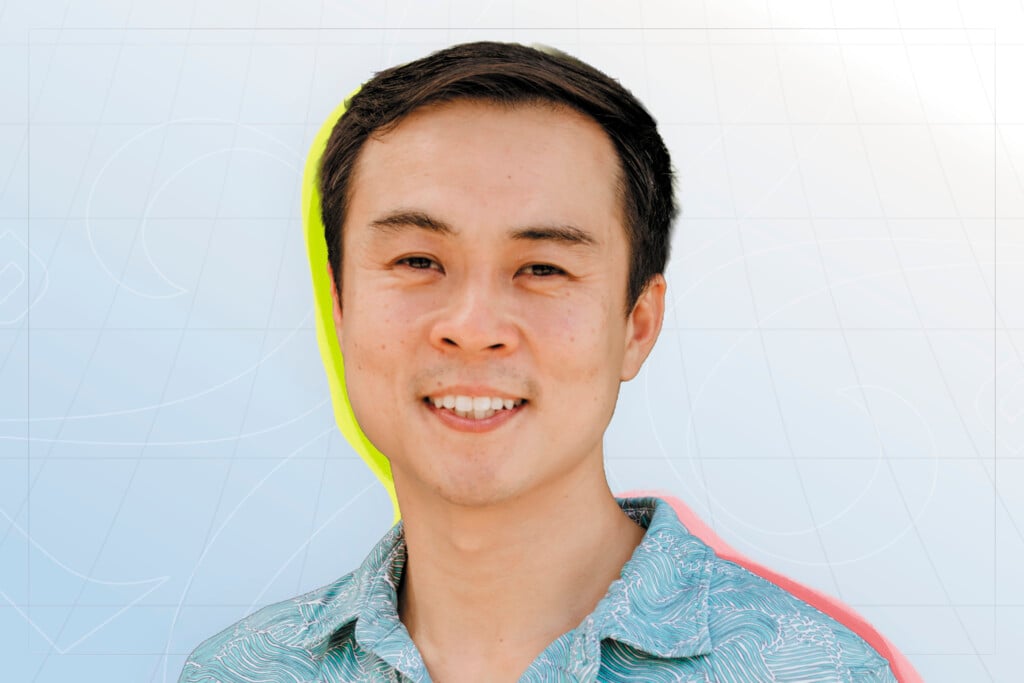
Jason Brand, co-founder of Kō Hana Rum, represents a rare blend of strategic vision and long-term commitment to Hawaiʻi’s land and people. Under his leadership, Kō Hana has grown into a respected, mission-driven distillery producing premium agricole-style rum made exclusively from heirloom Hawaiian kō (sugarcane), helping restore an agricultural and cultural practice that had nearly vanished.
Brand’s path to Kō Hana began far from the cane fields of Oʻahu. In 2008, while serving as president of Merrill Lynch’s Asia-Pacific operations, he made a decisive shift. “I traded in my business suit for a bathing suit,” Brand has said, relocating to Hawaiʻi after returning to the U.S. and developing a deep appreciation for the Islands.
“The original goal of Kō Hana Rum wasn’t making rum,” he says. “We were actually trying to solve Hawaiʻi’s electricity price problem.”
Brand and his partners set out to build an agriculture-for-export model capable of supporting a future technology-based industry — one that could provide sustainable, high-paying jobs for generations of local residents. An original search for plant varietals suitable for biodiesel feedstock led the team to the incredible history of the canoe varieties of Hawaiian sugarcane and after many years, nearly three dozen genetically tested expressions of the plant. Along the way, Brand and his team recognized that premium rum production could advance the same agricultural, economic and environmental objectives.
The market was already in place. Hawaiʻi is the seventh-largest rum-consuming state in the U.S., driven largely by tourism and the enduring legacy of the mai tai. In 2011, Kō Hana Distillers was incorporated, with farms established in Kunia, Waialua and Haleʻiwa.
Each site contributes distinct characteristics — from volcanic minerality to coastal salinity — expressed through specific yeast fermentations and aging in American oak, French oak, native Koa and repurposed barrels from whiskey, wine, sherry and Cognac.
— Jennifer Ablan
Hawaii Entrepreneur Awards 2026: Agriculture/Clean Tech Entrepreneur
An entrepreneur and company whose technology supports a greener future or helps farmers with innovative agricultural practices.
 Winner: Melissa DellaTorre, Pacific Hybreed

With the world population expected to hit 10 billion by 2050, the race to secure sustainable food sources has become a matter of global urgency. This year’s Agriculture / Clean Tech Entrepreneur of the Year, Melissa DellaTorre, is looking to the ocean for a solution.
As CEO of Pacific Hybreed, DellaTorre is leading the development of advanced selective breeding programs for oysters to secure a climate-resilient seafood supply.
“The ocean is 99% of the bio volume of the earth, so there’s a lot of opportunities to get more food from the oceans than we currently do,” DellaTorre explains. “Working for a company that is trying to maximize the potential of the ocean and shellfish to meet our growing demand for sustainable protein sources is an easy one to stand behind.”
Unlike finfish farms, mollusks are filter feeders that actually clean their environment. “A single oyster can filter 50 gallons of water per day,” DellaTorre notes.
Operating out of the Natural Energy Laboratory of Hawaiʻi Authority (NELHA) in Kona and a second site in Washington state, the company acts as a high-tech oyster nursery. They grow microscopic larvae into ‘seed’ about three millimeters in size before shipping them to roughly 20 farms across the Pacific Coast. By collaborating closely with farmers, Pacific Hybreed tailors its research to solve specific regional stressors.
In Alaska, they provide lines that grow faster in short, cold seasons. For farms in California and Mexico – regions that often face mass mortalities due to the OsHV-1 virus – they “found some [genetic] lines are completely resistant to accumulating any viral load,” DellaTorre explains. This breakthrough offers a lifeline to farmers in virus-prone areas.
The Kona facility provides a “biosecurity” advantage, as the isolated location helps keep their genetic lines safe from diseases moving along continental coasts.
Beyond the lab, DellaTorre says Pacific Hybreed is committed to the local community, working with programs like STEMworks Hawaiʻi to give high schoolers “a taste of what it’s like doing aquaculture.”
— Ryann Noelani Coules
Hawaii Entrepreneur Awards 2026: Consumer Packaged Goods Entrepreneur
Presented to the entrepreneur whose CPG company has consistently seen month-over-month growth in revenue and customers.
 Winner: Leala Humbert and Blaine Kusler, Ua Hawaii

In Hawaiian, Ua (pronounced oo-uh) means rain — a symbol of nourishment, renewal and healing. That meaning flows naturally into the story of Ua Hawaii, a fragrance and body lifestyle brand shaped by family history, craft and a deep relationship with place.
“About 35 years ago, my mom had a skincare and lavender farm here on the Big Island,” says co-founder Leala Humbert. “I learned from her how to do botanical infusions, make skincare products, lotions and perfume.” Alice, Humbert’s mother, sold her creations locally and was immersed in Hawaiʻi’s lei-making community. “As a young child, I used to help sort flowers for lei,” Humbert adds. “That’s really where my love of fragrance began.”
In 2019, Humbert and her husband Blaine began reworking Alice’s original formulas. “When we started thinking about launching Ua, we took some of her favorite fragrances, tweaked them and added our own touches,” Humbert explains. The brand relaunched in 2020 and later evolved into Ua Hawaii. “We felt it better reflected what we were building — focusing on fragrance and experience, and how scent can remind you of a sense of place and nostalgia.”
Most Ua Hawaiʻi products are still made on Hawaiʻi island, with stores in Kona and at Ala Moana. The brand has also expanded internationally. “One thing Alice always told us was, ‘If you’re going to do this, focus on Japan,'” Blaine says. “She had modeled there and always wanted to explore that connection.” Today, Ua Hawaiʻi operates stores in Osaka and Nagoya. “It was definitely a mission,” Blaine notes. “Japan is not an easy market.”
Looking ahead, the couple shares a clear vision. “We want to be one of those brands that people immediately associate with Hawaiʻi,” Blaine says. “Like Kona Brewing or Honolulu Cookie Company — but in fragrance and body care.”
For Leala, success is measured in quieter moments. “When someone tells me, ‘This reminds me of my tutu,’ or ‘This smells like home,’ that’s success,” she says. “Seeing our products become something people never leave home without — that’s the best part.”
— Jennifer Ablan
Hawaii Entrepreneur Awards 2026: Social Impact Entrepreneur
An entrepreneur and company that substantially contributes to helping solve some of Hawai‘i’s toughest problems.
 Winner: Pua Chin, Hui Makaʻāinana o Makana

Pua Chin is the Executive Director of Hui Makaʻāinana o Makana, a community-based nonprofit devoted to stewarding, protecting and restoring the natural and cultural resources of Hāʻena State Park, Kauaʻi. A lineal descendant of Hāʻena families, Chin leads with a profound sense of kuleana to the land her mom and ancestors once called home.
“This is where my mom grew up,” she says. “Our families didn’t want to see it overgrown, developed or lost.”
Founded in 1998 by lineal descendants, Hui Makaʻāinana o Makana was established to ensure the ʻike, skills and practices of kūpuna would continue. As Chin explains, “We call it a hui because it is a team effort.” With many of its kūpuna no longer physically present, the organization carries forward their intentions through collective leadership and action. “Many of our kūpuna aren’t here anymore,” Chin says, “but through the guidance of our Ohana Council we know the work we are doing is what they wanted to see done.”
Under her leadership, the Hui is currently operating under a Revocable Permit with Hawaiʻi State Parks, caring for approximately 15 acres within Hāʻena State Park. This stewardship includes loʻi kalo restoration, rehabilitation of a historic poi mill, maintenance of family burial grounds and historic house sites and active participation in the Hāʻena State Park Master Plan. The Hui’s work demonstrates how lineal descendants can responsibly manage lands that were once condemned or transferred into state control.
The Hui’s governance model is equally impactful. Guided by an ʻohana council composed of lineal descendants, the organization ensures decisions remain rooted in ancestral values. “We didn’t want to lose the input of our kūpuna,” Chin explains. Even as a nonprofit, she says, “our legitimacy comes from community first.”
Chin has also transformed visitor engagement at Hāʻena. Through collaboration with The Hanalei Initiative, which operates the shuttle system and Waipa Foundation, visitors receive cultural briefings before arrival.
“It helps because they become respectful, informed visitors,” she says. “This place is not just another tourist destination. It’s sacred. It carries its own essence — a sense of peace and calm. You feel nourished.”
— Jennifer Ablan
Hawaii Entrepreneur Awards 2026: Deal of the Year
Recognizes the local company that received the largest financial deal in the past year.
 Winner: Grant Demaree, Onebrief

In the high-stakes arena of modern conflict, the outcome of victory or defeat is often determined by split-second decisions. For decades, military command and control relied on static products and manual updates – a pace that struggles to keep up with the “machine speed” of 21st-century warfare.
Enter Onebrief, a Honolulu-headquartered tech powerhouse that is transforming how military staffs collaborate, plan and execute. Founded in 2019, Onebrief was born from the direct field experience of CEO Grant Demaree. A former Army officer who served in Liberia and Iraq, Demaree launched the company to solve the systemic frustrations he encountered during his deployments. “I served in the Army on several deployments that needed Onebrief,” Demaree says. “In both cases, I thought that military command could be hundreds of times faster given the right tools.”
Today, his company is doing exactly that. The platform acts as a command operating system that automates coordination, analysis and updates on a unified, secure digital workspace. This software allows small units in the field to sync perfectly with high-level command centers, ensuring the entire team is looking at the same live information at the same time.
This efficiency allows small teams to scale their impact to match much larger units – a critical advantage as the U.S. military navigates significant recruitment challenges. Demaree says, “The government did several side-by-side comparisons. Depending on the details of the situation, teams that use Onebrief are 3x to 10x as fast as those that don’t.”
The company’s innovative product has caught the eye of top-tier investors. Following a $20 million Series C extension last year, the company recently closed a Series D round, providing an additional $200 million at a $2.15 billion valuation.
Demaree credits Onebrief reaching “Unicorn” status to several factors: “Defense command and control is very important right now. It’s a volatile world, and better command and control is the fastest and most cost-effective way to buy more combat power. So investors see a growing market. Onebrief specific, our growth rate helped a lot. Investors also care a lot about user sentiment and spent a great deal of time talking to our users.”
The choice to keep the original headquarters in Honolulu is strategic. “Our first customer was one of the large military commands in Hawaiʻi, and we’ve since expanded to most of the large commands on Oʻahu,” Demaree explains. He notes that a “free and open Indo-Pacific is the single most important foreign policy goal of the US,” placing Onebrief at the literal and figurative center of that mission.
Looking ahead, Onebrief is pushing into “one-click wargames,” turning plans into simulations to test creativity before it hits the battlefield. For Demaree, the mission remains clear: “The future of military command will have decisive effects on our country and the world. We will make military command superhuman, and we’ll treat this issue with the seriousness it deserves.”
— Ryann Noelani Coules
Hawaii Entrepreneur Awards 2026: Startup Paradise Champion
Someone who consistently contributes to the success of Hawai‘i’s innovation community.
 Winner: Michael Bennett, Hawai‘i Tech Week

In less than two years, Michael Bennett has helped to build many connections among students, companies, engineers, entrepreneurs and investors via Hawaiʻi Tech Week.
Since he founded HTW in 2024, thousands of people have had the opportunity to build strategic connections, grow their workforce, gain investments and share cutting-edge knowledge.
“What I’m trying to do is build a broader movement while also being able to deliver value to the individual companies that are sponsoring” the HTW events, Bennett says.
The Hawaiʻi Venture Capital Association named him Startup Paradise Champion for 2026.
Bennett is a 2012 finance graduate from Hawaiʻi Pacific University who then moved to the continent to build his career. After attending Miami Tech Week in 2021, he was inspired to write a pitch for HTW and reached out to friends in the tech world in early 2024. The annual weeklong gathering features more than 50 speeches, panel discussions, workshops, networking mixers, product demonstrations and other events at multiple venues on Oʻahu. Events cover a range of topics for founders, investors, engineers, builders and students across the tech ecosystem, including “kāmaʻāina abroad plugging back in the local ecosystem,” he says.
Bennett adds that non-locals are also integrating with Hawaiʻi’s innovation and tech community as they network at these events. He says the relationships built have led to transformative outcomes for entrepreneurs, students and funders – resulting in new hires, internships, investments and more.
“Millions of dollars in venture and LP investments have been facilitated during the week,” he says, referring to limited partner investments which usually involve passive investors.
One 2025 HTW sponsor was Onebrief, a company valued at $2 billion that says it provides collaboration and AI-powered workflow software designed for military staffs. The company hired a few locals from last year’s Tech Week, prompting them to return home from the continent, Bennett says.
— Kiani Vidaurri
Hawaii Entrepreneur Awards 2026: Corporate Intrapreneur of the Year
Someone who works in a large organization but advocates for innovation and entrepreneurial thinking.

Winner: Elisia Flores, L&L Hawaiian Barbecue
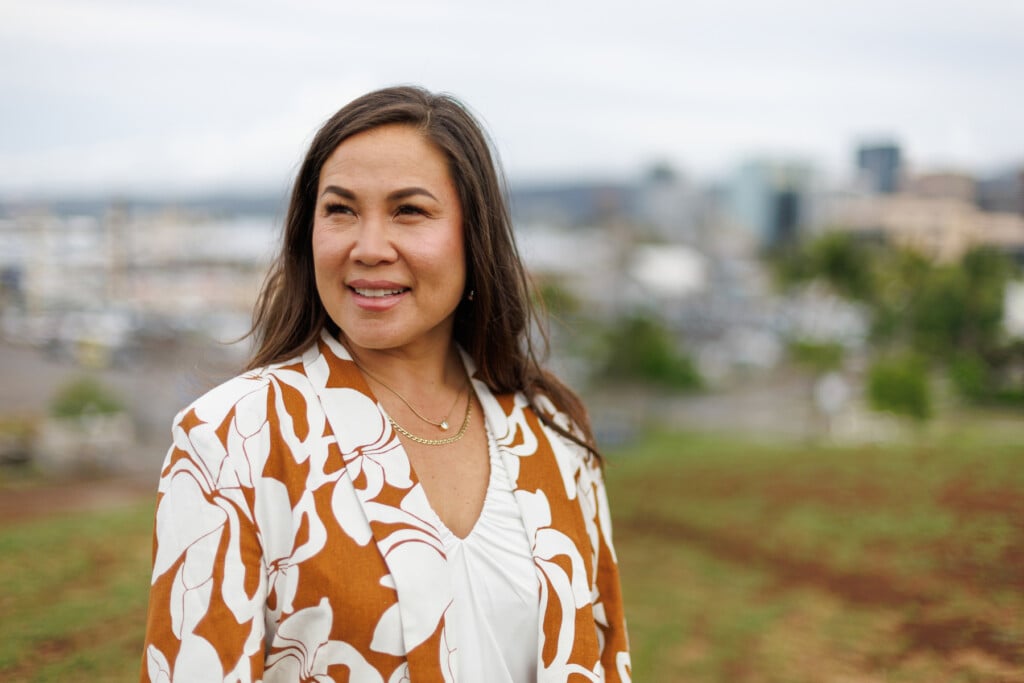
Elisia Flores, CEO of L&L Hawaiian Barbecue, exemplifies intrapreneurial leadership through her ability to innovate and scale within a legacy family business while remaining grounded in its founding values. As the daughter of L&L’s co-founder, Flores operates at the intersection of entrepreneurship and corporate leadership, bringing both heritage and forward-thinking strategy to the organization.
Flores emphasizes that entrepreneurship is deeply embedded in the company’s culture and in her own life. As she states, “I am surrounded by entrepreneurs. To its bone, it is entrepreneurial.” Working alongside her father has reinforced the importance of purpose-driven leadership. “I work with my dad every day, and in some cases, I can’t escape it. He had a clear vision of why he was doing what he was doing and what he was doing it for.”
She identifies two guiding “north stars” that continue to shape L&L’s strategic direction. The first is remaining authentic to the brand’s identity, and the second is ensuring that the company creates opportunities for others. “For other families to create wealth and opportunities as well — those two things are such north stars for us,” Flores explained. This philosophy reflects an intrapreneurial mindset focused on long-term value rather than short-term gains.
Despite being headquartered in Hawaiʻi — far from most of its franchise locations — L&L consistently outperforms expectations. Flores describes the organization as agile and resourceful, noting, “We’re pretty nimble. We punch above our weight. We’re based out here in Hawaiʻi, away from most of our stores, and we are always overperforming.” This ability to succeed despite geographic and resource constraints highlights her strategic adaptability.
Under Flores’ leadership, L&L has placed increased emphasis on consistency, compliance and disciplined growth. “We have a growth strategy. We say no to things. We are holding our franchises a bit more accountable,” she shares, underscoring the importance of focus and efficient scaling.
Beyond business, Flores draws inspiration from simplicity. “My favorite place is Banff, Canada. Peaceful and simple. It’s stuck with me.” That perspective is reflected in her leadership style — clear, direct and intentional — making her a compelling example of intrapreneurship in action.
— Jennifer Ablan
Hawaii Entrepreneur Awards 2026: Investor of the Year
An individual or entity that has invested substantially in the Hawai‘i startup ecosystem.

Winner: Wayne Murphy, Hatch Blue
Wayne Murphy, co-founder and partner of Hatch Blue, avoids the spotlight at all costs. When we talk about his Investor of the Year award, he instead focuses on Hatch Blue’s mission: “As global demand for sustainable protein continues to rise, Hatch Blue is focused on advancing solutions that responsibly steward ocean and aquatic resources.”
Murphy adds, “With billions of people relying on the ocean for food and livelihoods, the company is committed to supporting innovation that enables smarter, more sustainable use of these resources and helps breakthrough ideas reach commercial scale.”
Hatch Blue is a global venture capital platform dedicated exclusively to aquaculture and alternative seafood. Founded in 2017, Hatch Blue initially launched the world’s first aquaculture accelerator and now drives and supports innovation in the sector through its consulting and innovation program activities. The company operates globally, bringing deep sector expertise to founders and innovators working to transform aquatic food systems.
Murphy says Hatch Blue’s mission is also rooted in “the belief that global expertise should be accessible wherever innovation happens,” he says. “Central to its approach is a strong focus on founder capability and team execution, recognizing that successful companies are built by skilled, resilient leadership.”
Hatch Blue has so far raised over $130 million through 3 different investment funds — two of which focused on early stage funding for companies participating in the CREST accelerator program (totaling $25 million). The third, Blue Revolution Fund, with a later stage focused strategy, raised over $110 million dedicated solely to aquaculture innovation.
Hawaiʻi has played a foundational role in Hatch Blue’s growth with the state of Hawaiʻi as an early investor in Hatch Blue’s first fund and continued its support in subsequent funds.
Between 2018 and 2025, Hatch Blue delivered 5 aquaculture accelerators and a host of innovation programs in Hawaiʻi in collaboration with NELHA, Hawaiʻi Department of Agriculture and Hawaiʻi Technology Development Corp, supporting founders across the Pacific and strengthening the region’s role as a hub for aquaculture innovation.
Some notable investment successes in Hawaiʻi include Symbrosia and Kuehnle Agrosystems.
— Jennifer Ablan
Hawaii Entrepreneur Awards 2026: Island Innovator of the Year
Celebrating innovations that help Hawaiʻi solve a major problem in the community, the ocean or the ʻāina.
 Winner: Ted Peck and Brad Hansen, Holu Hou Energy

With Hawaiʻi’s electricity prices soaring to more than triple the national average – a burden largely fueled by the state’s reliance on imported oil – access to affordable, clean power has become a critical necessity.
This year’s Island Innovators of the Year, Holu Hou Energy’s President Ted Peck and CEO Brad Hansen, are meeting this challenge head-on. Their business model specializes in bringing solar energy and storage to traditionally underserved sectors, including low-income housing, multi-unit dwellings and military communities.
Since its founding in 2019, HHE has focused on solving the fundamental mismatch between energy supply and demand. “What we do that’s unique in the entire world of renewables is we connect four to six homes together,” which is called an ‘energy cluster’, Hansen explains.
This setup allows surplus power from one household’s battery to be automatically rerouted to neighbors who still need it. “We pioneered this sharing methodology, and we’ve been refining it in commercial operations since 2021,” Hansen says.
By sharing assets, the model reduces the total amount of storage required per building.
By collaborating with the Hawaiʻi Green Infrastructure Authority to calibrate Power Purchase Agreements (PPAs), Peck notes they can ensure an initial rate reduction of 25% or more compared to the utility grid.
Beyond immediate savings, HHE’s model provides long-term financial security through relatively fixed energy costs. Because grid electricity is tied to oil prices, it remains vulnerable to global events that “have nothing to do with us,” Peck explains.
The company’s PPA model further removes financial barriers by leveraging third-party financing. These investors fund the installation of HHE’s solar-plus-storage technology while tenants pay them for the energy they consume.
“Our first large project was on Kauaʻi in Koloa, at a low-income housing project called Koaʻe Makana,” says Peck. Building on that success, HHE is now scaling its impact. The company is currently outfitting between 4,000 and 5,000 Army homes with its modular technology and is in the process of securing contracts for another 2,000 units across various Association of Apartment Owners and low-income projects.
— Ryann Noelani Coules
Hawaii Entrepreneur Awards 2026: Tech Entrepreneur of the Year
An entrepreneur who has created technology and innovation to make our lives better.
 Winner: Miki Hardisty, Olelo Intelligence

Miki Hardisty already had experience with nuclear design and aerospace engineering, but it was her studies in data patterns and machine learning that sparked her interest in AI. The result is Olelo Intelligence, which she co-founded with her brother, Ed Moore.
The pair initially planned for their startup to focus on the mortgage industry by offering an AI system that listened to and analyzed sales calls. After they white-boarded their ideas, she created a prototype overnight. But when they applied the AI agents to Moore’s former colleague’s auto repair shops, they found an industry that needs their AI services even more than mortgage companies.
“We’re really addressing a market that has really gone untouched with a lot of technology,” Hardisty says.
The Hawaiʻi Venture Capital Association named Hardisty as Tech Entrepreneur of the Year for 2026.
Olelo Intelligence helps auto repair shops capture sales and minimize “leakage” from missed calls, Hardisty says. The platform scores every call, offering personalized coaching to salespeople so they can provide better service.
She says on average 22% of calls to these shops go unanswered, so she wants to combat that problem and earn more revenue for these small- and medium-size businesses.
Companies that use Olelo’s system also receive real-time notifications that alert advisers when a customer needs help. If no one is available to pick up the phone, an AI voice agent will take over to avoid a missed sales opportunity. This AI agent will also be scored and analyzed so that it can be improved.
“There is a degree of empathy that you have to really emote within all of those calls,” says Hardisty, who is CEO of the company. She adds that repair shops must keep in mind that customers’ livelihoods are often impacted by their cars’ issues, which can be expensive to fix.
— Kiani Vidaurri
Hawaii Entrepreneur Awards 2026: Lifetime Achievement Award
 Winner: Rob Robinson, Hawai‘i Angels

Rob Robinson is president of Hawaiʻi Angels, an angel investing group based in Honolulu. Before he founded the organization in 2002, he says the Islands lacked a place where entrepreneurs “could formally apply for funding and go through a formal screening process.”
Robinson’s introduction to angel investing began while teaching negotiation and conflict management at Harvard Business School in the 1990s. He says entrepreneurial students frequently sought his advice on negotiating with investors, but he wasn’t much help at first.
“They would ask me questions like, ‘Hey Professor, I’ve got a venture capitalist, and they want to give me $2 million for 40% of my company. Is that a good deal?’ And I would say, ‘I have no idea. I mean, I understand the math, but I don’t understand the rules of that particular game,'” recalls Robinson.
That sparked a fascination with the field. Unlike venture capitalists, who manage pooled funds, angel investors supply their own capital. “They are generally high-net-worth individuals,” he says.
In 2001, Robinson moved to the Islands to join the faculty at the University of Hawaiʻi’s Shidler College of Business – where he continues to teach today – and launched Hawaiʻi Angels the following year.
He says the group has a rigorous “three layer filtering system,” starting with applications. “Most of those get rejected,” he adds. After members give feedback to those whose applications they approved, they make a final cut. Each month, roughly two companies are invited to pitch before 60 angels.
“It is a lot like Shark Tank, but with less pressure,” Robinson explains. Founders are given 15 minutes to pitch followed by a Q&A. Entrepreneurs then step outside the room so members can deliberate. “If there’s enough interest, we schedule a meeting the following week with that entrepreneur to determine if there’s a real appetite for investment.”
To date Hawaiʻi Angels has invested more than $70 million in start-ups.
— Ryann Noelani Coules
Hawaii Entrepreneur Awards 2026: Student Entrepreneur of the Year
Honoring a younger member of the innovation community who has a passion for learning and the tenacious spirit of an entrepreneur.
 Winner: Lionel Roxas and Victor Hoang, Hexcelerate
When computer science students Lionel Roxas and Victor Hoang crossed paths at a 2024 tech conference hosted by UH Mānoa, their dreams turned into a partnership.
“I went there to talk about my aspirations to start a business,” Roxas says. Hoang, driven by similar ambitions, saw the potential in working together. “We just connected and have been working together ever since,” says Roxas.
They decided to focus their start-up on the job market, interviewing more than 100 companies and students to understand the friction points in hiring.
“The main problem,” Roxas explains, “is that a lot of job seekers simply aren’t ready when they jump into these interviews.” Even qualified candidates often struggle to sell themselves effectively.
They engineered Hexcelerate to help. The platform allows users to input specific job descriptions alongside their resume or LinkedIn profile to create a tailored mock interview with an AI avatar. “Our AI will go ahead and configure this interviewer for you and find relevant questions on the internet that a lot of companies use for these positions,” Roxas explains. After the mock interview, Hexcelerate “uses all this information to grade and give notes based on your interview performance.”
Hexcelerate is also bridging the gap for overwhelmed workforce development programs. Roxas notes that organizations like WorkHawaiʻi may only have 10 coaches for thousands of job seekers, and in-person sessions are often inaccessible. Roxas says by tapping AI tools, Hexcelerate helps programs collect hiring data they need to secure funding. “We have about 12 organizations so far who signed our pilot program contract.”
A key focus of the module’s training is the STAR method. Hoang explains that for behavioral questions, “you want to describe the Situation, the Task that you’re trying to solve, the Action you took, and then the Result of your action.” By combining AI simulation with these structured techniques, the duo helps candidates find their voice.
“If a very difficult question is being asked and the interviewee gives a vague response or doesn’t really understand the question, the interviewer, or our AI system would actually explain or give a simpler version of that question,” Hoang adds.
Designed for inclusivity, the program adapts to the needs of ESL learners, veterans and GED candidates.
— Ryann Noelani Coules
Hawaii Entrepreneur Awards 2025: People’s Choice Award
Chosen by our local community via an online poll conducted by Hawaii Business Magazine.

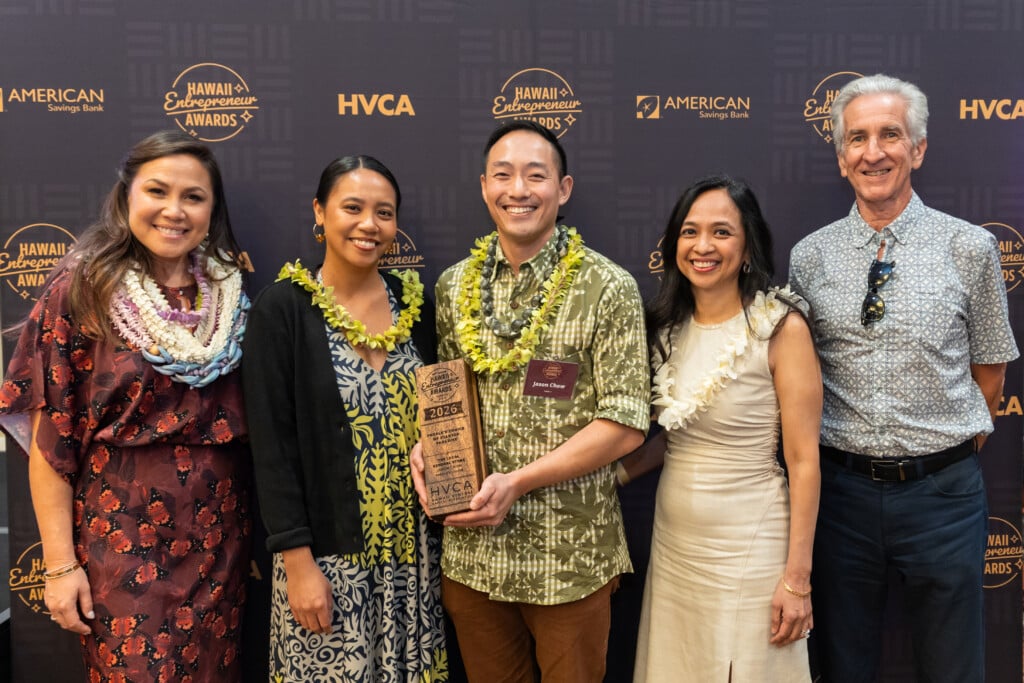
Winner: Harley and Jason Chow, The Local General Store
Harley Chow and Jason Chow, the husband-and-wife team behind The Local General Store, were recently honored with the People’s Choice Award through the Hawai‘i Venture Capital Association awards in partnership with Hawaii Business Magazine.
Both born and raised in Honolulu, Harley and Jason took different paths before returning to food. Harley began in the sciences before discovering a passion for pastry in San Francisco, where she trained in top bakeries and developed her signature croissants. Jason’s journey moved from biology and marine conservation to kitchens and, eventually, whole-animal butchery, where he developed a deep respect for local sourcing and utilization.
Together, they bring a thoughtful, hands-on approach to everything they create, blending technique, sustainability and a strong sense of place.
In the following Q&A with Hawaii Business Magazine, Harley shares more about the evolution of their business and the philosophy that continues to shape The Local General Store: Readers pick The Local General Store for People’s Choice Award, Hawaii Entrepreneurs Award
— Jennifer Ablan