More Than an Anime Convention
Kawaii Kon brings fans, creators and businesses together in a vibrant celebration of pop culture that’s been a launchpad for local creative entrepreneurs.
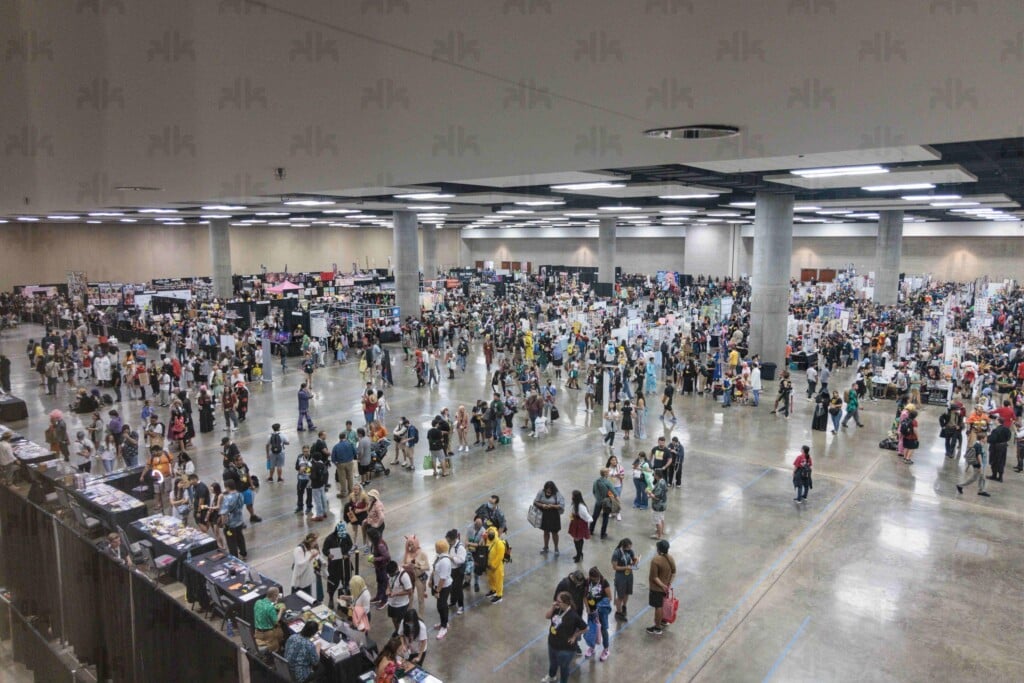
Kawaii Kon, Hawai‘i’s premier anime convention, has become a major annual event for Island businesses to showcase their products, services and creative work to both local and visiting attendees.
Kawaii Kon CEO Faisal Ahmed says this year’s three-day event running April 24-26 will contribute an estimated $7 million to $10 million to Hawai‘i’s economy, which includes spending on hotels, food and products.
“Kawaii Kon isn’t just another event. Few conventions have people going all out with cosplay, media coverage and fans traveling from across the country,” says Whitney Kitt Young, owner of Kitt & Bunn Supply Co., which creates “cute Kawaii journaling stickers, stationery, apparel and other unique products.”
Young first attended Kawaii Kon in 2018 and has had a table at the event since 2022. Last year, she had about 150 transactions at Kawaii Kon; at typical smaller weekend events, she averages about 20 transactions.
“For artists who don’t often get to travel overseas, it’s a rare chance to connect with fans and other creators. It’s a huge event, and I hope more people recognize how special it is,” she says.
This year, Ahmed expects between 20,000 and 30,000 attendees at the Hawai‘i Convention Center and other venues.
Young, who will set up in the area called Artist Alley, says Kawaii Kon is a place where she can share her art and mingle with friends she’s made over the years.
“For us, it’s one of the few events where anime, fan art and cute artists can truly showcase their designs and connect with customers who appreciate them. It’s been pivotal for my growth over the past few years,” she says.
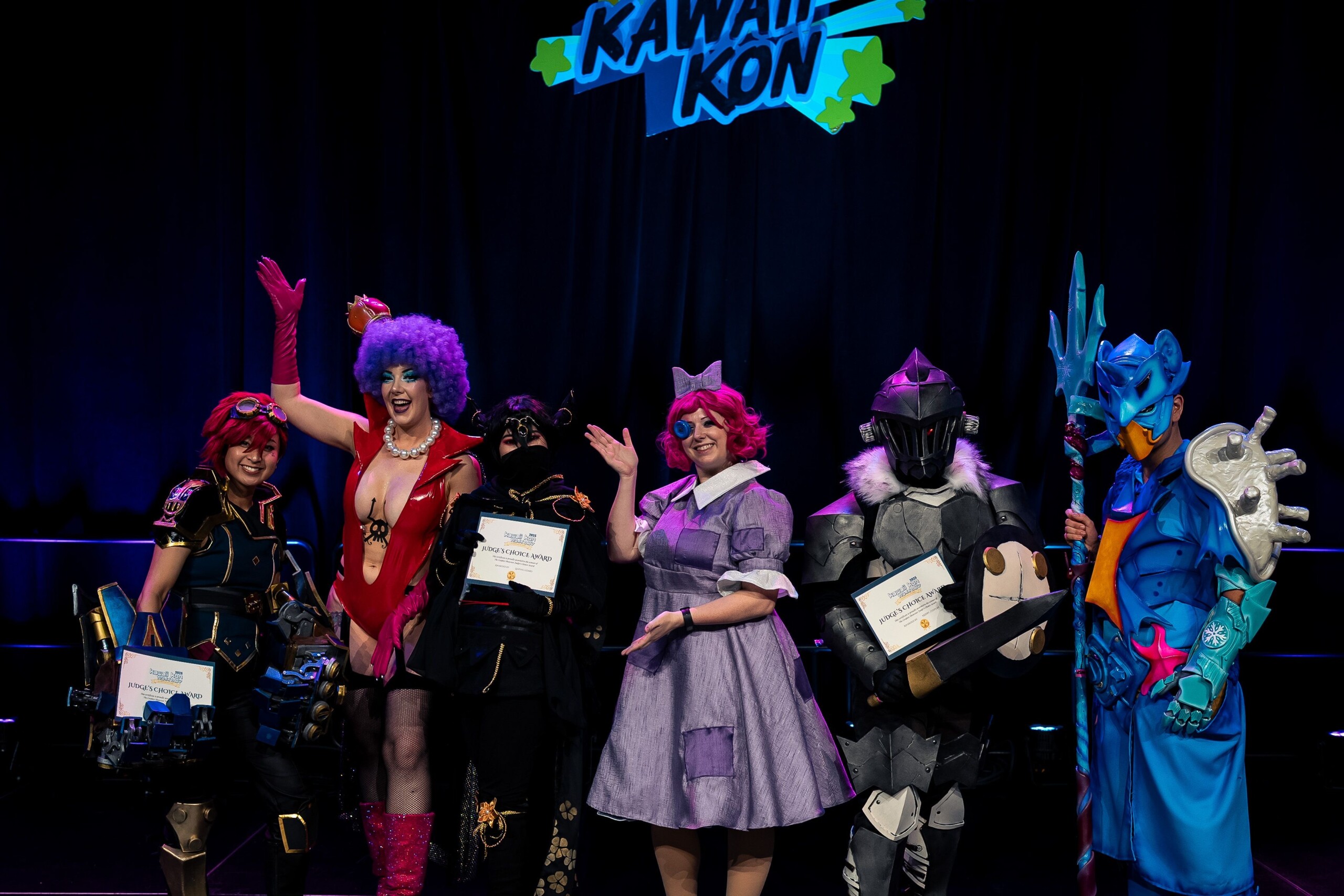
Photo by Caylee Takafuji. Cosplay competition at Kawaii Kom 2025
Started in High School
Illustrator Brady Evans has been going to Kawaii Kon since it began in 2005.
“I was a sophomore when a friend told me about a new anime convention starting up in Hawai‘i,” he says. “At the time, anime conventions were just starting to become popular in the U.S., so it was exciting to see one come to Hawai‘i.”
In 2006, he started selling his art at Kawaii Kon.
“When I was in high school, I wasn’t thinking about anime conventions as a business or a way to make money. Most artists in Artist Alley weren’t relying on it as a main income. It was really about connecting with other artists, showing your work, and sharing with fans of the series you loved. For me, it was just fun drawing what I wanted and maybe making a little money to cover printing costs.”
After earning a bachelor’s degree in studio art at UH Mānoa, he worked in arts administration, including as a museum collections manager at the Honolulu Museum of Art.
“Over time, my work at events like Kawaii Kon became more profitable and helped me develop my artistic voice. It wasn’t until 2021, after leaving arts administration, that I committed full time to my art career. Now, my business includes selling my artwork at conventions like Kawaii Kon, freelance work for clients, children’s book illustrations, and projects for video games in the U.S. and Japan.”

Photo by Nevan Isaiah Pak, showing merchandise for sale at Kawaii Kom
Gamers Gather at Kawaii Kon
Nevan-Isaiah Pak first attended Kawaii Kon in 2010 and later joined the esports broadcast team for the convention’s gaming room. “We usually put on tournaments and open shows for people to compete,” he says. “It’s one of the only places on the island where gamers can come together and play.”
That experience inspired Pak to create his own esports recreational league, Workin Gamer, which he launched last year to provide working adults with a sense of community through gaming.
“Kawaii Kon is the birthplace of gaming here on the island for me,” Pak says. “I want to use it as a launching point to reach the entire gaming community. Right now, no recreational leagues here focus on esports, so I wanted to fill that gap.”
Pak has also witnessed how Kawaii Kon has evolved over the years. “It’s changed from being mostly nerds who watch anime and play games to now seeing whole families in cosplay. You see older people attending with their grandkids. I see the full range of all walks of life coming together.”
Geoffrey Siu, owner of Geoffrey Siu Art, has attended Kawaii Kon every year and was one of its first vendors. He shared a breakdown from last year: His table cost him $556.71, fixtures to display merchandise were $237.76 and his total expenses were $1,478, which he says was cheaper than previous years. Siu did make some money last year, though 2024 was better.
“Kawaii Kon itself accounts for about 5% of our revenue, which sounds like it’s very small, but it is actually one of our top events that we do.”

Photos left and center by Caylee Takafuji, photo on right by Nevan Isaiah Pak, showing attendees in costumes at Kawaii Kom 2025.
Not Just for the Young
Caylee Takafuji, a longtime attendee and dedicated cosplayer, has found the perfect balance between her work and her passion for costume play. By day, she is a manager at the Hilton Hawaiian Village and a parttime licensed massage therapist.
“I’ve been in the industry for over a decade, and I really love it,” Takafuji says. “I was fortunate to find a boss who supports my hobbies, cosplay included, and he is probably one of my biggest supporters.”
Takafuji says conventions like Kawaii Kon provide a creative escape. “It is a way to let go, dive into this world, and just enjoy being creative,” she explains.
She also wants to challenge the misconception that conventions are only for younger audiences.
“I am in my 30s, and I have been attending since my 20s. People might think anime is just for kids, but it is not. As adults, we have the freedom and the means to fully enjoy it. It is a chance to let your inner child out, to have fun, and to reconnect with that carefree joy. Conventions bring light and excitement into life, and anyone who loves anime, pop culture, or cosplay can and should join in.”

Photo courtesy of Brady Evans showing his display at Kawaii Kom 2025
Rising Costs, Growing Ambitions
When Kawaii Kon first began, a three-day pass cost $40. Today, it’s closer to $100, a change that Ahmed says reflects the realities of growth and rising production expenses.
“We try to keep our margin at about 10% above costs,” he says. “Unexpected expenses always come up, and sometimes that margin shrinks. We have to balance how many acts we bring in, the technology we invest in, and what we can realistically afford. Even raising ticket prices by $5 can draw criticism, but costs across the board have gone up.”
Entertainment remains one of the convention’s largest expenses. In recent years, Faisal has expanded the lineup to include influencers and major music acts from Japan and South Korea, bringing Kawaii Kon’s programming closer in scale to larger anime events on the mainland.
Recent performers have included Japanese punk rock band Ash Da Hero, singer and actor Miura Ayme and Takeru, a Japanese pop singer. This year, Flow, a Japanese band best known for performing theme songs for the anime TV series Naruto, will appear among others. Kawaii Kon’s special guest budget ranges between $300,000 and $400,000, which covers airfare, hotels and appearance fees, Ahmed says.
Teri Orton, general manager of the Hawai‘i Convention Center, says the venue has built a strong, lasting relationship with Kawaii Kon that reflects the convention’s growing importance to the facility and the broader visitor industry.
Unlike single-day events, Kawaii Kon spans three days and uses not only the exhibition halls but also the third- and fourth-floor meeting rooms and ballrooms. Ahmed says there will be no active renovation work at the convention center during the event.

Photo courtesy of Nevan Isaiah Pak, showing attendees in cosplay
Why Hawai‘i is the Perfect Home
Hawai‘i’s unique blend of local and Japanese traditions gives the convention an atmosphere different from anime gatherings elsewhere, Ahmed says. He calls Kawaii Kon structured yet relaxed, respectful yet warm, enthusiastic but never overwhelming.
“Culture is the number one thing for me,” he says. “I’ve been to countless anime conventions on the mainland, in Japan, and in other countries and Kawaii Kon really stands out.”
Etiquette is also a key element. Similar to conventions in Japan, attendees in Hawai‘i line up patiently, follow the rules and respect boundaries. There’s little of the chaotic crowd behavior that can define larger mainland events. But unlike Japan, where fan interactions often come with formal expectations, Hawai‘i adds its own layer of aloha.
“In Japan, it’s almost unheard of for fans to give a gift without also asking for a handshake, a photo, or an autograph,” he explains. “But here, every year, someone will just walk up and say, ‘Thank you for coming to the island. Here’s a malasada,’ and then walk away,” says Ahmed.
Visiting performers and influencers are often puzzled.
“They’ll look at me like, ‘I would’ve taken a picture with them,’ and I tell them, ‘They don’t want anything. They just wanted to thank you.’ ”

Photo courtesy of Geoffrey Siu. Vender display booth at Kawaii Kom 2025
Hawai‘i’s Appeal
Ahmed says Kawaii Kon’s influence stretches beyond the convention floor. He says many Japanese and South Korean companies come to see how an American convention operates. “If you have a choice between the mainland and Hawai‘i, you tend to pick Hawai‘i,” he adds.
And the fact that it’s in the Islands makes the convention appealing to Japanese fans. Ahmed estimates that each year, roughly 500 attendees travel from Japan to Hawai‘i for Kawaii Kon. Many come for the interactions that are common in Hawai‘i but almost nonexistent back home.
“In Japan, handshakes with artists aren’t really a thing anymore – and even before, it was pretty unlikely,” he explains. “But at Kawaii Kon, we talk to the artists, we explain what fans are hoping for, and we put safety protocols in place so everyone feels comfortable.”
For those fans, it’s worth the flight.
Japanese companies see the size and enthusiasm of Hawai‘i’s audience, which can spark bigger conversations about long-term investment.
“One of the biggest examples is Uniqlo,” Ahmed says, referring to the Japan-based apparel company. “They came out to look at Kawaii Kon, saw the audience here, and realized they could open a store in Hawai‘i. When they launched, they even partnered with us. That was really cool.”
Today, Ahmed estimates that Kawaii Kon networks with roughly 40 to 50 Japanese companies each year.

Photo of convention attendees courtesy of Kawaii Kom 2023
Political Pressures and Convention Safety
Ahmed says the current U.S. political atmosphere is having an impact on Kawaii Kon.
“I’ve had two music groups and three other guests back out because of concerns tied to the current political climate” and U.S. foreign policy.
To minimize complications, Ahmed emphasizes that the convention takes extra care with guest paperwork. “For every performer we bring in, we require proper visas,” he explains. “A lot of events skip that step, but we go through extra lengths to make sure everything is correct. We verify expiry dates and all the details so there aren’t issues at the border.”
For attendees traveling on tourist visas, Ahmed says, entry to the venue is typically not a concern.
“Kawaii Kon is a private event,” he says. “During the convention, the Hawai‘i Convention Center is considered a building‑wide private event space, not open to the general public. That means we can control who enters.”
Ahmed has made it clear that without a warrant, federal agents won’t be allowed into the center. “We’ve confirmed this with convention center leadership.”