Hawai‘i’s Water Crisis: How Graywater Could Buy the Islands Time
Hawaii Business Magazine and Hawai‘i Community Journal are launching a year-long series exploring the state’s water challenges. This first story examines how water scarcity is rattling the islands’ economy, environment and communities, and why graywater reuse could be a crucial part of the solution.
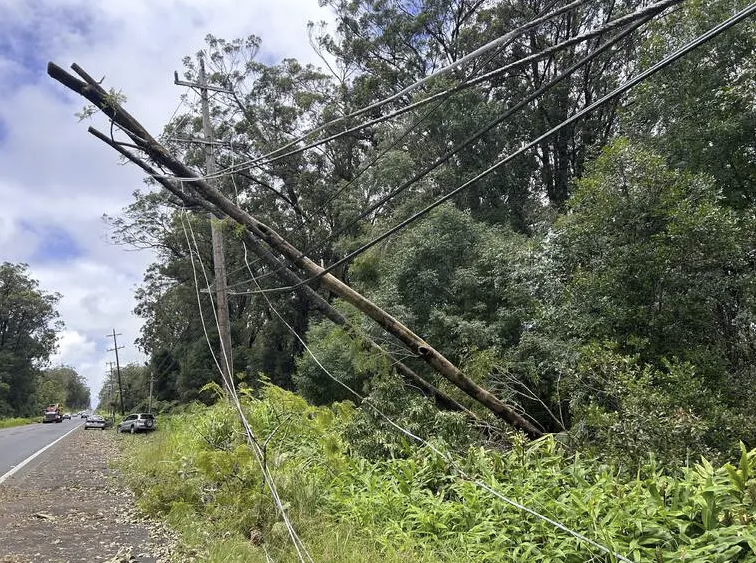
When heavy storms swept across Hawai‘i in late February, knocking down power lines and flooding streets, many water experts welcomed the rain. For Royce Rapozo, a mechanical engineer at Commercial Plumbing Inc., the downpour carried a different weight. He knew that even a few inches of precipitation would not undo years of declining rainfall, falling aquifer levels and mounting strain on the islands’ water systems.
“We are nearing a critical point, where even a single event like the Red Hill water contamination could become the tipping point that pushes us into a full‑blown crisis,” Rapozo says. “Water is becoming more scarce, being able to reuse water is becoming more important and almost becoming a necessity. Demand is outpacing supply.”
When golf courses run dry, fire hydrants falter and major events are cancelled, Hawai‘i’s water scarcity hits hard. From PGA Tour tournaments halted by brown fairways to the catastrophic wildfires in Lahaina, businesses, communities and emergency services are confronting a crisis that has been quietly building for years.
On O‘ahu alone, groundwater levels in nine monitored aquifers were in alert or caution status for much of 2025. Key sources, including Kaimukī, Punaluʻu, and Pearl City, recorded sustained declines as rainfall averaged just 53 percent of normal over a five-month stretch. Although isolated months brought heavy downpours, most of the year was marked by drought conditions.
Statewide, 2025 ranked as Hawai‘i’s second driest year in more than a century, with average rainfall just 42 inches – roughly 20 inches below the 30-year mean, according to the inaugural Hawai‘i Annual Climate Report 2025.
Maui experienced its driest year on record, Hawai‘i island the second driest and 65 percent of the state endured drought conditions by year’s end. Temperatures were also above average, making 2025 the sixth warmest year on record.
Across the islands, rainfall patterns have become increasingly erratic. Some regions, including Kona on Hawai‘i island, have experienced declining rainfall since the 1980s. Stream flow reductions threaten freshwater availability for both communities and ecosystems. Climate variability now complicates forecasting and long-term planning, leaving aquifers vulnerable to sustained drawdown.
The consequences are already visible. Maui’s water shortage forced the cancellation of the 2026 PGA Tour’s The Sentry at Kapalua after irrigation restrictions left the course unplayable. The tournament, typically a signature early-January event, generated roughly $50 million annually for Maui’s economy, supporting hotels, restaurants, local vendors and nonprofits. Hundreds of workers who rely on event-driven employment were affected, and hotel occupancy forecasts for early 2026 dropped roughly 15 percent.
Drought-related irrigation limits have caused lasting damage to the Plantation Course at Kapalua, owned by Uniqlo founder Tadashi Yanai, highlighting the broader economic ripple effects of water scarcity. In February, Hawaii News Now reported that Yanai has offered more than $40 million to improve West Maui’s water infrastructure. “It’s about ultimately getting to the R-1 water (the highest grade of treated, recycled wastewater) to our golf course,” attorney Ben Kubo of TY Management, which Yanai owns, told Hawaii News Now.
The Honolulu Star-Advertiser, citing a statement from Earthjustice, reported on Wednesday that the environmental law firm had prevailed in its appeal to the state Commission on Water Resource Management to prevent the golf course from using potable water for temporary irrigation during water shortages. In response, the paper said, TY Management reiterated its goal to use treated wastewater processed by Maui County instead of stream water or potable water for irrigation.
During the 2023 Lahaina wildfire, water infrastructure struggled under extreme demand. Firefighters found hydrants with insufficient pressure, and damaged pipes further depressurized the system, forcing crews to focus on evacuations rather than containment. The disaster highlighted that water scarcity is not only an economic issue but a matter of life and death.
CATTLE, COFFEE AND MAC NUTS
The economic impacts extend across multiple sectors. Cattle ranching suffered roughly $44.5 million in revenue losses with herd reductions and costly supplemental feed. Macadamia nut and coffee growers abandoned hundreds of acres due to water stress and warmer nights affecting flowering. Small businesses and nonprofits turned to Economic Injury Disaster Loans to survive. Water shortages also sparked legal disputes between developers and residents in areas like Kapalua.
“Agriculture in Hawaiʻi is challenging from the start. Land costs far more than on the mainland, and securing water is expensive. We can’t grow everything we need here, so we end up importing more, and that creates a ripple effect that increases the cost of living,” Rapozo says. “The impact goes far beyond drinking water – it affects the entire system.”
As these pressures mount, attention is shifting from finding new sources of water to using existing supplies more efficiently. If rainfall is less predictable and aquifers recharge slowly, one of the most immediate opportunities is reducing how much potable water buildings demand each day. That is where graywater enters the conversation.
Graywater refers to lightly used water from showers, bathroom sinks and laundry, not from toilets or kitchen drains. Instead of sending that water into the sewer system, it can be captured, treated on site, and reused for nonpotable purposes such as toilet flushing, irrigation and cooling towers. By lowering demand for treated drinking water, graywater systems reduce daily withdrawals from aquifers that recharge gradually.
SAN FRAN’S GRAYWATER BLUEPRINT
This approach has already moved from pilot to policy in San Francisco. Since 2016, most new buildings over 100,000 square feet have been required to incorporate on-site water reuse systems for nonpotable applications. Simpler laundry-to-landscape systems often require minimal permitting, while more complex multi-fixture systems that treat water from showers and sinks for toilet reuse must undergo regulatory review.
Major corporations have adopted the model. At Salesforce headquarters in San Francisco, Salesforce Tower houses one of the largest on-site water recycling systems in a commercial high-rise. Installed in partnership with the San Francisco Public Utilities Commission and Boston Properties, the system treats wastewater generated inside the tower, including rainwater, cooling tower blowdown, sinks, showers, toilets and urinals.
Using a six-step treatment process in a centralized basement facility, the building recycles an estimated 30,000 gallons per workday, roughly 7.8 million gallons of potable water annually. The treated water is redistributed through a separate pipe network for toilet flushing and irrigation.
Federal officials have cited the project as a model for climate resilience. Jim Robbins of Yale Environment 360 adds, “Recycling graywater alone can save substantial amounts of water. Using it to flush toilets and wash clothes reduces demand for new water by about 40 percent.”
Hawai‘i is now preparing to apply that blueprint at residential scale. At Kuilei Place in Honolulu, a mixed-use development of more than 1,000 homes scheduled for completion in 2027, the state’s first on-site residential graywater reuse system is under construction.
Developed by Kobayashi Group with California-based Epic Cleantec, a San Francisco water reuse engineering firm, the system will use a four-stage biological treatment process to recycle up to 30,000 gallons of graywater per day.
The projected impact is significant, saving roughly 11 million gallons of potable water annually and reducing utility costs by an estimated $161,000 per year, according to Kuilei’s website.
‘WE CAN GIVE ACQUIFERS A CHANCE TO REPLENISH’
Commercial Plumbing Inc. is helping to bring the system to life. Randy Hiraki, president, puts perspective on the issue: “The more we recycle water, the more we can give our aquifers a chance to replenish.”
That replenishment window is critical. Aquifers recharge slowly and depend on consistent rainfall and healthy watersheds. By reducing potable demand for toilets and irrigation, graywater systems decrease daily extraction rates, giving aquifers breathing room during dry periods.
Kepa Resentes, vice president of operations, explains, “Graywater systems let us treat water as a resource, not waste. Every gallon we redirect reduces pressure on natural sources.” Rapozo adds, “Rainfall is unpredictable. Our aquifers cannot recover overnight. If we can reuse water effectively, we give those underground reserves breathing room.”
Kuilei Place required years of coordination among local agencies, including the Board of Water Supply, the Honolulu Department of Environmental Services and the Hawai‘i Department of Health. Its approval may serve as a template for future developments under the state’s 30-year water master plan.
Graywater will not solve Hawai‘i’s water challenges on its own. Watershed restoration, infrastructure modernization, demand management and regulatory reform remain essential. But as other cities have demonstrated, building-scale water reuse can meaningfully reduce stress on strained aquifers. “Graywater would give Hawaii more of a fighting chance instead of continuously depleting the water supply,” Rapozo says. “It’ll give nature kind of a chance to catch up.”