Why Hawai‘i Needs More Public-Private Partnerships
Hawaiʻi's biggest challenges, from aging infrastructure to housing shortages and rising costs, will take more than government to solve.
Hawaiʻi faces no shortage of big challenges: aging infrastructure, housing shortages, rising costs and growing demands on public resources. Solving them will require more than government action alone. It will also require private-sector investment, innovation and expertise.
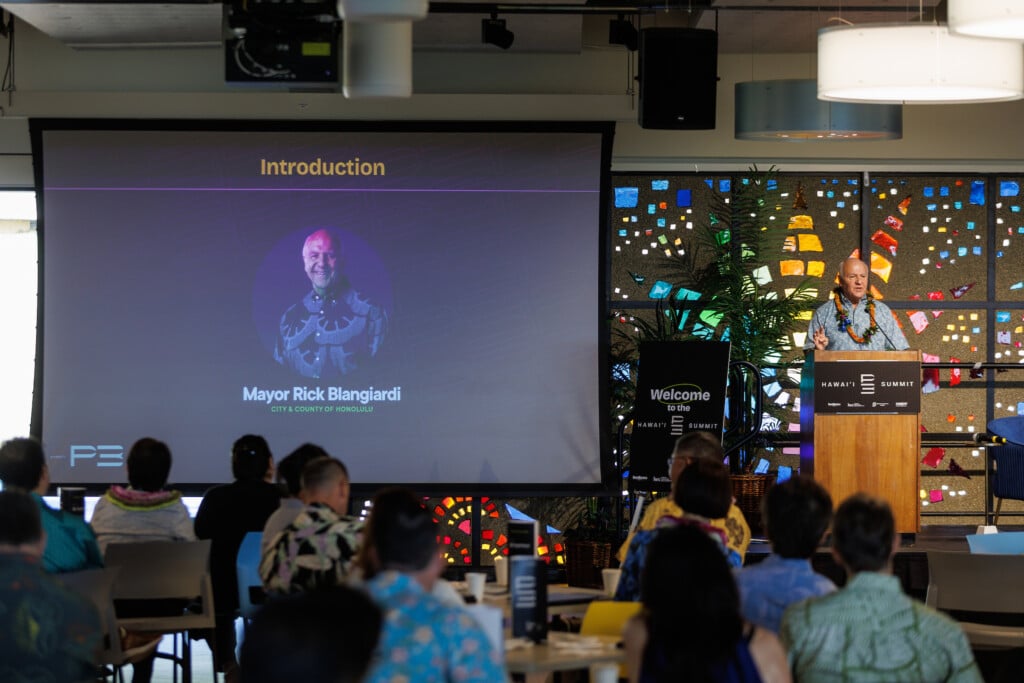
That was the premise behind Hawaii Business Magazine’s inaugural Public-Private Partnership (P3) summit in May, which brought together leaders from government, business and nonprofits to explore how collaboration can help address some of Hawaiʻi’s most pressing issues.
While public-private partnerships are used around the world, Hawaiʻi has been slower to embrace them. Yet some of the state’s most ambitious projects are moving forward because of these arrangements.
One of the most visible examples is the redevelopment of Aloha Stadium through the New Aloha Stadium Entertainment District project. As Hawaii Business reported in March, the state is partnering with Aloha Hālawa District Partners (AHDP), the project’s master developer, to design, build, operate and maintain the new stadium while developing the surrounding entertainment district. AHDP will operate and maintain the project for 30 years under state oversight.
The project will replace the shuttered Aloha Stadium with a new 31,000-seat multipurpose venue, with the potential for future expansion, while transforming the 98-acre site into a mixed-use district that includes housing, hotels, retail, entertainment, office space and community amenities.
By combining public investment with private capital and expertise, the project aims to deliver a long-awaited community asset while reducing the financial burden on taxpayers.
“Effective connections between the public and private sectors are key to moving Hawaiʻi forward. It’s clear that the state has lagged behind in forging the kinds of public-private partnerships that drive local economies,” says Hawaii Business publisher Kent Coules, who helped produce our first P3 Summit.
The summit underscored this reality: Government and business often cannot solve complex problems alone.
Government provides oversight and accountability. Private organizations contribute capital, innovation and expertise. The most successful partnerships recognize the value of both — a win-win for all parties.
Of course, public-private partnerships are not without controversy. Questions about transparency, accountability and community impact deserve scrutiny. Hawaiʻi’s residents should expect thoughtful debate whenever private interests intersect with public assets. As the state’s needs continue to outpace available resources, finding effective ways to work together will become increasingly important.
Our cover story on the Maui water crisis offers another example of the opportunities and challenges that arise when private capital intersects with public needs.
As I report, Tadashi Yanai — the billionaire founder of Uniqlo and the richest man in Japan — has found himself at the center of one of Maui’s most consequential debates over water, infrastructure and community stewardship.
Cast by some critics as a symbol of outside wealth and privilege, Yanai has proposed contributing tens of millions of dollars of his own money to help modernize West Maui’s aging water infrastructure, with the goal of transferring those improvements to public ownership.
His proposal has ignited debate about who should control Hawaiʻi’s precious resources, but it also raises questions about how private investment can contribute to solving public challenges. After spending time with Yanai and his deputies while reporting this story, I found Yanai to be sincere in both his affection for Maui and his desire to be part of its future. “I love Maui,” Yanai tells me. “I would like to live here permanently someday.”
Reasonable people can disagree about the merits of his proposal, but the broader question remains: How can Hawaiʻi harness private capital and expertise while protecting the public interest? As our P3 Summit made clear, that is a conversation we can no longer avoid.
At Hawaii Business, these are conversations we strive to foster. Our mission is not simply to report the news, but to provide context, challenge assumptions and examine the forces shaping Hawaiʻi.
That commitment was recently recognized on a national stage.
For the fifth time in nine years, Hawaii Business has been named the nation’s best regional business magazine by The Alliance of Area Business Publishers, earning the organization’s highest honor against publications from larger markets across the United States and Canada.
The recognition reflects the work of an extraordinary team of editors, writers, photographers, designers and digital storytellers dedicated to producing journalism that informs, challenges and serves Hawaiʻi’s business community.
Judges praised the magazine’s people-centered storytelling, creative design and focus on the issues shaping Hawaiʻi’s future.
The honor came alongside five additional national awards recognizing excellence in profile writing, explanatory journalism, multimedia storytelling, special publications and design.
These awards are gratifying, but they are not the goal. The goal is producing journalism that matters — journalism that helps readers better understand the forces shaping Hawaiʻi’s economy, communities and future.
Mahalo for reading and for supporting Hawaii Business.
Jennifer Ablan
Editor-in-Chief