After Lala, Can We Do Better?
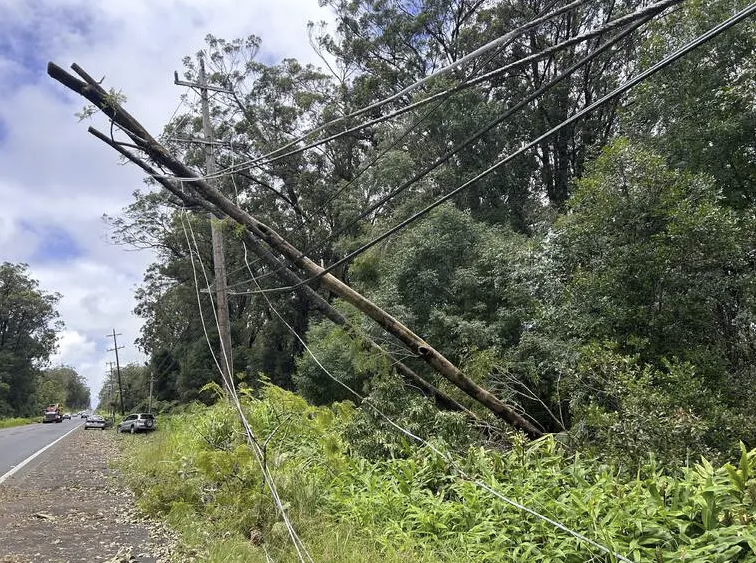
Days after Hurricane Lala had moved out of Hawaiian waters, the constant low growl of generators could be heard across the islands where homeowners took matters into their own hands after electric power lines had been snapped by winds, fallen trees and mudslides.
Along with the steady background hum, wafts of diesel fuel overpowered the plumeria, pua kenikeni, jasmine and pikake scents more familiar to residents. First one day, then two, three, four and longer. While Hawaiian Electric Industries (HEI) says its units aim to have restored power to 95% of the Islands’ affected residents by Friday, nearly 20,000 customers were still without power as of early Thursday. It also acknowledges that some areas, particularly the hard-hit southern Kaʻū District on Hawaiʻi island could be without electricity for weeks. Gov. Josh Green flew in to survey the damage and to reassure residents their needs would be met, even as apocalyptic images of damage circulated on social media.
At the Lowe’s store in Kona, clerks said they had sold out of their stockpile of 100 generators on Friday before the hurricane threatened the island. Solar-powered batteries were also out of stock, and they estimated it would be a month or so before the next shipment arrives.
One customer, while leaving the store, shouted to an arriving friend hoping to buy a generator: “Lowe’s is out, Home Depot is out, Costco is out and Walmart is out! Ace Hardware was the last but they’re also out now.”
Clerks said customers were still stocking up on batteries, flashlights and chainsaws as well as cleaning supplies. Some residents said they were considering going off-grid after noticing those who fared best during outages were their neighbors who’d previously cut their ties with the grid. Surely that can’t be good for HEI, which has already sought two new rate increases for 2027 and 2028, on top of electricity rates that are among the highest in the country.
So, the slow process of recovery and cleanup begins, as support crews fly in from the continent to help the island subsidiaries of HEI reconnect downed powerlines. Besides the costs of emergency restoration work, factor in the commerce that has evaporated because shop doors were shuttered during the power outages. The governor has estimated damage from the storm in the hundreds of millions of dollars, while outside estimates project total losses, including infrastructure, in the $3-5 billion range.
All residents of the Islands are extremely grateful for the fast work and dedication of emergency crews who have worked nonstop to restore power, cell and internet services. They have shown we are indeed Hawaiʻi strong.
One look at the weather forecast gives reason for greater concern. Two new storm systems are brewing to the east and could form into tropical storms or hurricanes on the approach lane toward Hawaiʻi. If they hit us, we may be in the same cycle all over again.
Why are the islands so vulnerable to widespread power outages and costly repairs? One reason is that it has been considered too costly to bore into lava rock to put powerlines underground, as is done in most other states.
But surely the repeated cost of restoration and repairs, plus the lost business to hundreds of companies across the state, could be mitigated by pre-emptive burying of powerlines in the crucial stretches where trees frequently knock out powerlines. (In North Kohala, for instance, one- or two-day power outages happen several times a year, even with winds that donʻt reach tropical storm levels.)
Now that we as a society have ignored the climate science showing that rising ocean temperatures will lead to more frequent and more violent hurricanes, the projected future cost of repairs, restoration and rebuilding surely would lower the opportunity cost of pre-emptive action. We pay for it either way.
At some point, county and state lawmakers and HEI executives might need to recalculate the cost-benefit analysis of burying power lines in some strategic locations where repeated repair costs keep piling up.