Scouting Teaches Hawai‘i’s Kids to Lead
Scouting America, Aloha Council teaches skills that range from personal finance and conservation to managing a team and leading a major community project
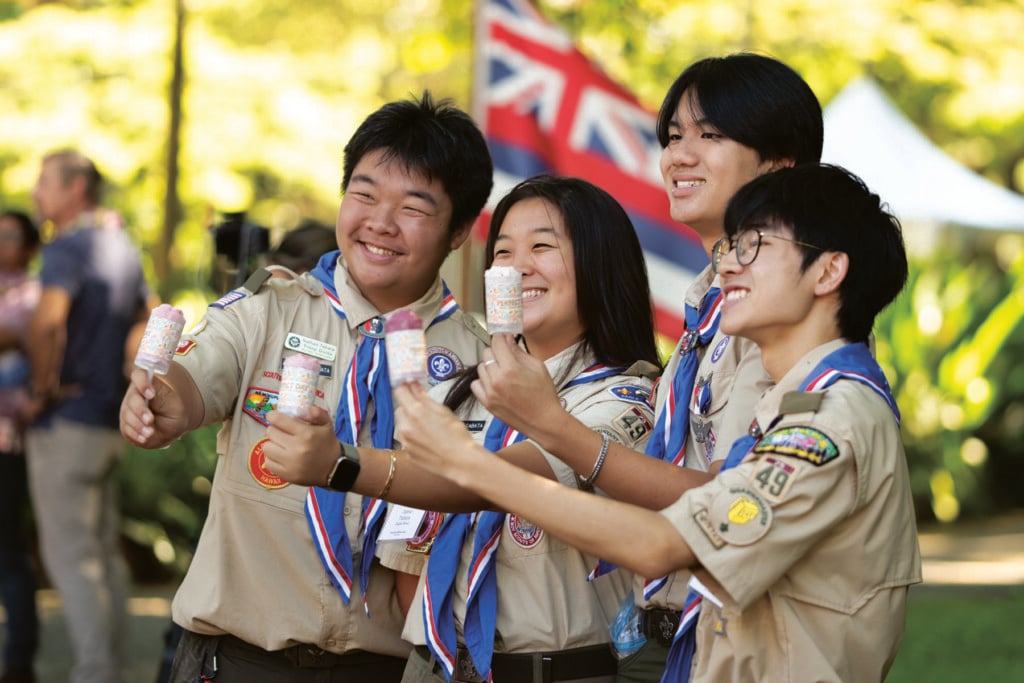
A 13- or 14-year-old Scout can get something that many adults don’t receive until well into their careers: formal leadership training.
And that training is not just classroom instruction. Scouts lead other Scouts, plan meetings and camping trips, manage projects and learn what happens when weather changes and other complications force a change in plans.
“They are leading the program, they are organizing their meetings, they are planning it, they are presenting it, and they’re responsible for it,” says Blake Parsons, CEO of Scouting America, Aloha Council.
That emphasis on leadership is one reason Parsons believes the 115-year-old organization remains relevant despite dramatic changes in American families and the proliferation of sports and other youth programs.
Scouting’s mission, he says, continues to center on character development, citizenship, personal fitness and leadership – summed up by the organization’s slogan “Prepared for Life.”
The Boy Scouts of America officially became Scouting America in 2025, reflecting the organization’s expansion of opportunities for girls. About 20% of its youth members in Hawai‘i are girls, Parsons says, and that percentage is growing.
(Girl Scouts remains a separate organization, nationally and locally.)
Scouting programs begin with kindergarten-age children and extend through age 18 in the main program, Scouts BSA. Young people can remain in the Venturing program until their 21st birthdays.
Individual units have flexibility in how they accommodate boys and girls. Some are coed while others have separate programs for boys and girls.
For families, Parsons says, coed programs can allow a son and daughter to attend the same program on the same night rather than driving them to different activities.
At the Cub Scout level, he says, camping and other activities are often family events.
“Can girls benefit from the values and ideals and program that we offer boys? One hundred percent,” Parsons says. “Everything that we teach is applicable to anybody.”
Learning by Doing
Scouting competes for young people’s time with sports, school activities and other youth organizations. But Parsons says Scouting offers something distinctive: repeated opportunities for young people to practice leadership and independence.
Scouts work in small teams called patrols and elect their own patrol leaders. Older Scouts mentor younger ones. And besides planning campouts and troop meetings, and organizing service projects, they teach younger Scouts skills, including how to survive outdoors.
That outdoor component adds unpredictability.
“There’s a lot of things you can’t control in the outdoors,” Parsons says. “Things that just happen: rain, heat, wind, stress.”
Young people have to adjust, solve problems and make decisions.
Even something as simple as packing for a campout can be an exercise in independence: A child has to figure out what will be needed, pack independently and arrive prepared for the campout.
Scouting also teaches practical subjects that are not always covered extensively in school. To earn a personal finance merit badge, Scouts learn about family budgets and how to manage money.
Before earning the badge, though, Parsons says Scouts have to demonstrate what they’ve learned to an adult and explain it.
The organization has also updated its programs over time, adding STEM activities and, most recently, a drone program.
A Major Project at Age 17
The culmination for about 5% of Scouts – including 138 in the Aloha Council last year – is becoming an Eagle Scout.
One of the final requirements to reach Scouting’s highest rank is a major service project that Parsons describes as an intensive lesson in project management.
A Scout must identify a community need, develop a solution, present the idea for approval, create a budget, raise money, recruit and organize volunteers, carry out the project and afterward analyze what worked and what didn’t.
“That is project management to a max,” Parsons says.
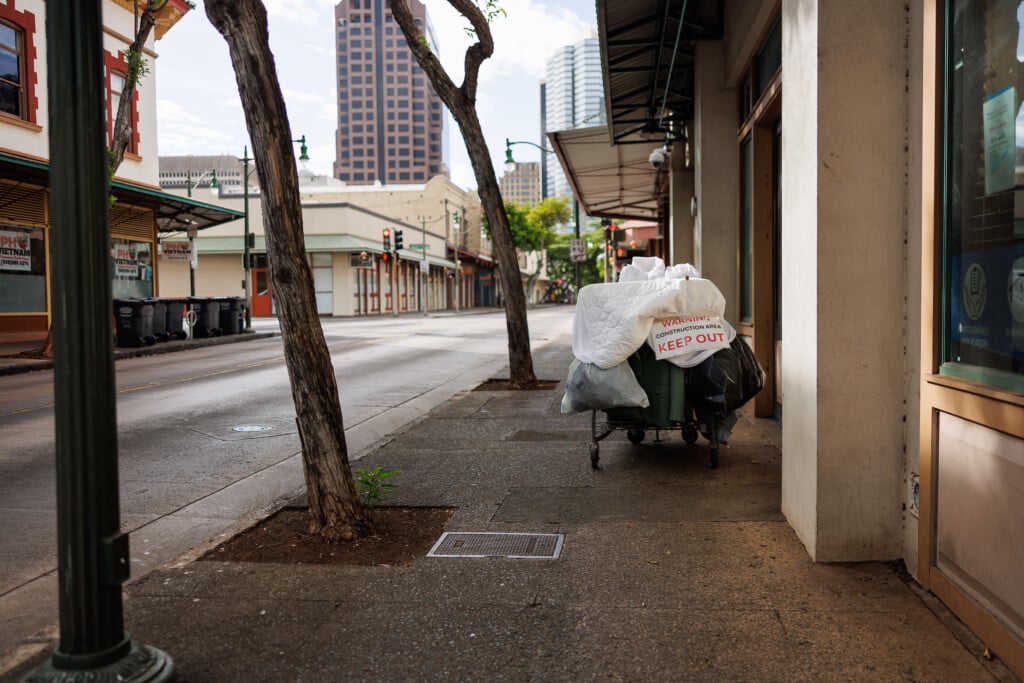
He recalls one Scout who created a discreet clothing closet at a school for homeless students and others who might arrive without clean or suitable clothing.
The Scout worked with the school and arranged for donated clothes and shelving. School employees would manage the closet so students could quietly get what they needed.
Then the school administration changed while the project was being planned.
The Scout had to start again with a new administration, explain the project and get its approval – exactly the kind of unexpected obstacle that confronts adults managing projects.
“It’s curveballs that get thrown at you while you’re trying to organize this,” Parsons says.

Photo courtesy of Scouting America
Rebuilding Membership
Scouting in Hawai‘i is much smaller than it was a decade ago.
Today, the Aloha Council serves about 3,000 to 3,500 Scouts a year, with the largest number on O‘ahu; most of the others are on the islands of Hawai‘i, Maui and Kaua‘i.
One big decline came in 2019, when The Church of Jesus Christ of Latter-day Saints ended its long-standing relationship with Scouting to focus on its own worldwide youth program.
Then came Covid, which cost the council about another 1,000 Scouts as units struggled with where and how to meet.
Around the same time, the national organization’s bankruptcy and sexual-abuse scandal also affected the Aloha Council, which contributed to a national settlement trust. Parsons says the council has strengthened background checks and training and continues to enforce policies that prohibit one-on-one contact between adults and youths.
Rebuilding has meant returning to schools and community groups and becoming more aggressive about explaining what Scouting offers.
“We’re a 115-year-old organization,” Parsons says, “but I tell our staff all the time we’ve got to act like a startup.”
That means speaking to Rotary clubs and other organizations, working with board members, using paid and earned media and finding local influencers who can describe their Scouting experiences.
“We can’t expect past views or past experiences or whatever it was that people had in Scouting to get us where we need to be in the future,” Parsons says.
Removing Financial Barriers
Parsons says the Aloha Council has made another commitment: A family’s finances should not prevent a child from participating.
The registration fee per child is about $150 a year, but the council provides financial assistance when needed for registration, camps, travel and other expenses.
Financial assistance is also available for the nearly 2,000 adult volunteers who help run Scouting in Hawai‘i, including money for training.
Those volunteers are essential because the council’s professional staff does not run the weekly programs. Volunteers do that in schools, churches, community centers and other locations across the Islands.
Parsons says one of his most important goals is to make their jobs easier.
“If five years from now volunteers are saying it’s easier to be part of Scouting, it’s easier to run a unit, it’s easier to be a volunteer, then we will have found success.”
A $2 Million Operation
The Aloha Council has an annual operating budget of about $2 million. Parsons says it has cut operating expenses about 30% in recent years, partly by using technology to reduce administrative work.
Registration fees account for only about 10% to 15% of revenue, he says, and much of that money goes to the national organization.
Other revenue comes from Scout Shop sales, programs, events and rentals, but charitable contributions remain crucial. Parsons says more than $1 million a year comes from individuals, foundations and businesses.
The annual Distinguished Citizens Dinner alone is expected to raise more than $500,000 this year.

38 Hawai‘i Scouts participated in this year’s National Jamboree held at the Summit Bechtel Reserve in West Virginia, which ran July 22–31. Photo courtesy of Scouting America
Making Better Use of the Camps
The council also has valuable real estate, including its Nu‘uanu headquarters, a 70-acre camp on O‘ahu’s North Shore, 20 acres of fee-simple land and 180 leased acres near Waihe‘e Ridge Trail on Maui, and a 30-acre property in Kōke‘e on Kaua‘i.
Parsons says the council has invested heavily in maintenance and improvements that had been deferred for years and now is making the properties available to people and groups other than Scouts.
At the North Shore camp, for example, improvements include a $1.5 million shower facility, upgrades to the kitchen and other buildings and major repairs to the water system.
The Maui property is also undergoing substantial improvements, including plans for a $3 million dining hall.
In addition to Scouts, Parsons envisions the camps hosting gatherings for nonprofits, church groups and corporate retreats. They have commercial kitchens, cabins, showers and other facilities needed for overnight stays.
Greater community use would provide revenue to maintain properties that Scouts themselves could not support on their own.
About 95% of Scouting activities, Parsons says, actually happen somewhere else – at schools, beach parks, national parks and other places throughout Hawai‘i. So the facilities are often available to others.
“We are blessed to have these properties,” he says. “I want other people to come up there and use them just as much as we have, but also help us sustain it.”
A Personal Mission
Parsons came to the Aloha Council in 2023 from a career that included public relations, and helping lead construction trade associations and apprenticeship training.
His previous work had involved helping people in their late teens, 20s and 30s become foremen and leaders in the construction industry. Scouting offered the opportunity to help even younger people become leaders.
“We can do that at age 10 or 12 or 13,” Parsons says.
And perhaps create experiences that young people will remember long after they become adults.
“If I can make sure other people have those experiences, that would be amazing.”