Grand Hawaii Electric: Wired for Success
From apprentice to solo owner-operator, Johny Le turned hard, sometimes dirty work into a thriving business.
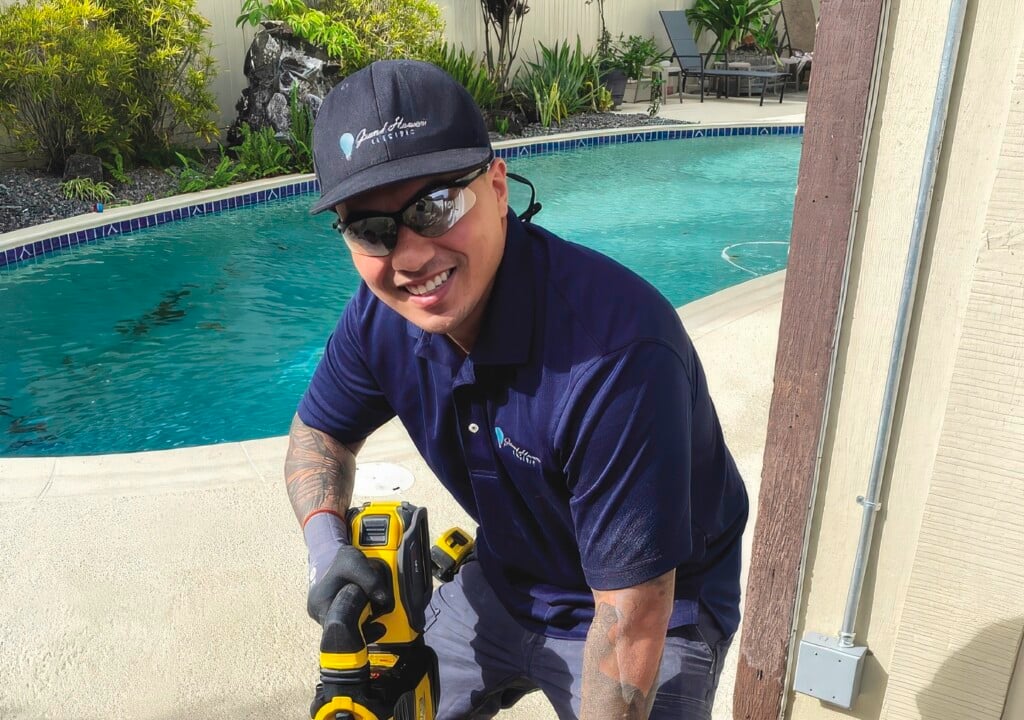
Long before he ran a business, Johny Le was running electrical conduit through concrete, pulling underground cables and studying blueprints at job-sites across Honolulu.
It was the early 2010s and most of his peers were chasing office jobs, culinary careers, tech opportunities and college degrees.
“At the time, nobody wanted to do trade work,” Le says. “It was hard, dirty and not attractive.”
But he chose it anyway. Today, as the founder of Grand Hawaii Electric (no association with Hawaiian Electric Co.), Le is part of a different moment: Skilled trades are resurging, fueled by a younger demographic rediscovering the value of hands-on work – the so-called “toolbelt generation.”
Le grew up in Kalihi, the son of Vietnamese refugees. He started in carpentry, earning an associate degree from Honolulu Community College before transitioning into electrical work through Hawaiʻi’s apprenticeship system.
In 2015, while still a third-year apprentice, Le worked on the sprawling redevelopment of the International Market Place. Within months, he was managing the project’s second and third floors, leading a crew of 16 electricians.
“That project set the standard for me,” he says. “Take on the toughest jobs, lead with excellence and deliver every time.”
The experience taught him efficiency, leadership and how to make complex work profitable.
Le carried that mindset into subsequent projects: high-rises like Aeʻo at Ward Village, Honolulu’s rail system and residential developments across West Oʻahu. He completed a 42-story high-rise deck project using just four workers per floor instead of the typical 10-plus.
“I learned how to run lean,” he says. “That’s where the value is.”
By the time he struck out on his own in October 2021, Le had spent more than a decade working nearly every layer of the trade.
At Grand Hawaii Electric, Le manages every aspect of his solo operation: marketing, lead generation, customer communication, scheduling, fieldwork and invoicing.
“The company forced me to build systems,” he says. “Everything is streamlined, everything is documented, nothing is left to chance.”
Despite his background in massive commercial projects, Le focuses on residential maintenance services – a space he saw as underserved – such as panel upgrades, troubleshooting, fixture replacements and quick, reliable service.
Le educates homeowners, explaining what’s happening with their electrical systems, what risks exist and how to protect their homes.
“Electrical work can be dangerous. If people understand it, they can protect themselves and their families.”
He’s developed a franchise model for Grand Hawaii Electric, aimed at helping other electricians replicate his approach.
“I’m not rushing it. The goal is consistency and ensuring the system works for anyone who wants to operate it.”