Condos, Cards and Caps and Gowns: Hawai‘i’s Most Compelling Investments
From the hidden costs of condo ownership to the booming Pokémon card market and Waipahu High School rewriting what's possible for its students, this issue explores what it really means to invest in Hawai‘i.

With volatility rattling stock markets and assets of all kinds, condominiums and collectible Pokémon cards are no exception. Both take center stage in our June issue, invaluable to those who chase them and utterly unpredictable for those who own them.
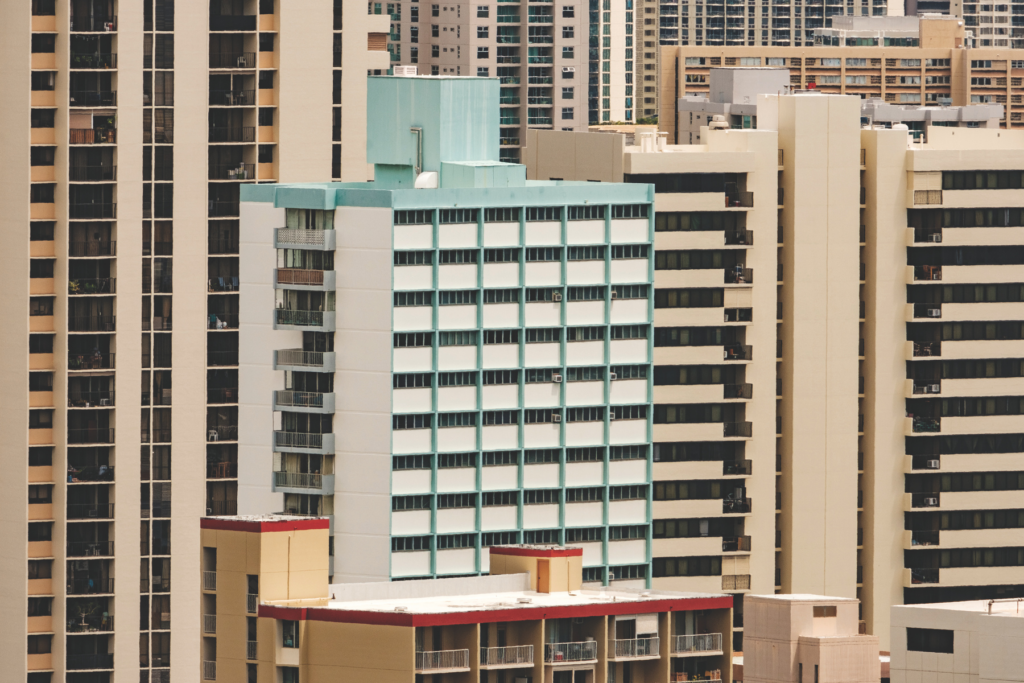
Condos can be a complete nightmare, as investigated in a deep-dive exposé by senior contributing writer Cynthia Wessendorf. They are a critical part of the housing supply in urban Honolulu and its suburbs. Although vacation-home buyers and wealthy off-island investors have driven up prices in some neighborhoods, condos remain one of the few viable paths to homeownership for many local residents. Title Guaranty Hawaii data shows that 83% of all properties sold on Oʻahu in 2025 went to local buyers, mostly for long-term occupancy. New short-term rental permits are now restricted to resort-zoned areas like Waikīkī and Ko Olina, further nudging the market toward long-term residents.
Buying offers the promise of equity and stability, but the risks are real, as Wessendorf lays out on page 26. Maintenance fees climb year after year. Special assessments — sudden, large charges for repairs like new windows, roofs or plumbing — can blindside even the most prepared buyer.
Wessendorf’s cover story highlights Ruth Rodrigues, whose situation illustrates just how daunting hidden costs can be. Displaced from her rental in Āina Haina, she explored a two-bedroom unit at the Mauna Luan towers in Hawaiʻi Kai but balked at nearly $1,500 a month in maintenance fees, plus an unknown special assessment for window replacements. “I don’t want to be a horror story,” she says. “We lock in and then it’s, ‘hey, we need $50,000 more.'” She ultimately chose to keep renting, as 40% of Oʻahu households do.
Yet there is a bright side. At Kuilei Place, a 1,005-unit condominium under construction in Mōʻiliʻili, history professor Linda Lierheimer locked in a two-bedroom unit at $625,000 — well below the $833,000 market rate. When it opens in 2027, she’ll become a first-time homeowner just before retirement. “I’ll be a first-time homebuyer at 66, but that’s what Hawaiʻi does to you,” she says.
Pokémon Cards
On Pokémon’s 30th anniversary, what was once a childhood pastime has become serious business. High-profile sales, like influencer Logan Paul’s $16.4-million Pikachu Illustrator card, have brought real dollar signs to the hobby. When Honolulu hosted the Pokémon World Championships, more than 14,000 people attended, with lines stretching hundreds deep just to enter the pop-up shop.
In Mānoa, Andy and Mari Oshiro turned their passion into Alola Mart, a brick-and-mortar shop that opened in August 2025. Andy has sold rare cards for thousands — one Pikachu card fetched $6,500 and could command five figures today, as Rachel Wagenman reports on page 70.
But for the Oshiros, the real reward is community. “We’re in it for the community,” Andy says. “Pokémon is for every age — we have senior citizens, young kids and classmates from high school bringing their own kids in.”
Collector Jomari Garcia agrees, selling at local events mostly just to fund his hobby. “Technically I don’t really make money,” he says. “I’m just breaking even.”
Waipahu High School
The biggest investment in Hawaiʻi is its people. When Hawaii Business Magazine came across Waipahu High School’s rise as the largest feeder school to the University of Hawaiʻi at Mānoa College of Engineering, we started digging. What Grant Nakasone reports on page 44 is remarkable. Once noted for youth gang activity, Waipahu is now known nationally for its wall-to-wall College and Career Academy design — the first of its kind in Hawaiʻi — integrating rigorous academics with specialized career pathways and an Early College program that lets students earn tuition-free college credits.
Leila Manibog, a recent Waipahu High School graduate, took an interest in pharmacy and interned at Long’s Drugs through the school’s early career program, logging at least 120 hours packaging medications and counting pills among her responsibilities. “They treated me like a regular pharmacy technician,” she told me in a telephone interview. Manibog is one of many students who have passed through the school’s Academic Health Center, operated by Hawaiʻi Pacific Health since 2024, training alongside real providers on the Waipahu campus.
She’s now headed to the Thomas J. Long School of Pharmacy at the University of the Pacific in Stockton, California.